

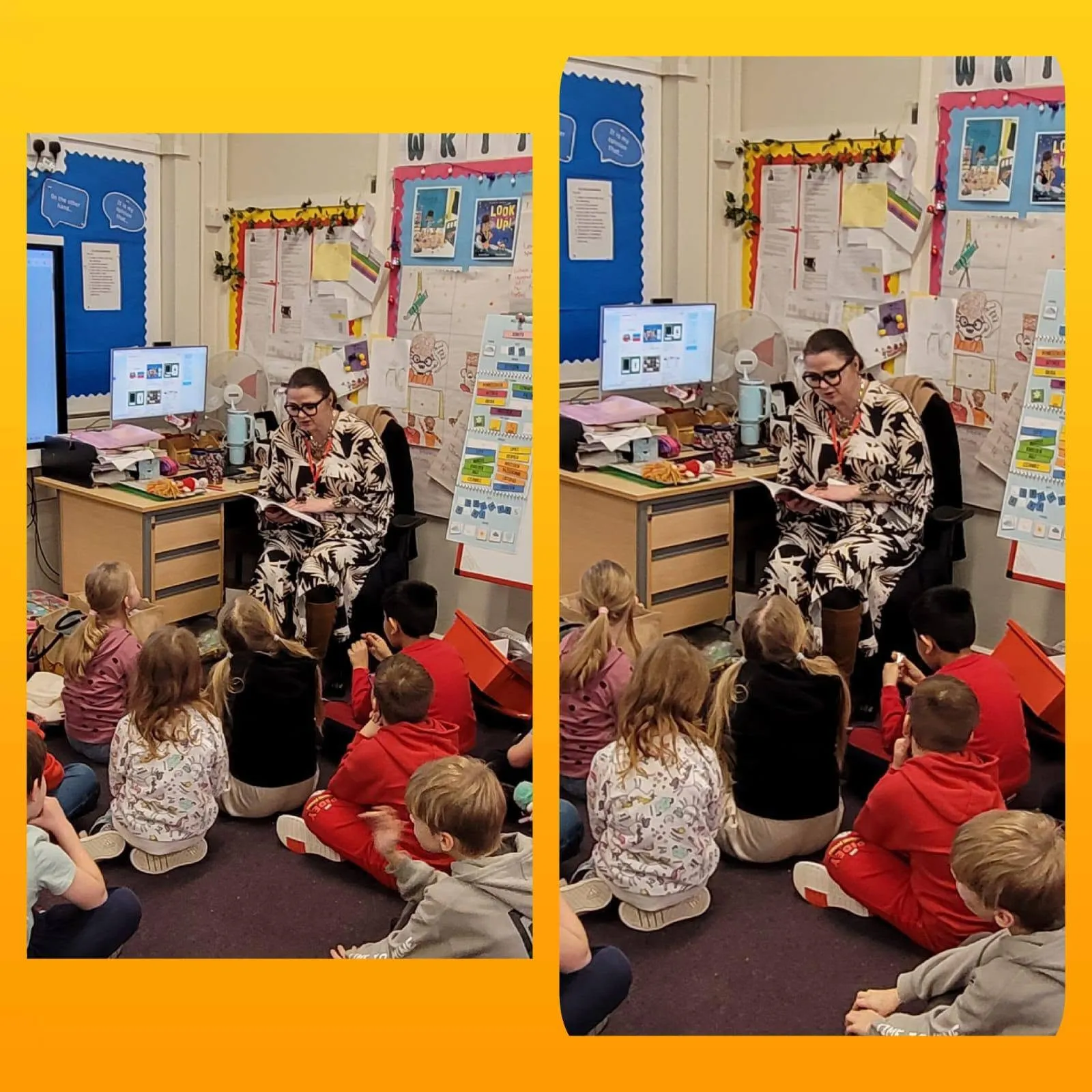
The class devoted its January lessons to consolidating the spelling rules for the soft sounds – ‘ń’ and ‘ni’, and ‘ć’ and ‘ci’. The pupils worked on their worksheets with great enthusiasm.
One sound, two ways of writing it
Soft sounds are written in two ways. Before a vowel, their softness is marked by the letter ‘i’ – so we write ‘niebo’ (sky), ‘taniec’ (dance) and ‘ciasto’ (cake). In such combinations ‘i’ is not a separate vowel: ‘ni’ in the word ‘niebo’ is read as a single sound. At the end of a word and before a consonant, we put an accent mark over the letter: ‘koń’ (horse), ‘słońce’ (sun), ‘ćma’ (moth). For bilingual children this distinction needs regular practice, and in the lessons it was reinforced in several ways.
Grandparents' Day
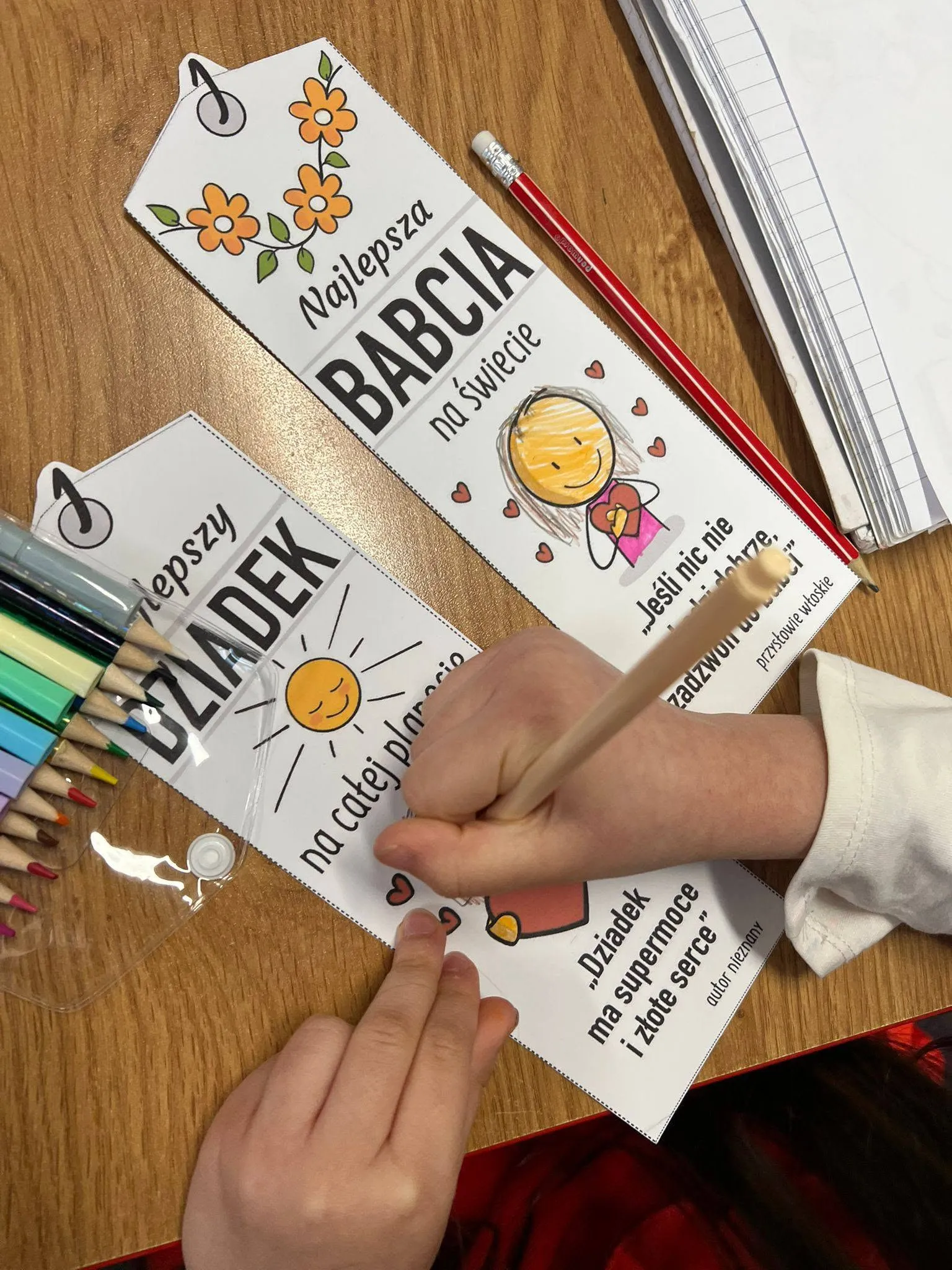
Later in the lessons, the class talked about Grandparents' Day, celebrated in Poland on 21 and 22 January. The children talked about their loved ones and wrote down the most important information on their worksheets. They also made small gifts – among them bookmarks with the words ‘Najlepsza Babcia na świecie’ (The best Grandma in the world) and ‘Najlepszy Dziadek na całym świecie’ (The best Grandad in the whole world). It is also worth remembering how to write the dates of these celebrations correctly: we write ‘21 stycznia’, not ‘21 styczeń’, because the name of the month is in the genitive case here.
Interactive games and ‘Karolcia’
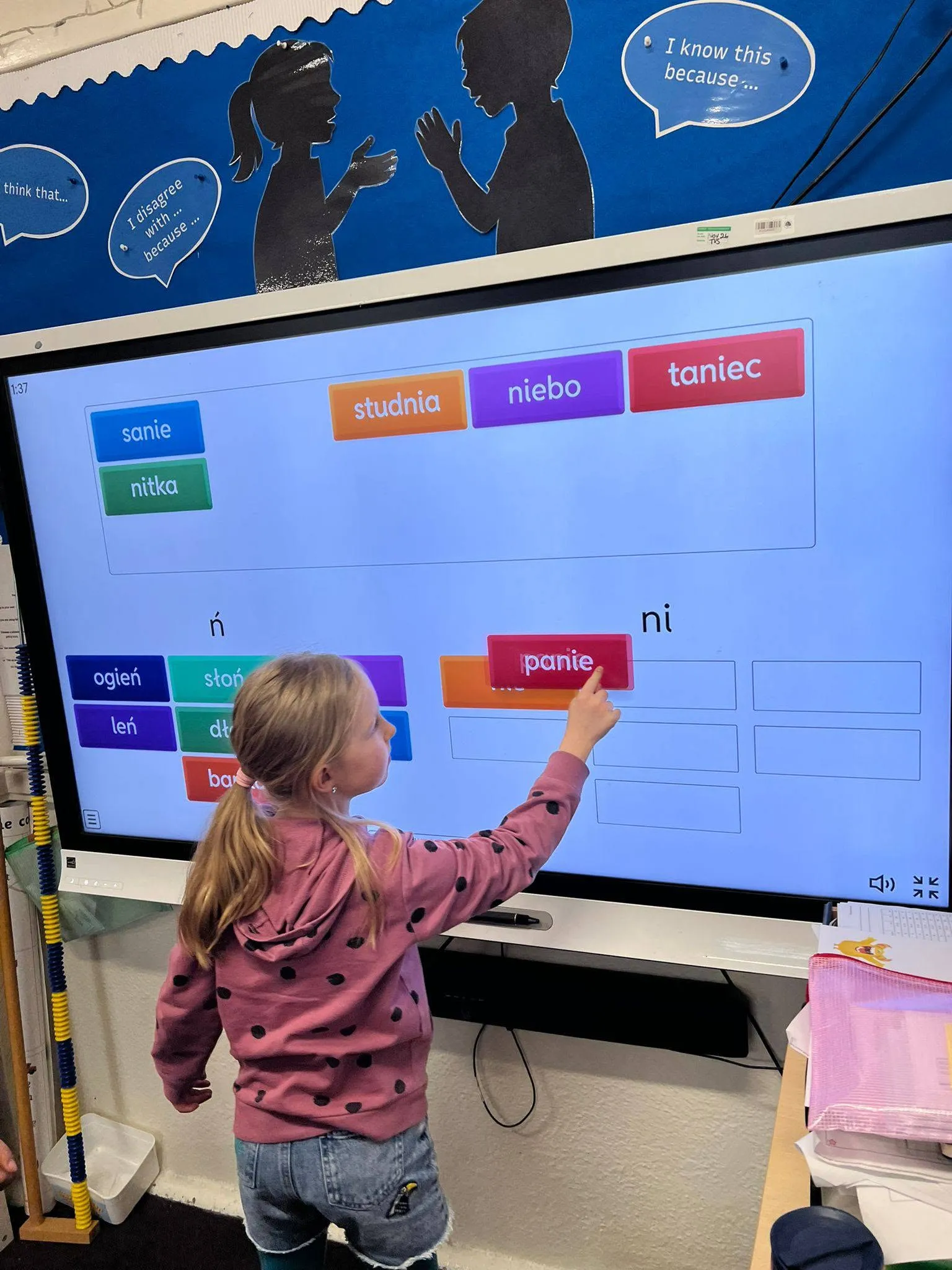
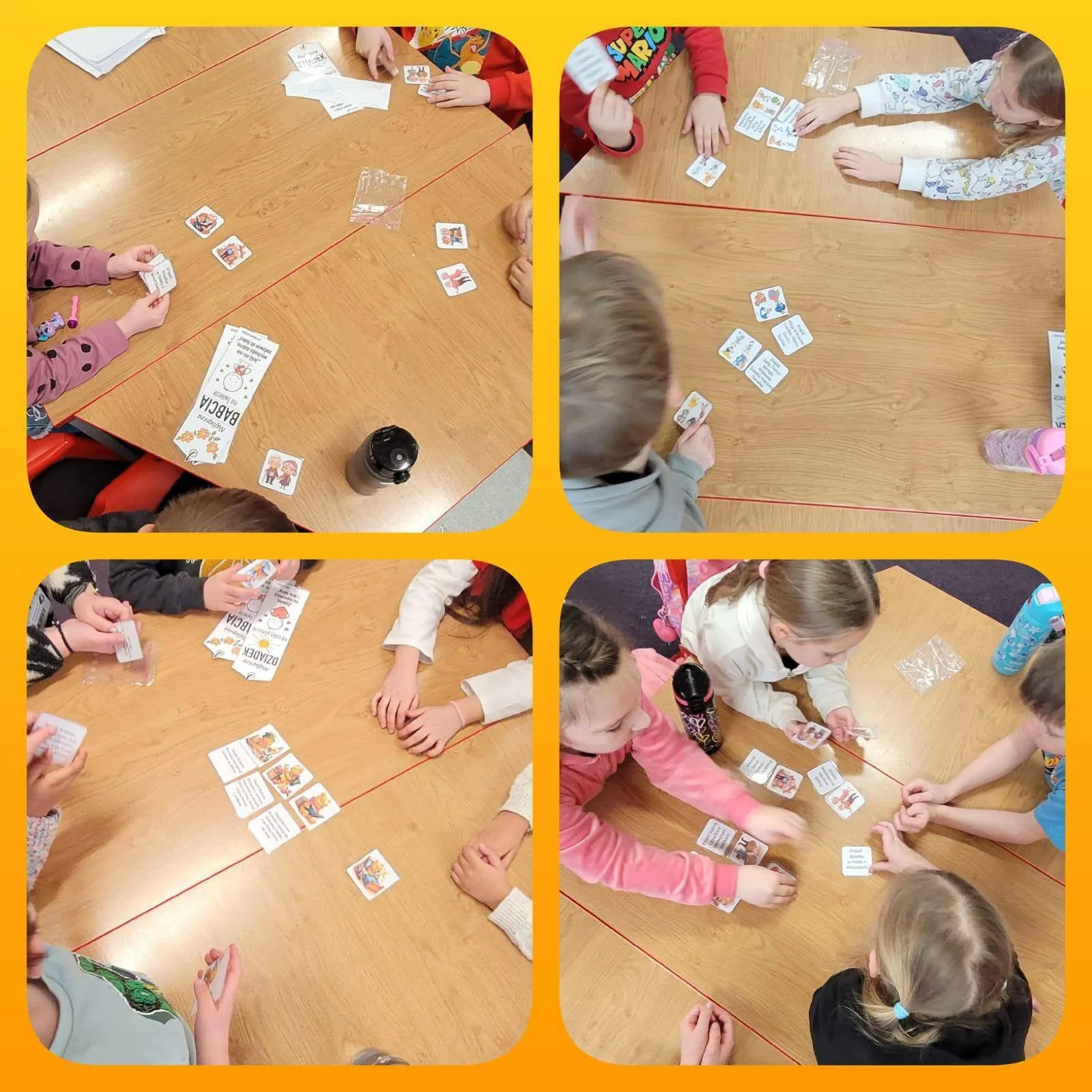
The last lesson was devoted to reinforcing the rules through interactive games. At the whiteboard, the pupils matched words and pictures to the correct spelling, and in words such as ‘sło…ce’ chose between ‘ń’ and ‘ni’. In the picture-card games, they read out instructions, for example ‘Znajdź dziadka czytającego wnuczkowi książkę’ (Find the grandad reading a book to his grandson), and looked for the matching illustrations. The lessons ended with reading another adventure from ‘Karolcia’, a novel by Maria Krüger. More photos from the lessons can be seen in the gallery.