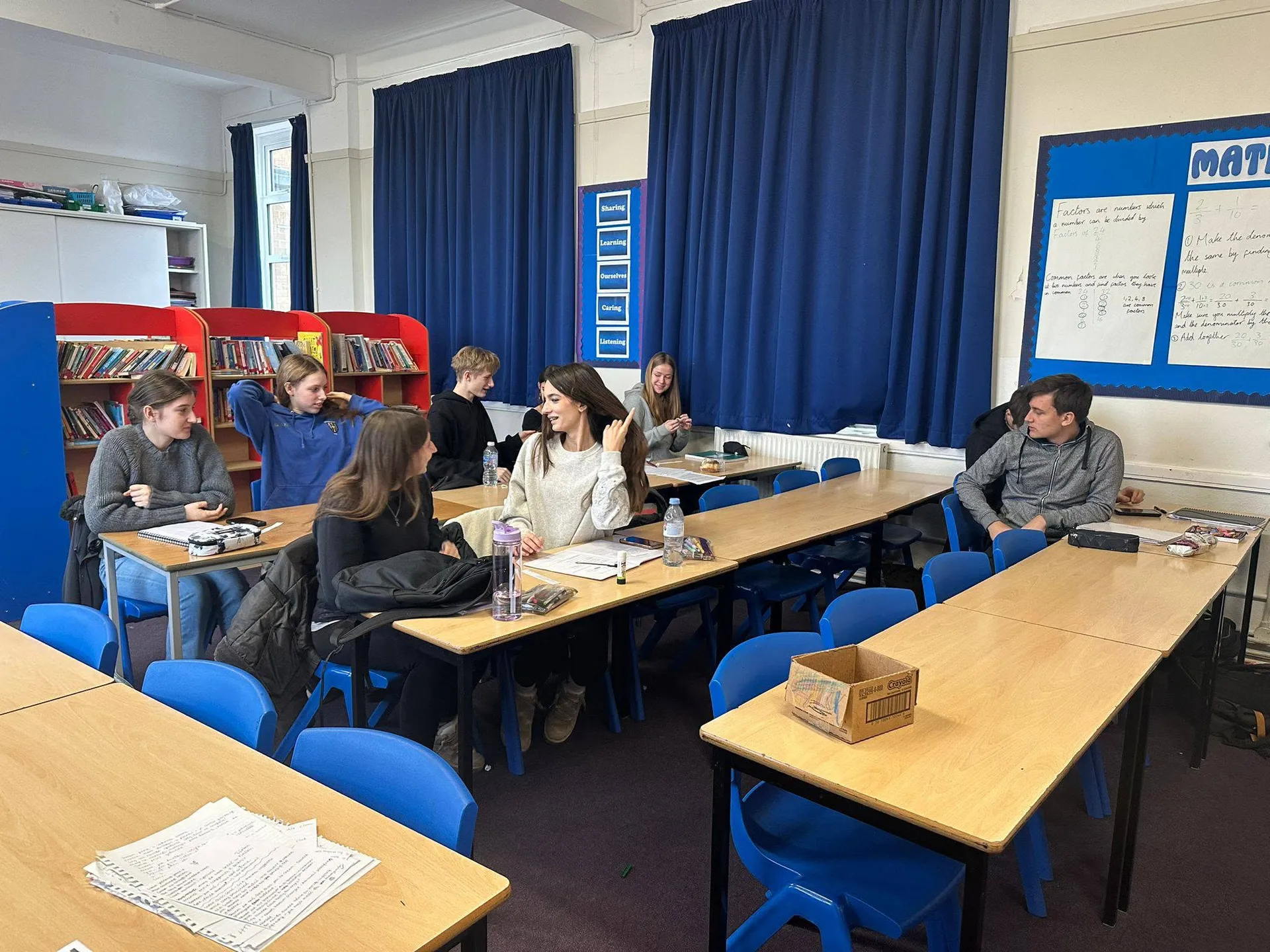


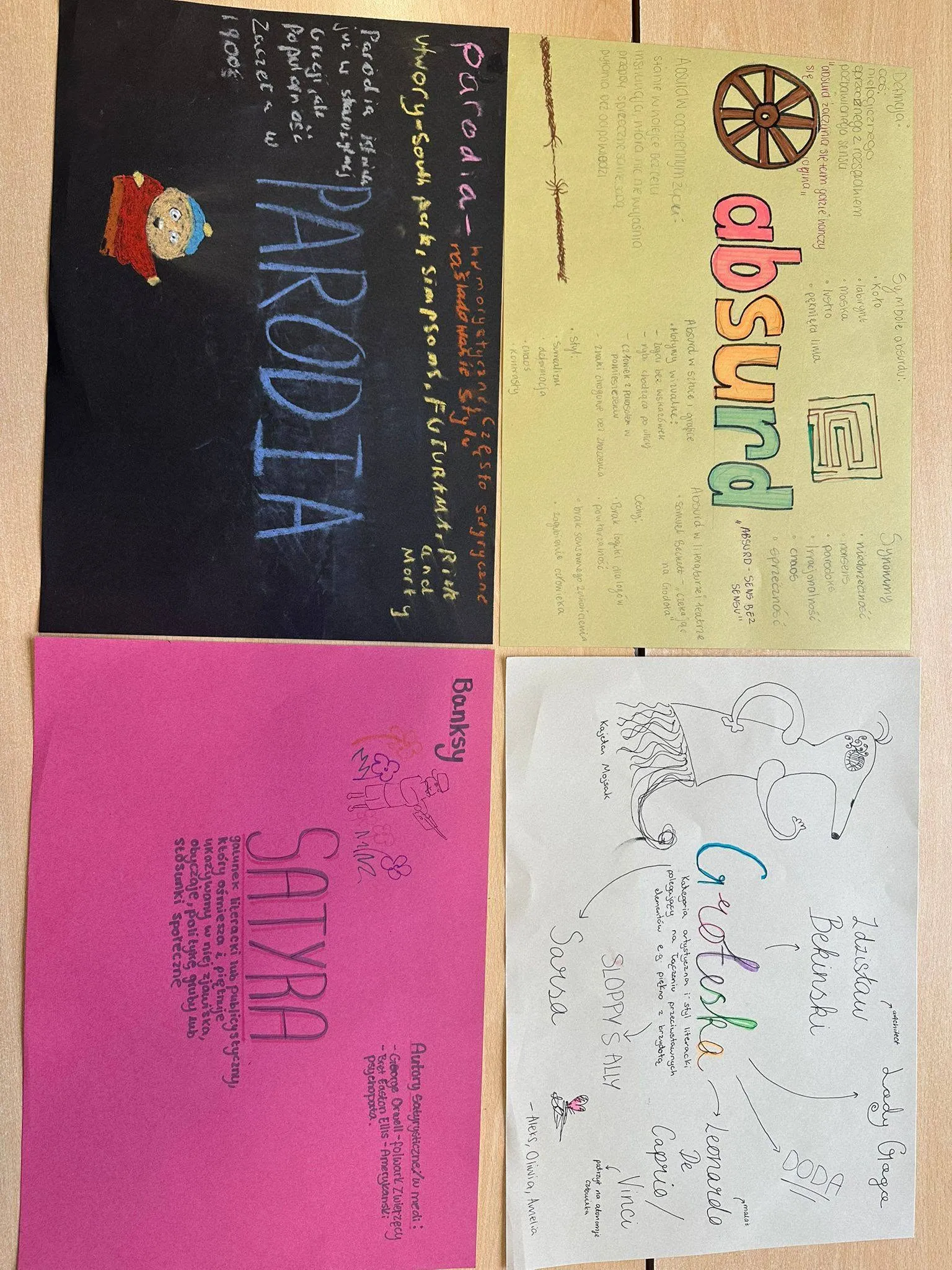
We have just had an intensive and engaging lesson devoted to Sławomir Mrożek's ‘Tango’. Pupils worked with the concepts of the grotesque, the absurd, parody and the theatre of the absurd, but instead of a traditional lecture, the lesson was dominated by activity.
Difficult concepts in action
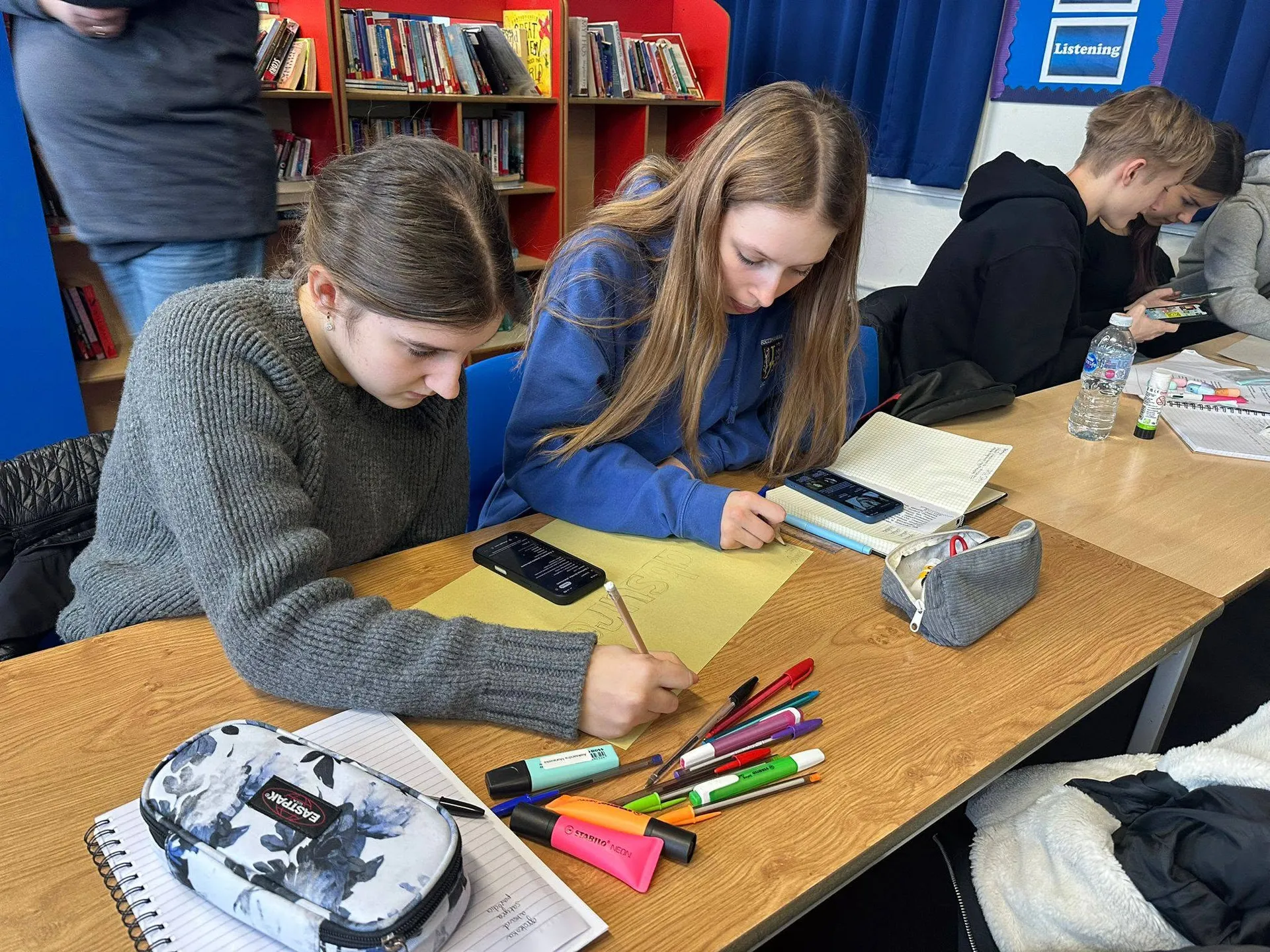
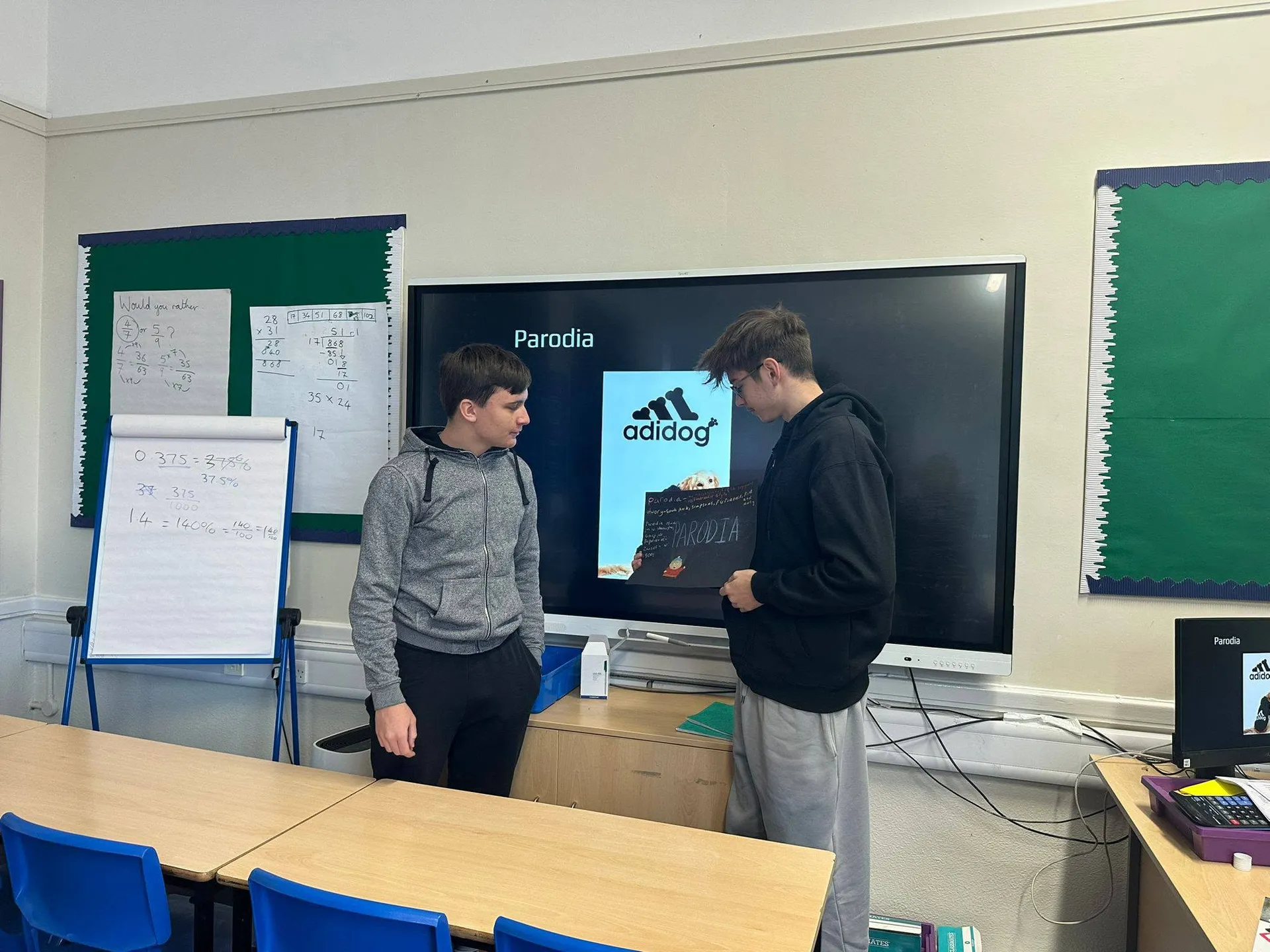
The lesson included the game ‘I have… who has?’, a snowball exercise, group work and the preparation of posters, all rounded off with discussion and interpretation. According to the instructions displayed on the screen, the snowball worked like this: everyone wrote a concept on a sheet of paper and threw it to someone in the class, who then read out and explained the term. The groups prepared posters on parody, the absurd, satire and the grotesque, and then presented them to the class.
The grotesque combines the comic with the tragic and deliberately distorts reality, while the theatre of the absurd – a 20th-century movement in drama associated with Samuel Beckett and Eugène Ionesco, among others – portrays a world devoid of logic. Sławomir Mrożek (1930–2013), one of the most outstanding Polish playwrights, used these devices in ‘Tango’, published in 1964, telling the story of a family in which rebellion against all norms led to chaos.
The tango as a dance and a metaphor
The interpretation of the tango as a dance and a metaphor proved particularly interesting. The conversation covered life, power, the state and society, leading and submission, order and chaos. A dance in which one partner leads and the other follows encouraged reflection on power relations – all the more so because Mrożek's play ends with a tango.
The pupils showed independent thinking and courage in expressing their views, and their associations were truly mature. This is an excellent starting point for further work on the text. More photos from the lesson can be seen in the gallery.