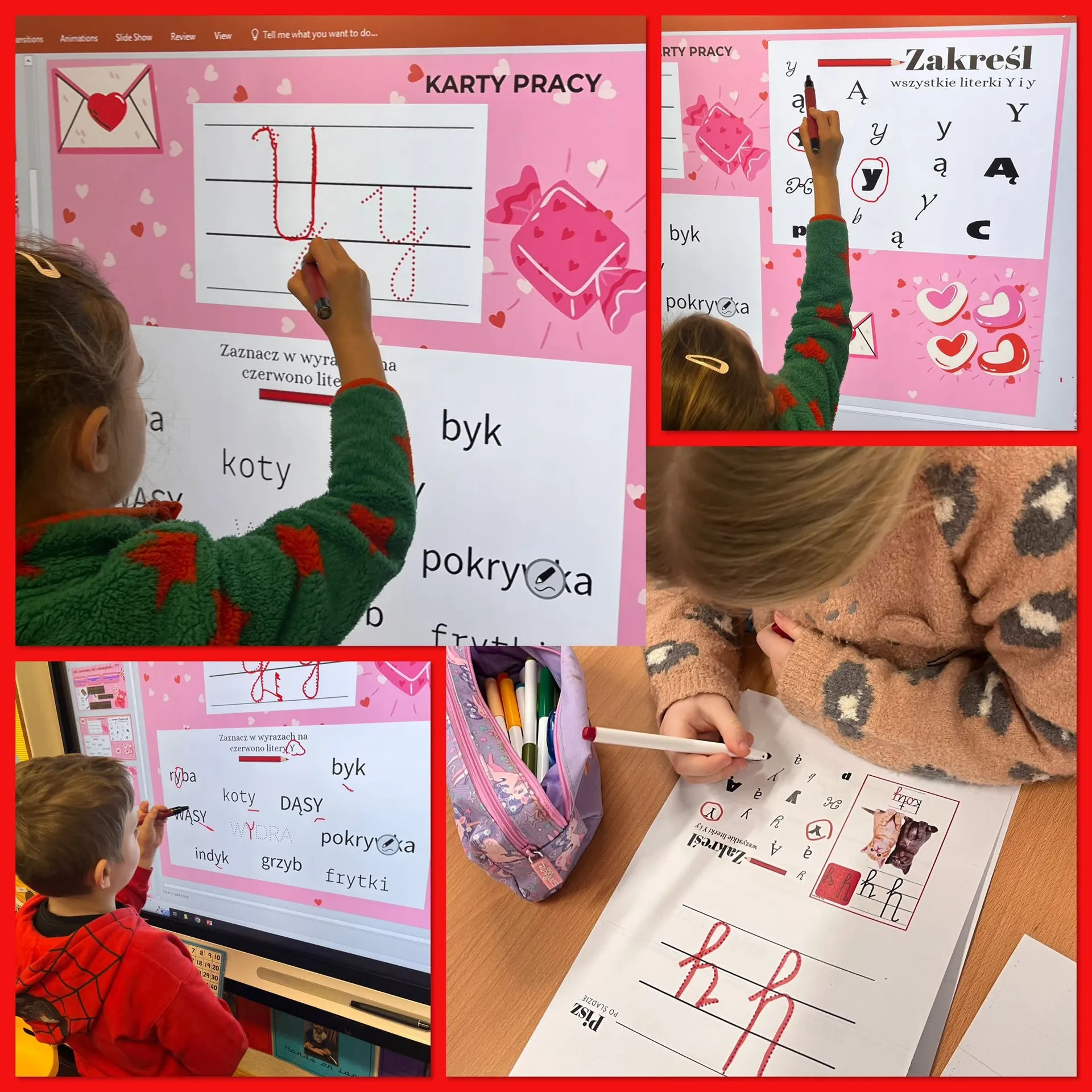


The figure of St Valentine and Valentine's Day introduced pupils to the world of a new letter – Y. The children learnt who the patron saint of lovers was and why it is on Valentine's Day that people write greeting cards.
According to tradition, St Valentine was a 3rd-century priest and martyr, and his feast day falls on 14 February. The custom of giving valentines to loved ones became widespread in Poland relatively recently, but today even the youngest children know it.
The main star of the lesson, however, was the letter Y. Pupils practised writing it on worksheets and on the interactive whiteboard, and checked what happens when they add it to the end of the words ‘kot’, ‘płot’ or ‘młot’. This creates plural forms: ‘koty’, ‘płoty’, ‘młoty’. The sound y has no exact equivalent in English, so children growing up in the United Kingdom need plenty of opportunities to hear it and pronounce it correctly.
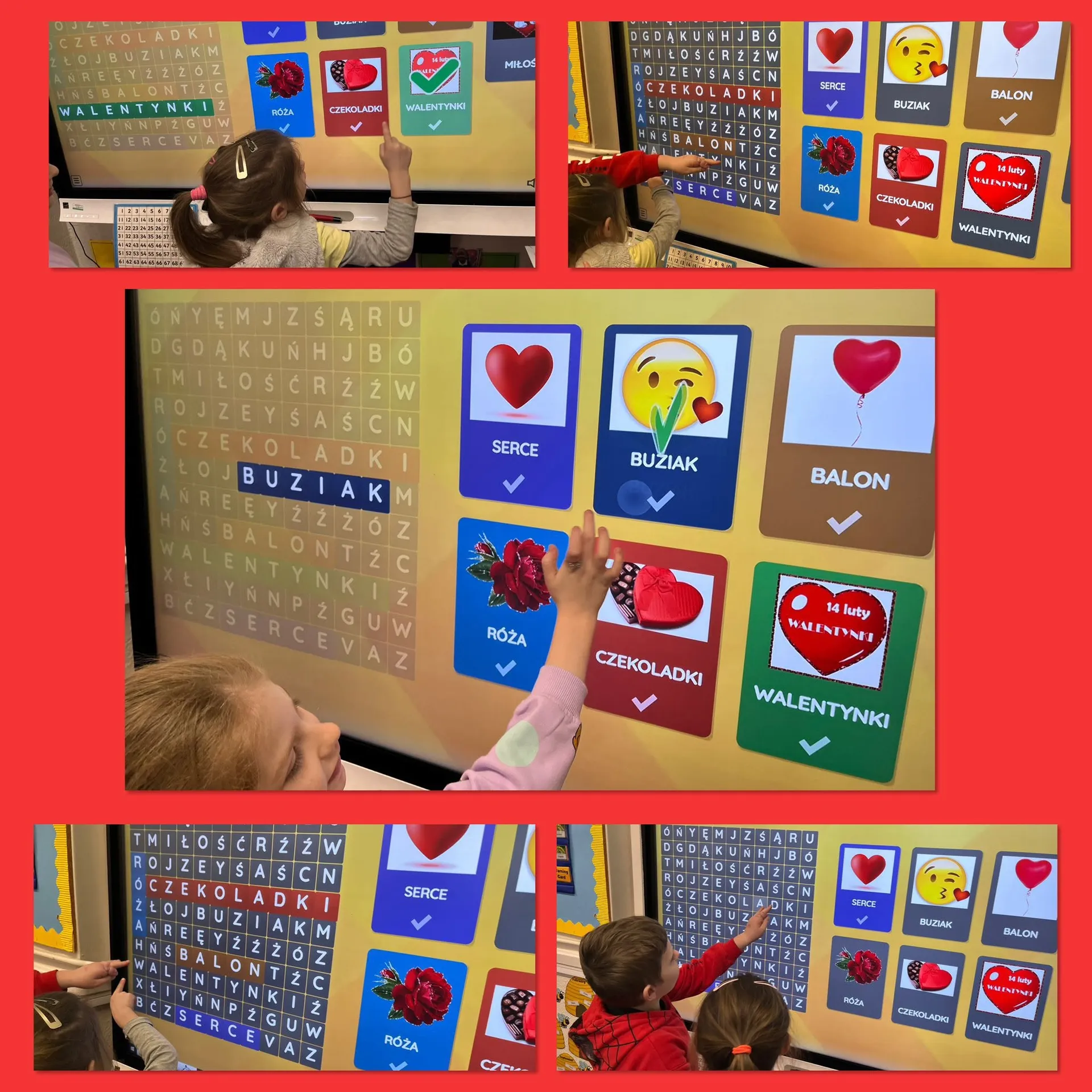
Valentine's vocabulary also featured in games: the children searched for the words ‘serce’, ‘buziak’ and ‘róża’ on the interactive whiteboard, and in a quiz they answered the question of how to say ‘Kocham Cię’ in English.
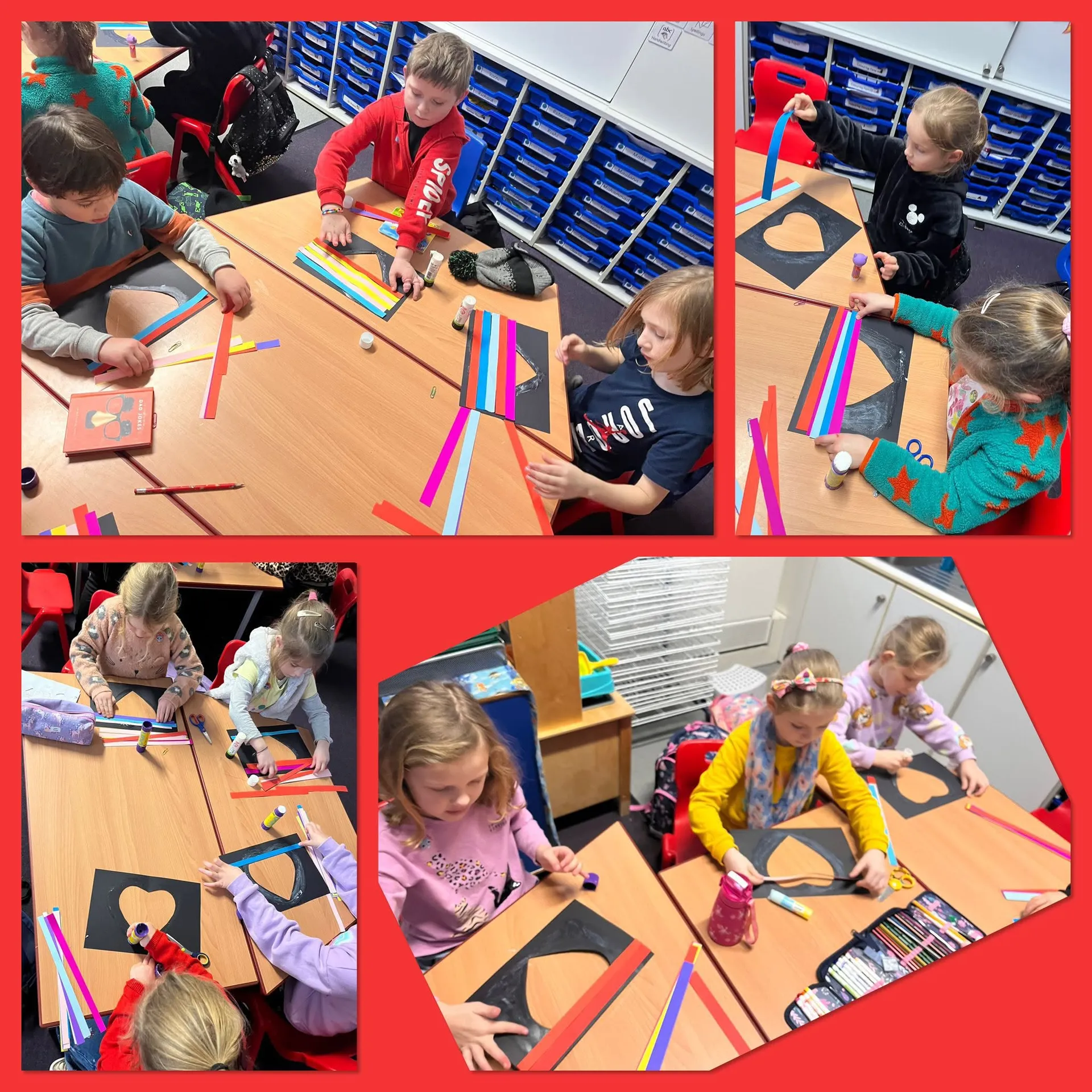
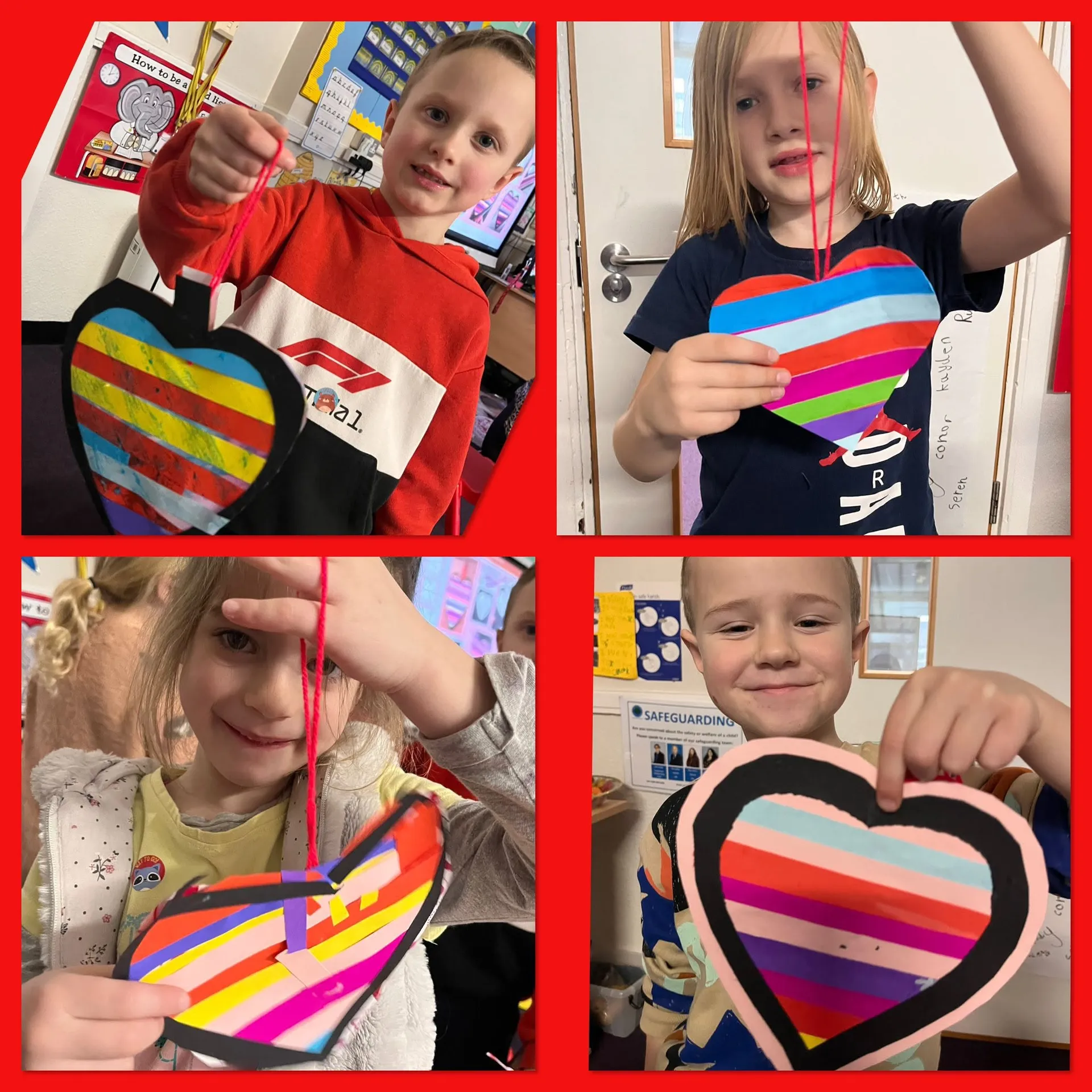
Pupils also filled paper hearts with colourful strips, creating bright hanging decorations and Valentine's cards. More photos from the lesson can be seen in the gallery.