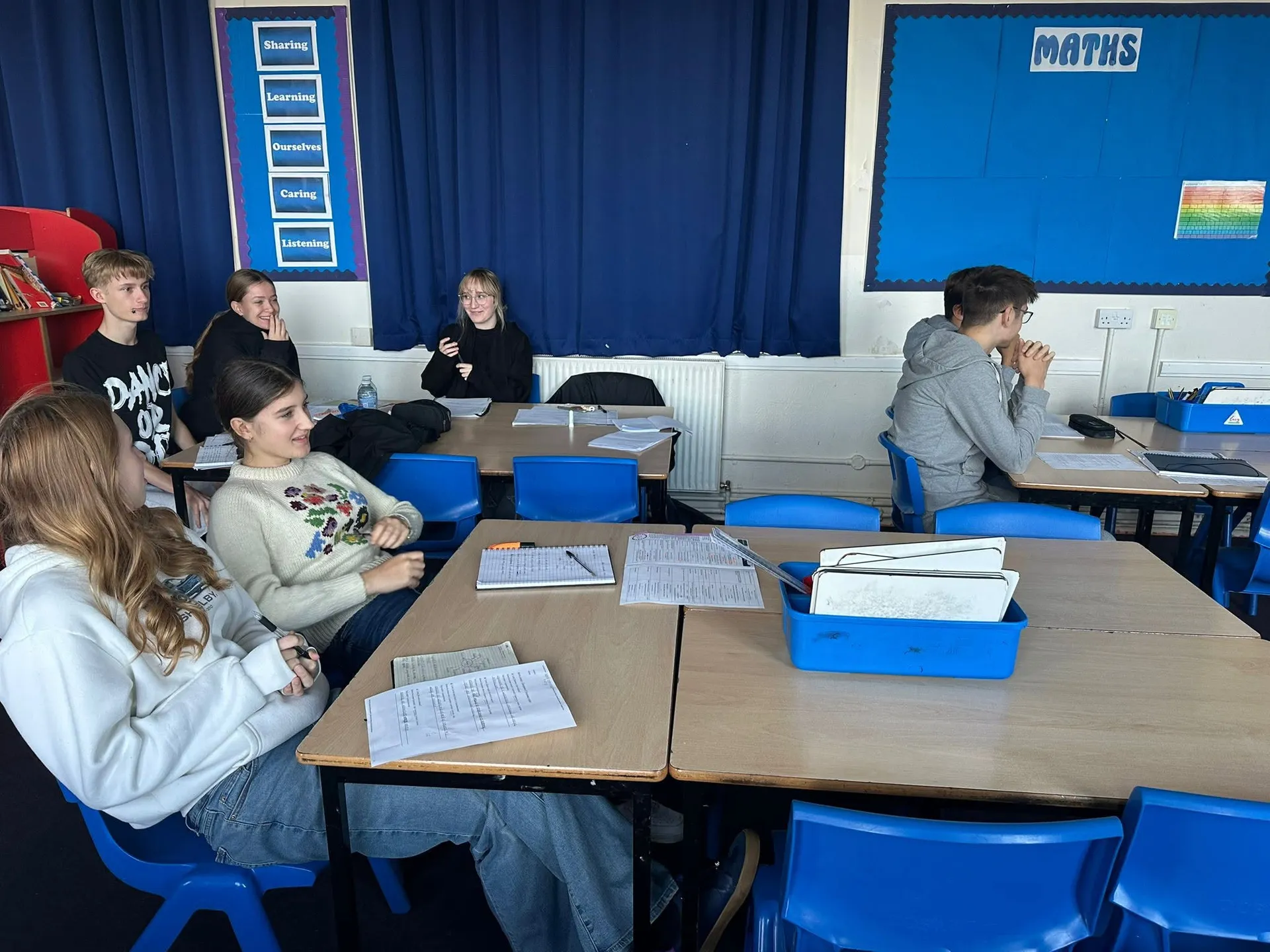


The A-level students devoted their Saturday vocabulary lesson to Andrzej Wajda’s film ‘Katyń’. The lesson combined language, history and cinema, and its aim was to consolidate vocabulary relating to the Second World War – and it was anything but boring.
Wajda’s film about the Katyń massacre
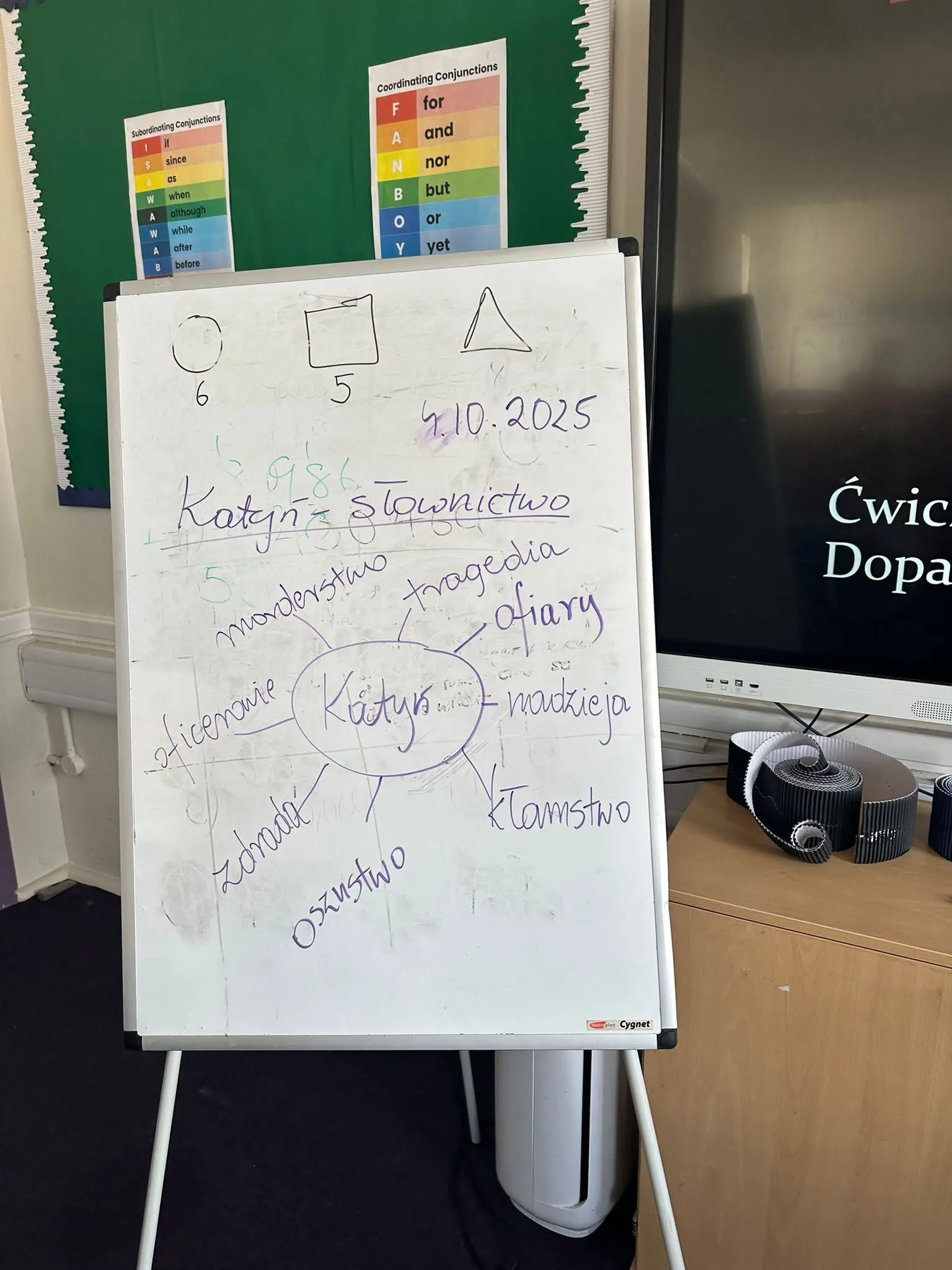
‘Katyń’ (2007), nominated for the Oscar for Best Foreign Language Film, tells the story of the crime committed by the NKVD in spring 1940. Wajda shows it not only from the perspective of the murdered officers but also from that of their families – above all the women who waited for years for news of their loved ones and, after the war, had to confront the Katyń lie. For the director it was a personal subject, as his father, Jakub Wajda, was among the victims. Unsurprisingly, the ‘Katyń – vocabulary’ mind map included words such as ‘ofiary’ (victims), ‘tragedia’ (tragedy), ‘kłamstwo’ (lie) and ‘nadzieja’ (hope).
Running dictation, Taboo and quotations
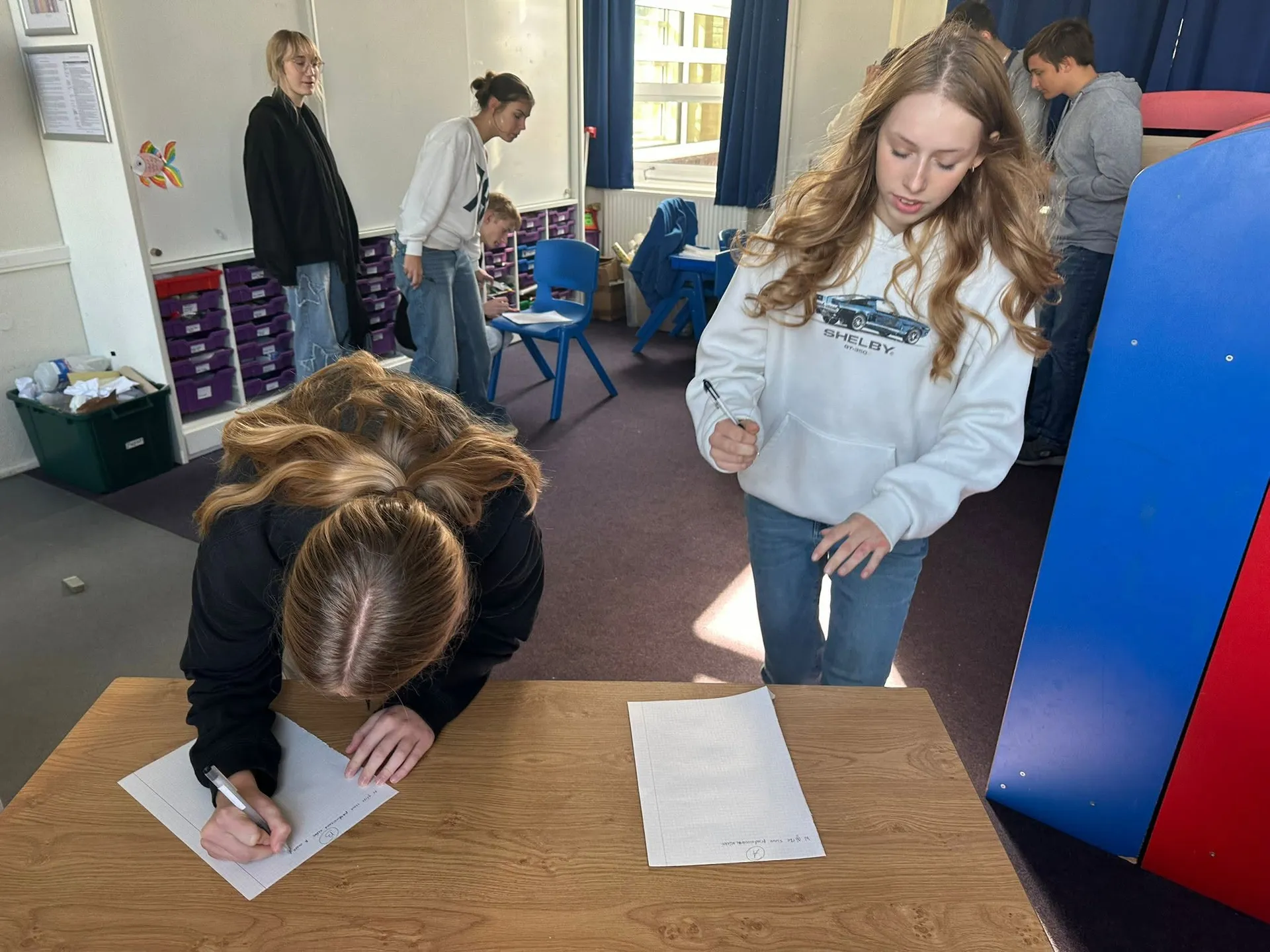
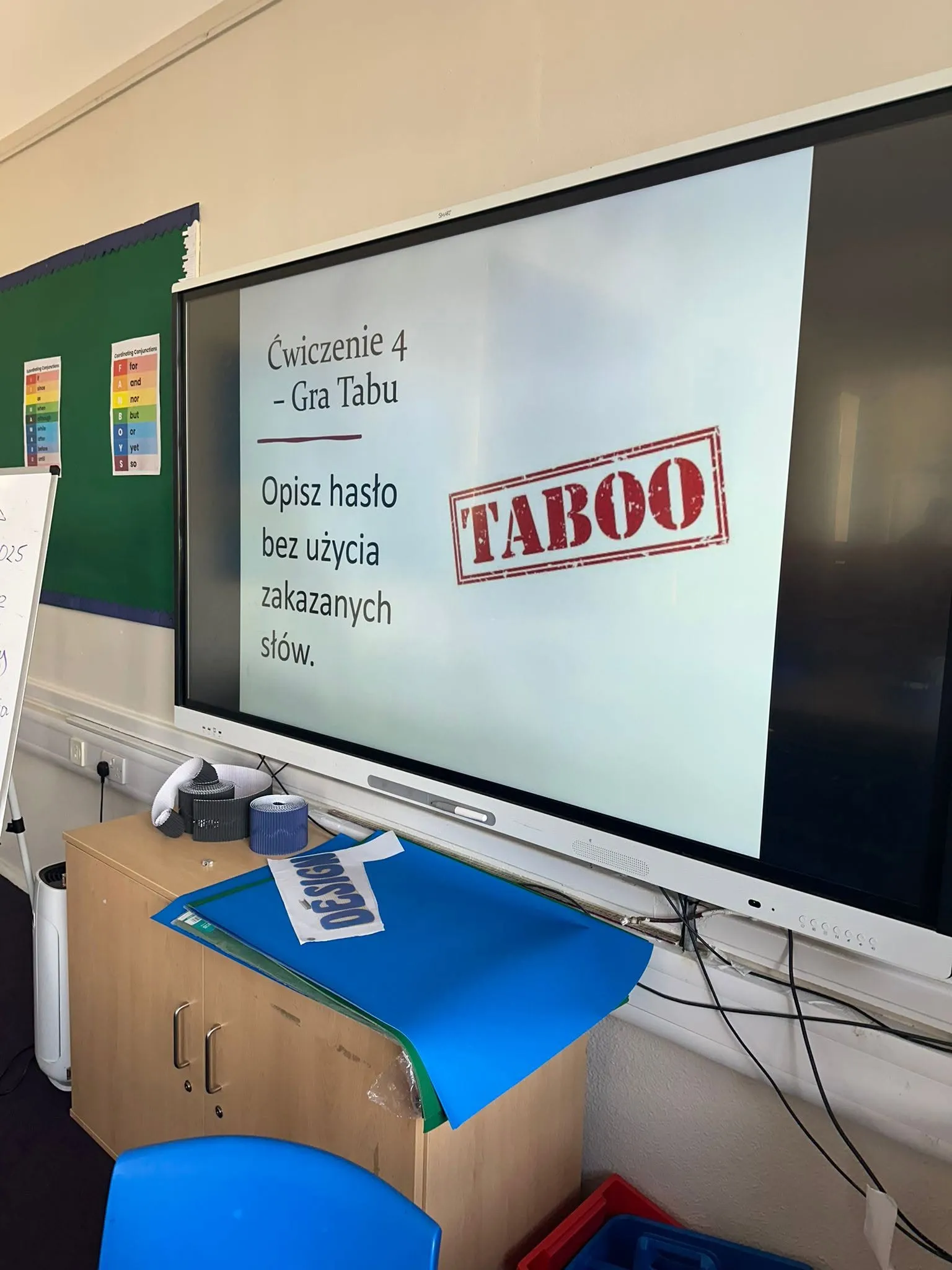
The lesson featured a running dictation – an exercise in which one person memorises part of a text placed away from the desk and dictates it to a partner. There was also a game of Taboo, in which players have to describe a word, for example ‘propaganda’, without using any of the forbidden words. The students matched quotations from the film with the words that best captured their emotion and meaning; they translated, defined, wrote their own sentences and compared nuances of meaning between Polish and English. In one exercise, groups composed a short commentary on the film from a set of words such as ‘tajemnica – propaganda – pamięć’ (secret – propaganda – memory). Exercises like these prepare students to speak and write confidently about film and history.
A bit of history, a bit of linguistics and plenty of good energy – just the way we like to learn at our school.