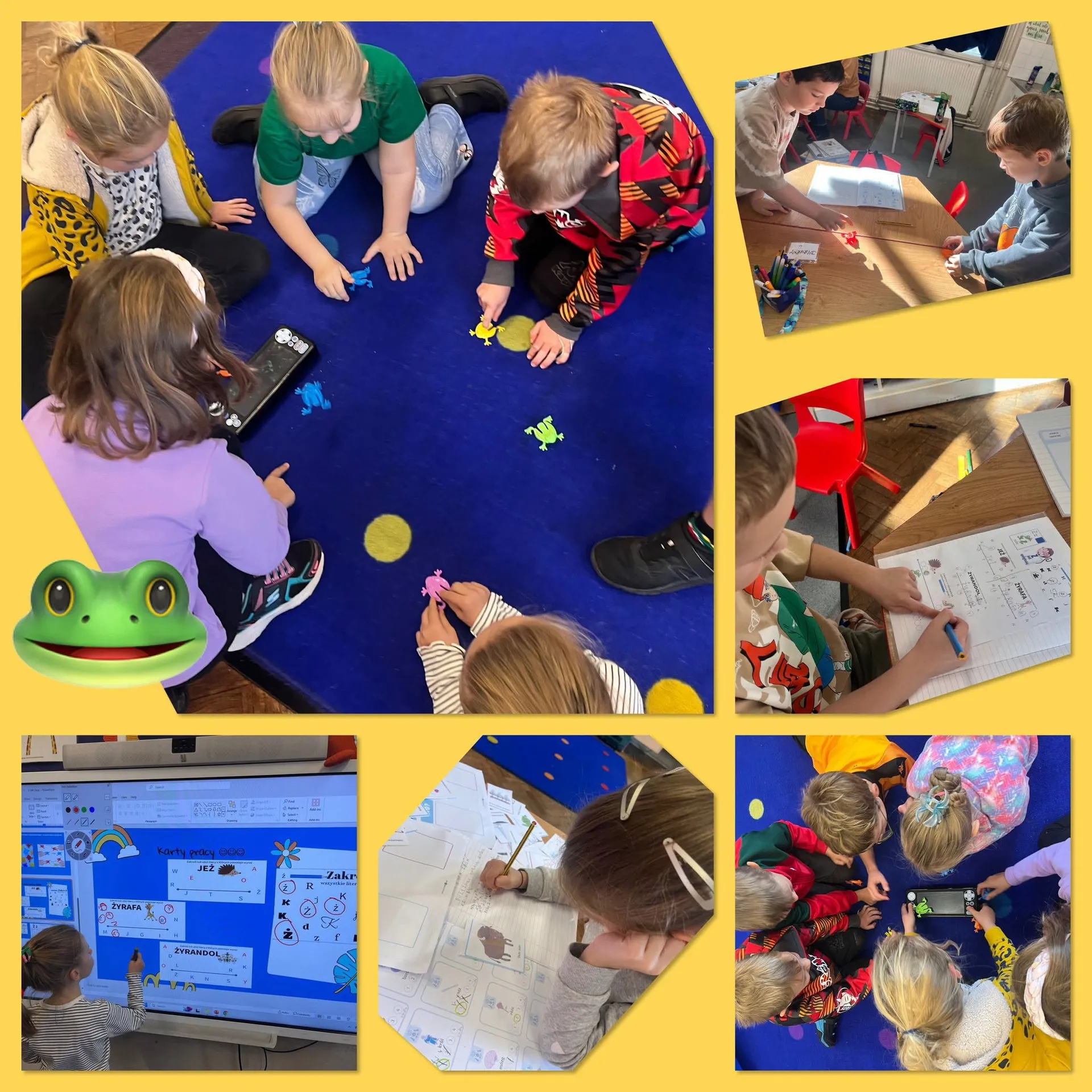


Is a frog green, or perhaps yellow? How does a giraffe sleep? How many spines does a hedgehog have? Does a bison like cranberries? Questions like these accompanied a playful and lively Saturday in one of our classes, devoted to the ż sound.
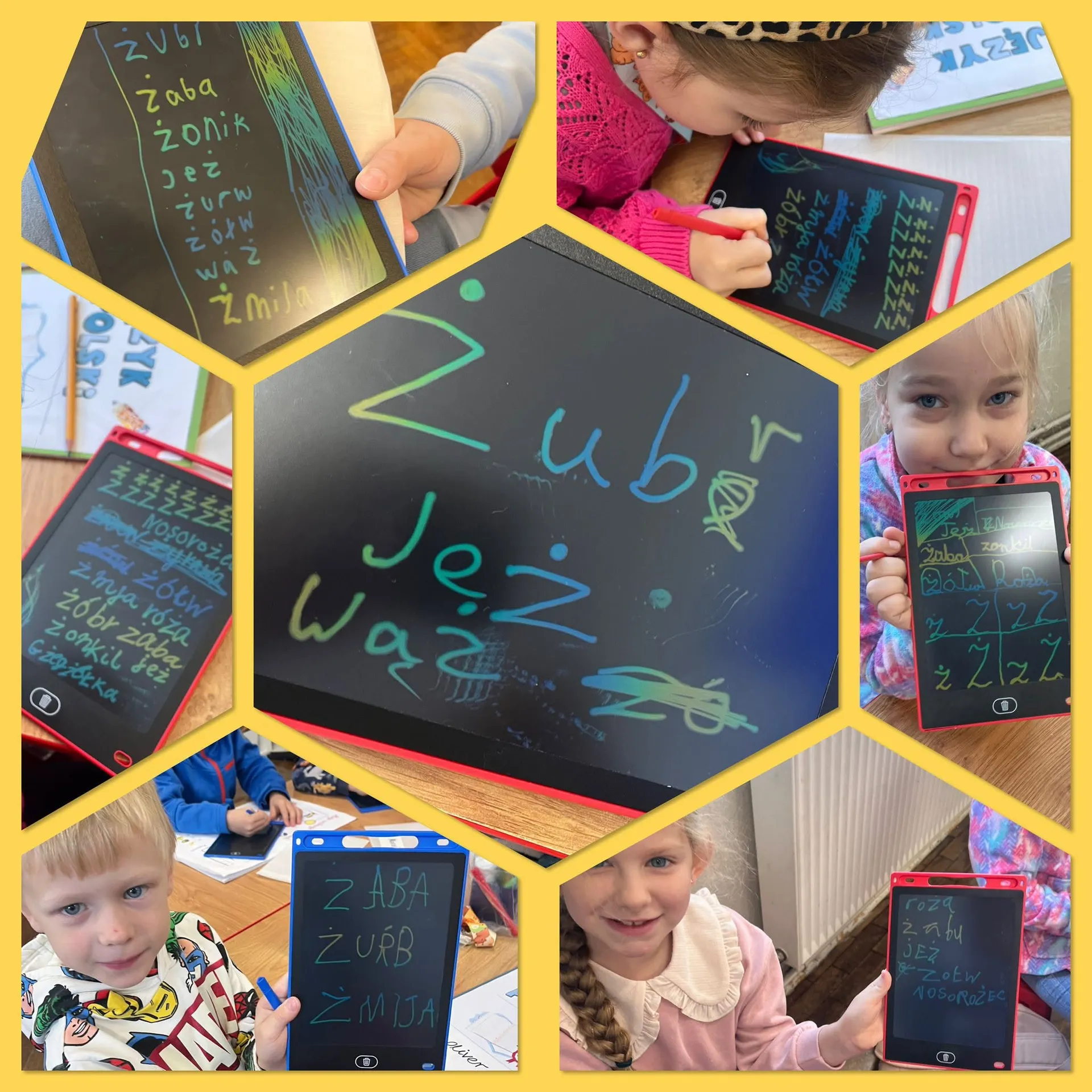
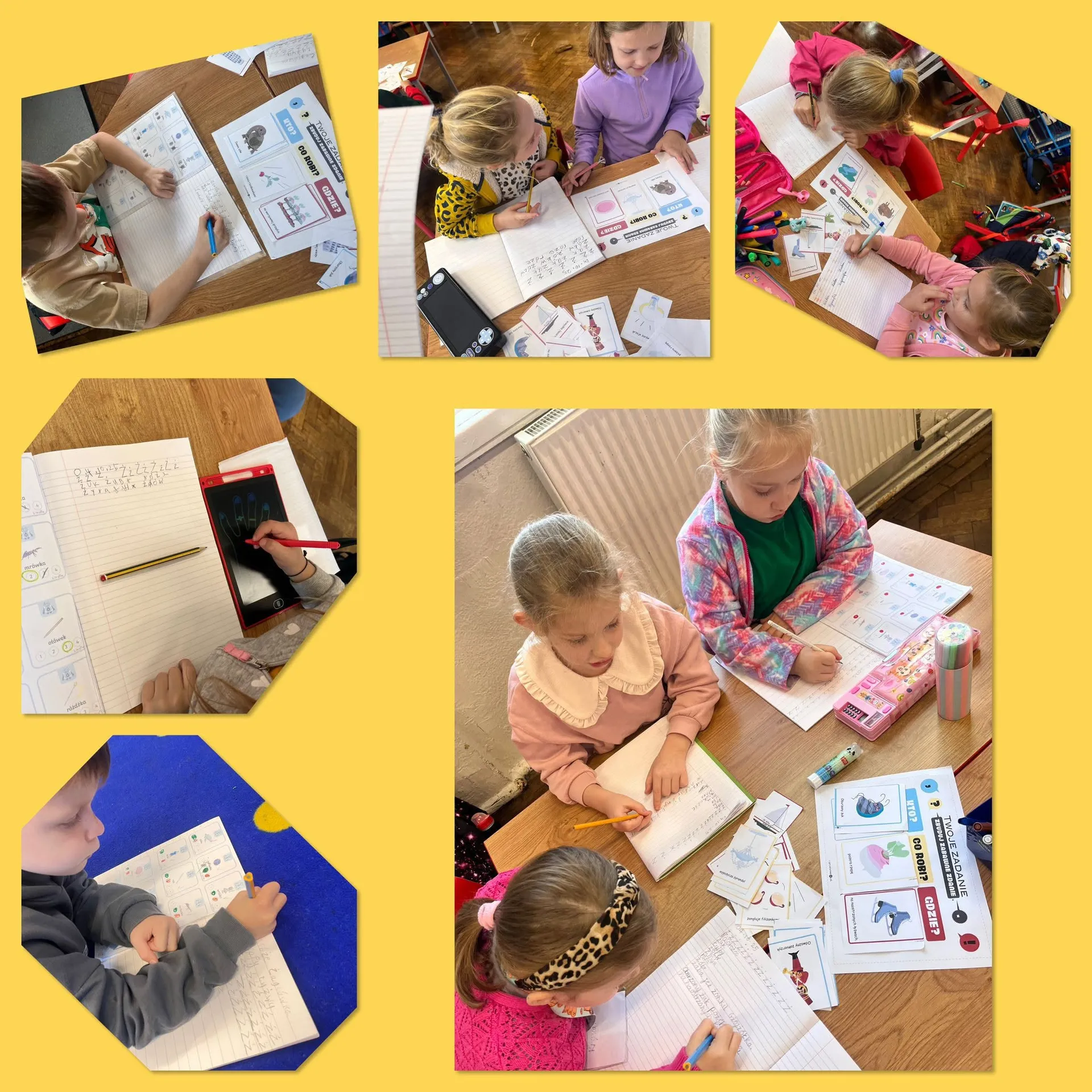
A great deal of effort, but also plenty of laughter, went into making up funny sentences in groups, following the pattern: who? – does what? – where? Is it possible for ‘duży żubr żonglował filiżankami na żółtym leżaku’ (a big bison to juggle teacups on a yellow deckchair)? In a Polish lesson, absolutely. The pupils also wrote words containing ż, such as ‘żubr’ (bison), ‘jeż’ (hedgehog) and ‘wąż’ (snake), on magic slates and completed exercises on the interactive whiteboard.
The ż sound is tricky to spell because the digraph rz sounds exactly the same. Alternation can help: we write ż, among other cases, when in other forms of the word or in related words it alternates with g, h or z – as in the pairs ‘noga – nóżka’, ‘druh – drużyna’ and ‘mazać – mażę’. In many words, such as ‘żaba’ (frog) or ‘żubr’, the spelling simply has to be memorised, which is why games in which these words are repeated many times are so valuable.
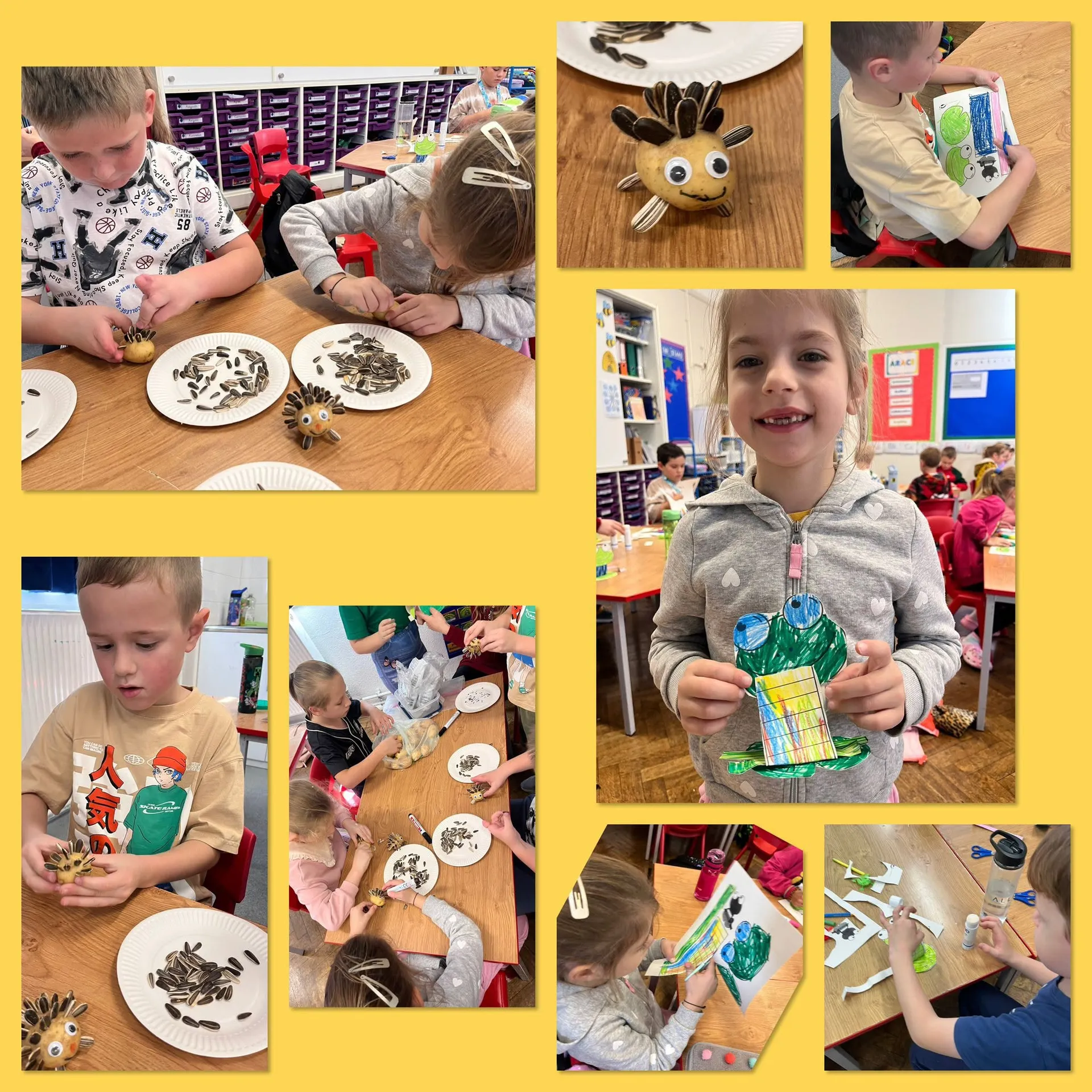
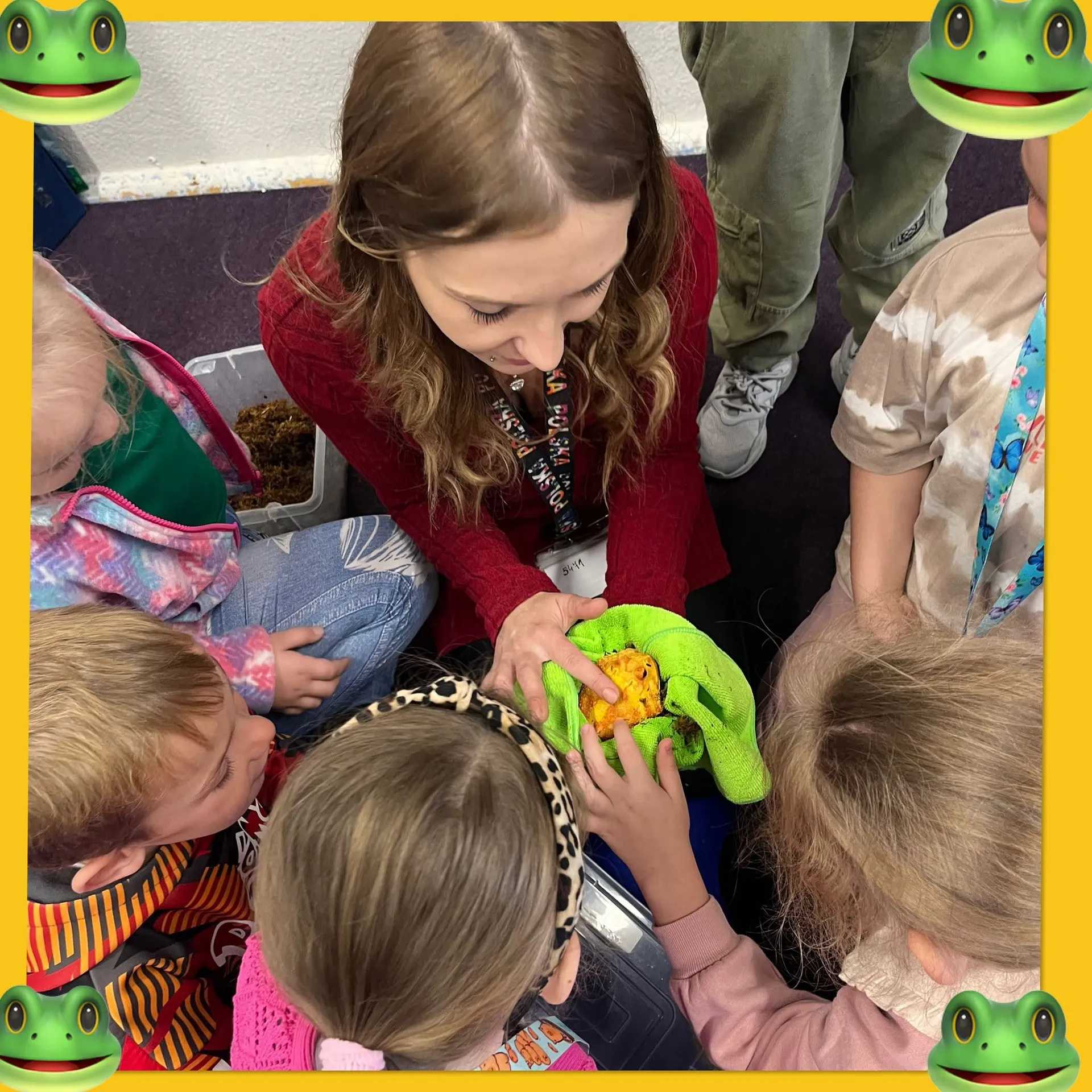
The pupils made paper frogs as well as hedgehogs from potatoes and sunflower seeds. There was also a competition for the highest-jumping frog. The real surprise, however, was a live yellow frog: Ms Gosia once again amazed the pupils by bringing it to the lesson.
More photos from this lively Saturday can be seen in the gallery.