

Saturday’s lesson in one of our classes was devoted to a new sound written with the digraph ‘rz’, and the lesson plan was shaped by Julian Tuwim’s well-known poem ‘Rzepka’ (‘The Turnip’), which begins with the words:
Grandpa planted a turnip in the garden, and went to look at that turnip every day. – Julian Tuwim, ‘Rzepka’
A turnip in the classroom and a vegetable tasting
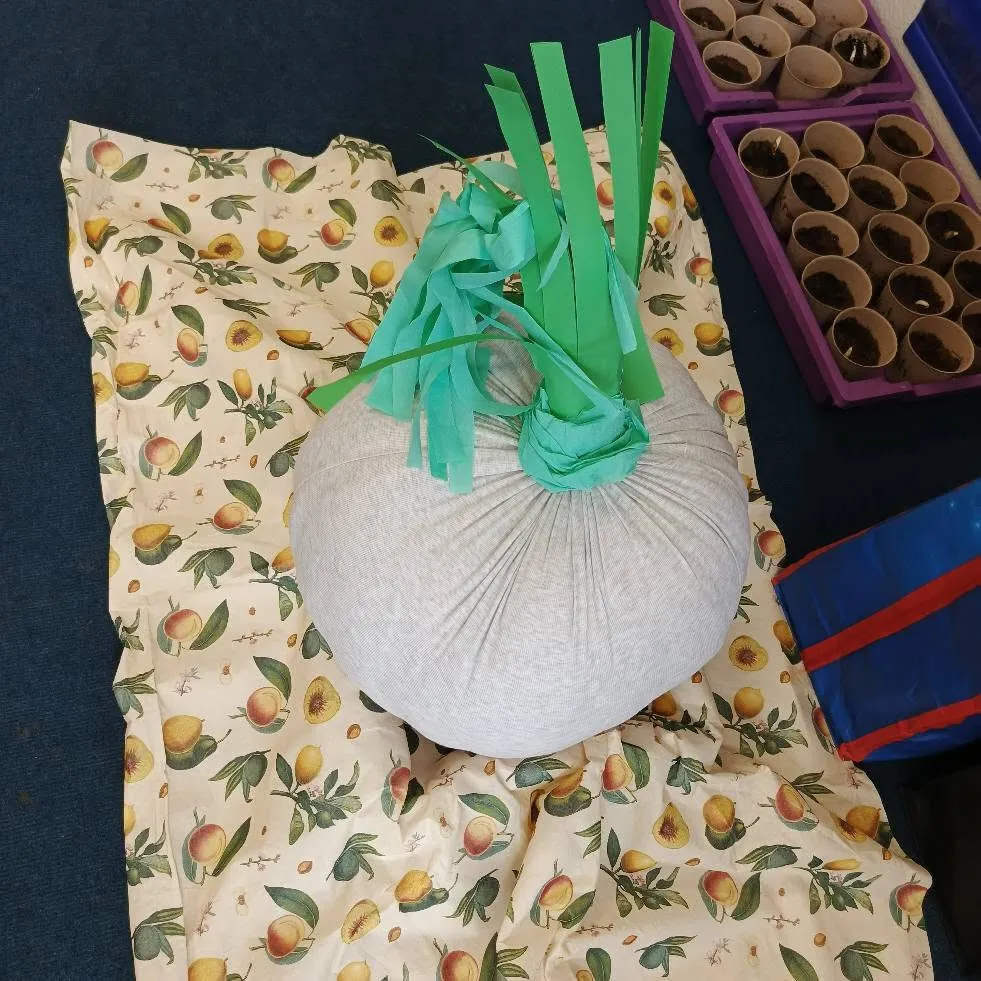
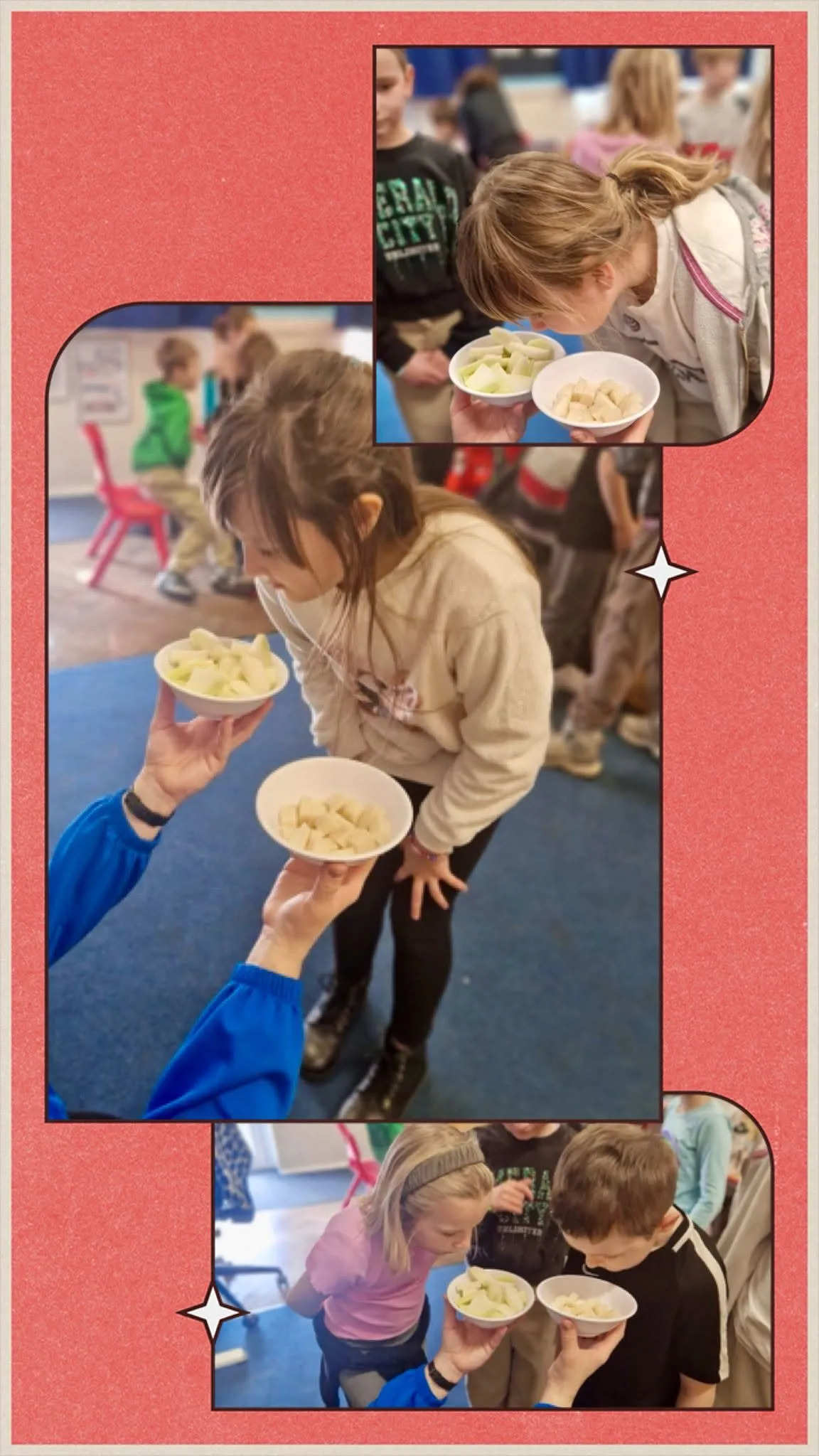
In the middle of the classroom grew a beautiful, sturdy, gigantic turnip – a prop recalling Grandpa’s garden from the poem. The children also encountered real vegetables: using smell and taste, they got to know turnip and kohlrabi, which are very healthy and contain many vitamins. The pupils also worked with word cards and worksheets, consolidating how to write the new sound.
Why ‘rz’ needs care
In pronunciation, the digraph ‘rz’ represents the same sound as the letter ‘ż’, so the correct spelling cannot be decided by ear. The alternation rule often helps: we write ‘rz’ when an ‘r’ appears in another form of the same word or in a related word – as in the pairs ‘góra – na górze’ (mountain – on the mountain) and ‘dobry – dobrze’ (good – well). A second clue concerns the neighbouring letters: after the consonants ‘b’, ‘p’, ‘d’, ‘t’, ‘g’, ‘k’, ‘ch’, ‘j’ and ‘w’ we usually write ‘rz’, hence ‘krzepka’ (sturdy) and ‘trzy’ (three). The spelling of many other words, such as ‘rzepka’, simply has to be memorised – and this is exactly where poems and games help.
Staging the poem
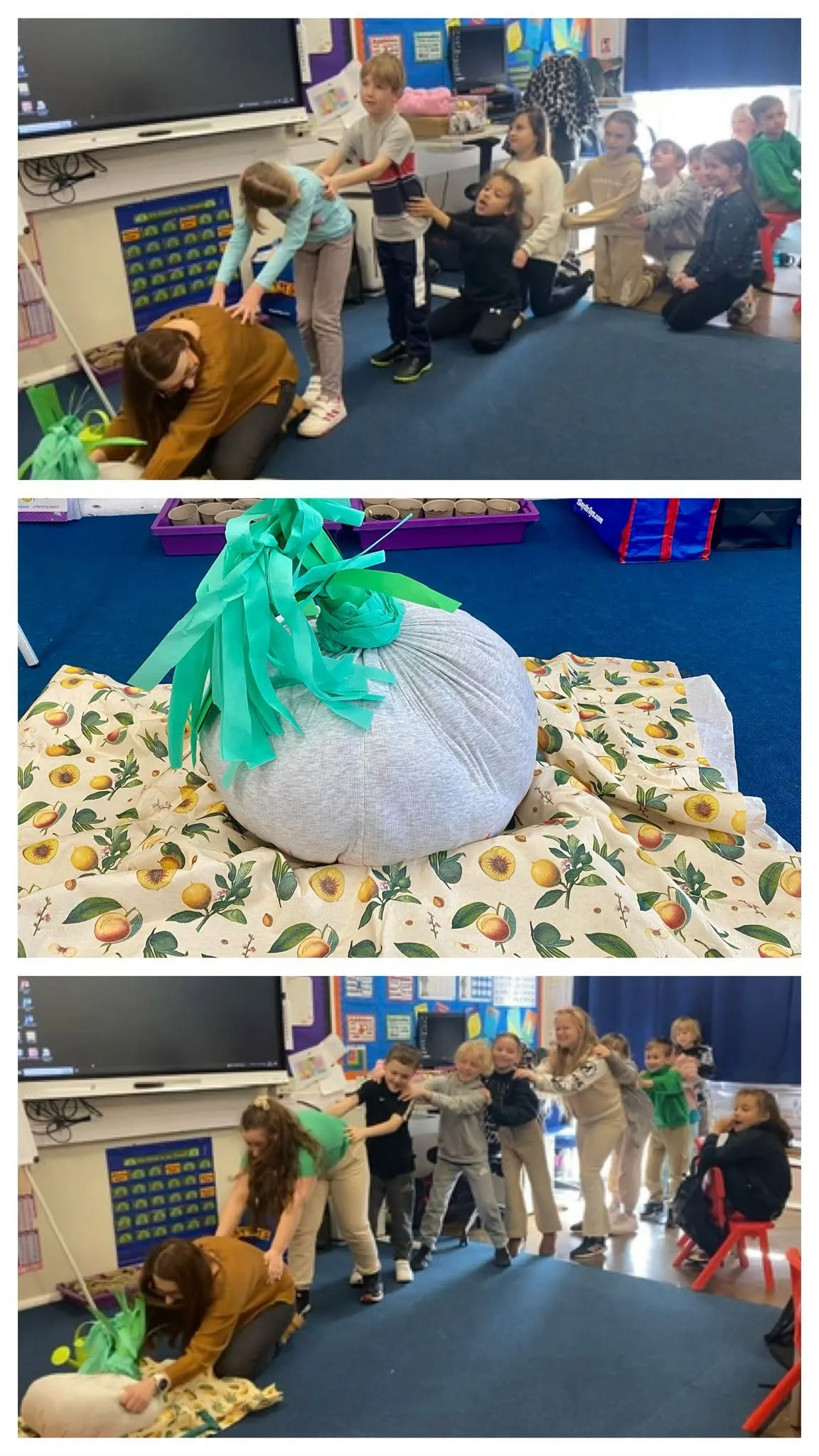
Tuwim’s poem has a chain structure: one helper after another joins Grandpa as he pulls at the turnip, and the repeated rhythm makes the text easy to remember and act out. At the end of the lesson, the pupils staged this amusing poem – lined up one behind the other, they pulled the turnip out together. The children thoroughly enjoyed it. More photographs from the lesson can be found in the gallery.