

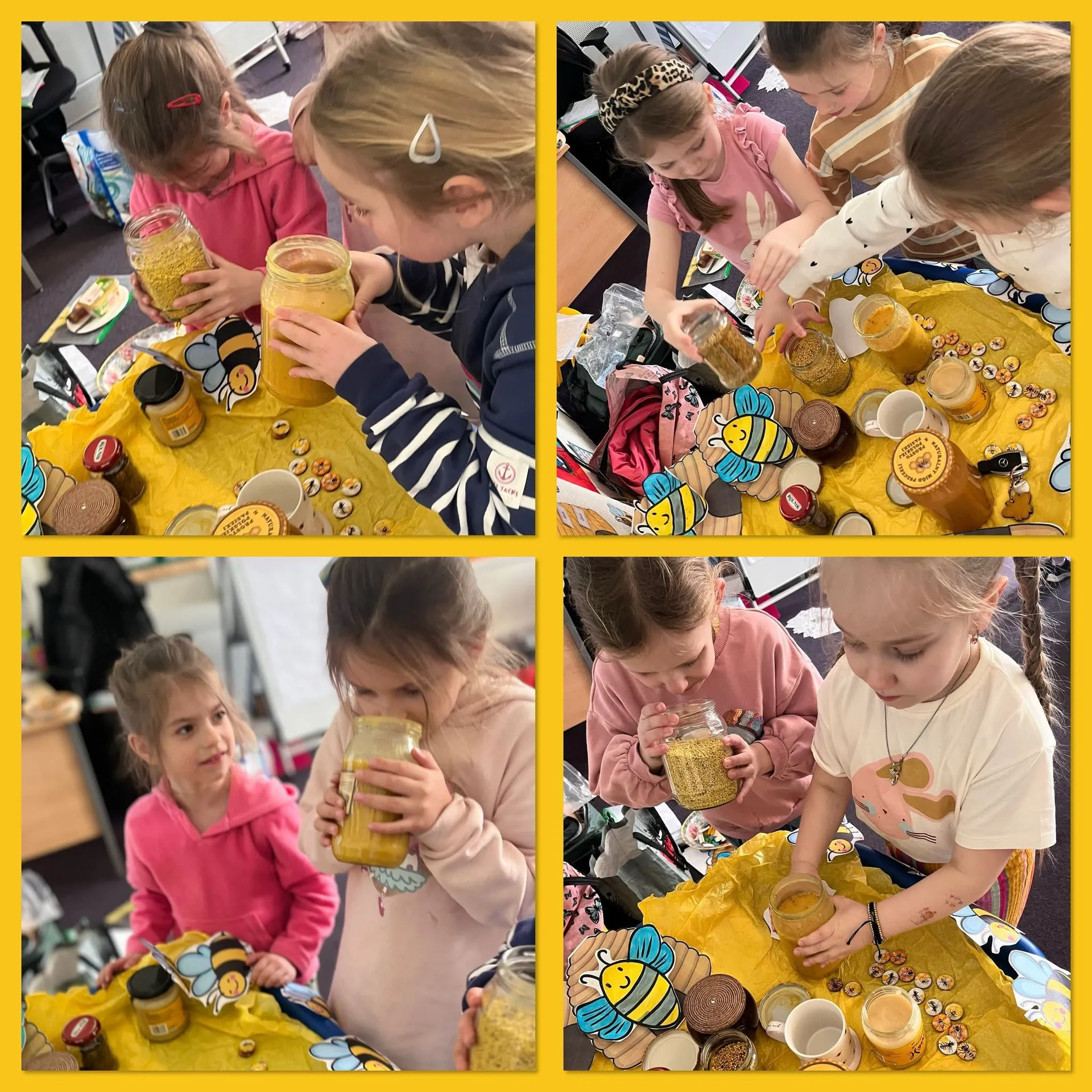
This Saturday’s lessons were all about bees. The classroom was buzzing like a hive, and the pupils – like busy little bees – surpassed themselves.
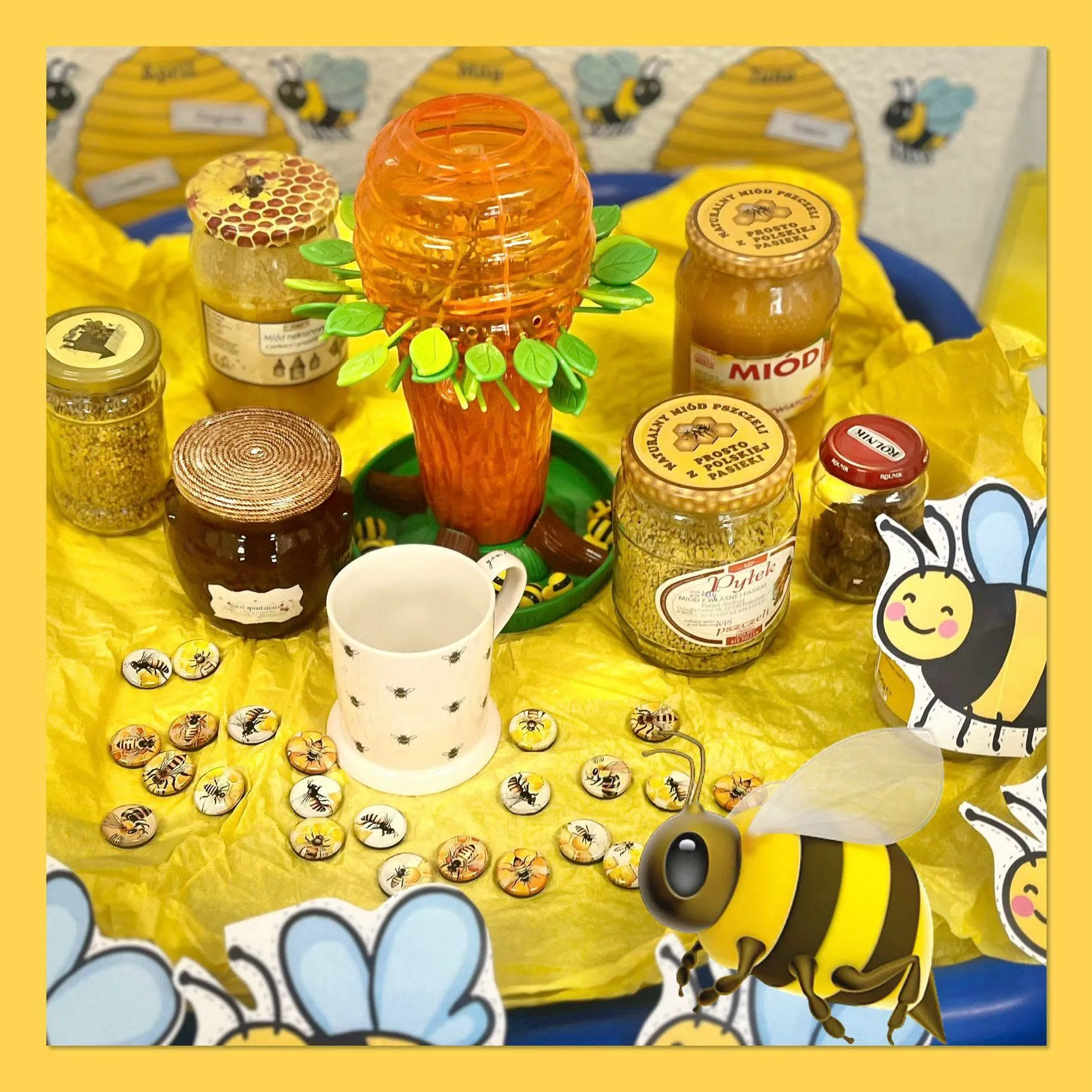
The children learnt about different types of honey and bee pollen, and even saw what bee glue, or propolis, looks like. It is a resinous substance that bees collect from tree buds and use to seal and protect the hive. Jars of honey and pollen, displayed on a yellow cloth among wooden bees, could be examined up close.
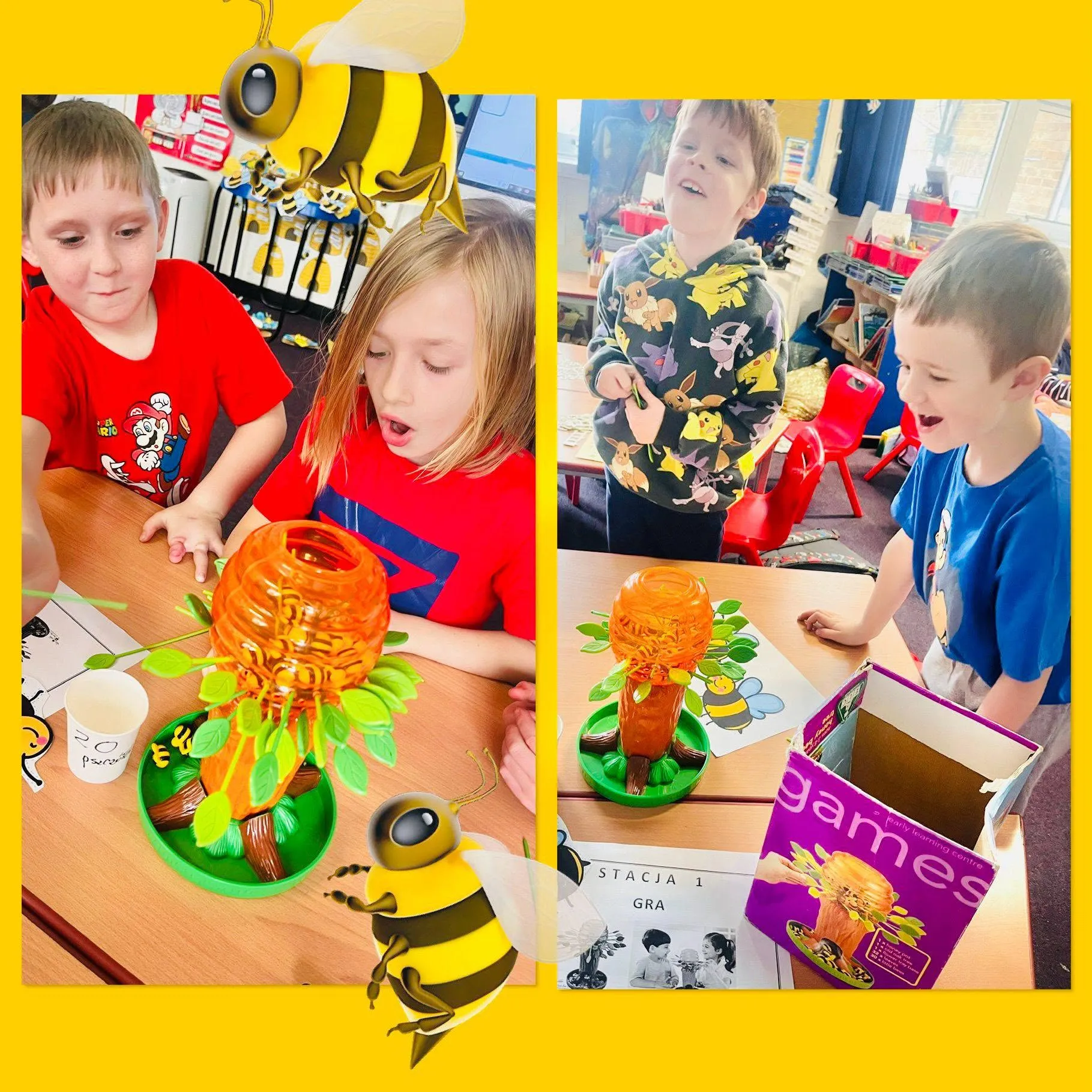
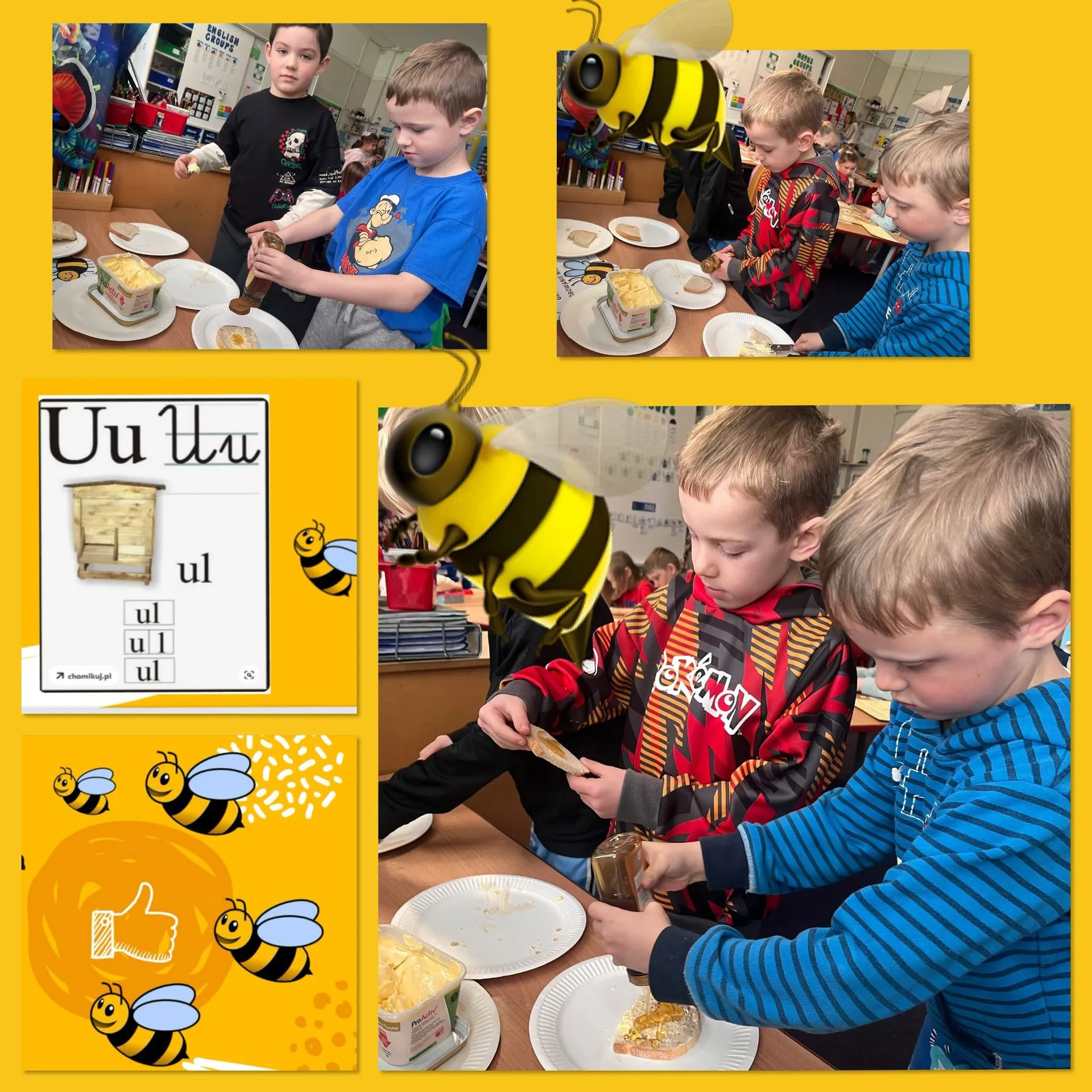
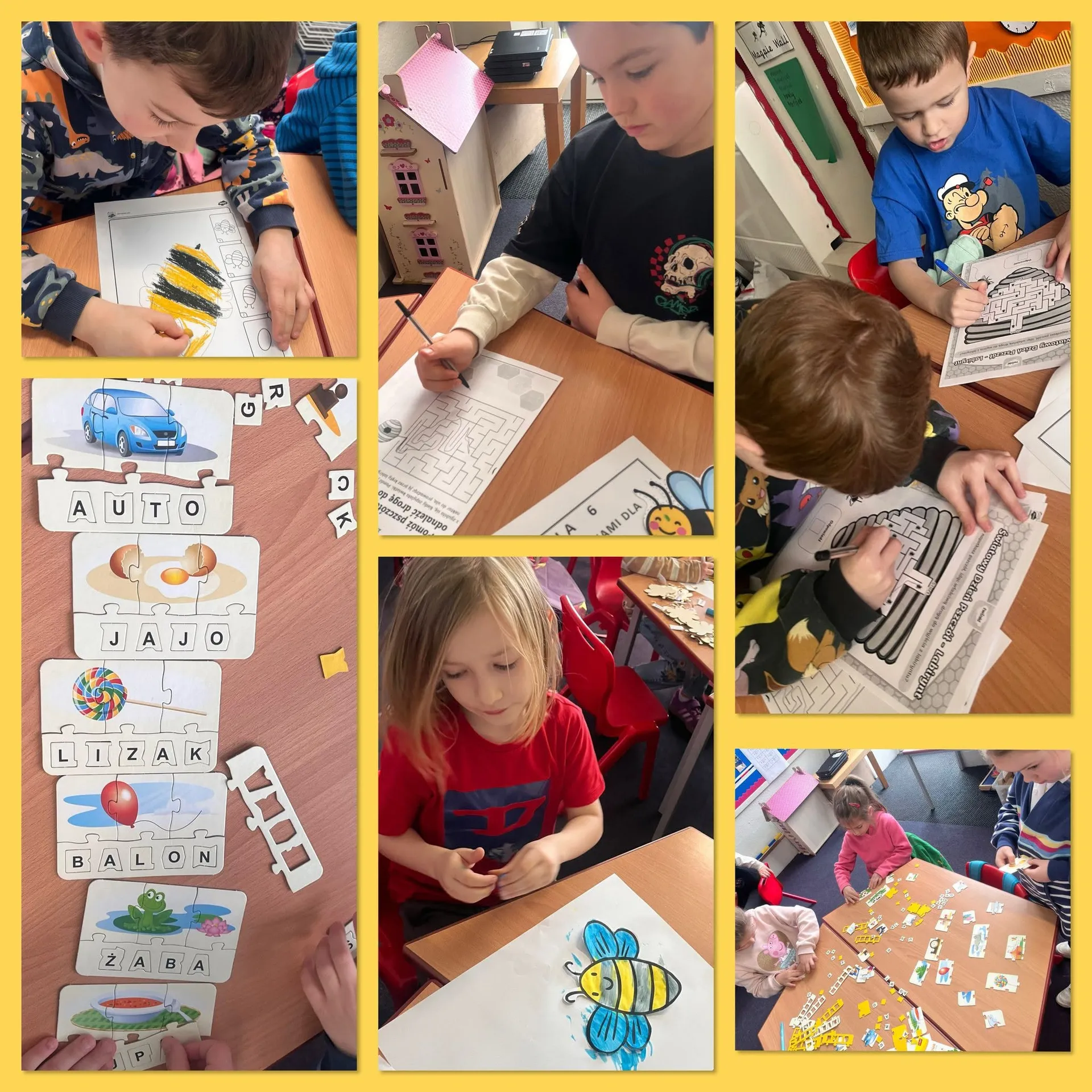
The pupils also worked at seven activity stations, spending ten minutes at each. They played games, painted, decorated wooden bees, solved quizzes and made words from jumbled letters. They also learnt, step by step, how to draw a bee. This way of working, with frequent changes of task and place, combines learning with movement and helps the youngest pupils stay focused. To finish, the children made their own honey sandwiches – it was fun and, quite literally, sweet.
And which sound and letter did the pupils learn that day? U, as in ‘ul’ (beehive). This is a good opportunity to recall a spelling rule: at the beginning of a word, Polish uses ‘u’ rather than ‘ó’ – there are only a few exceptions, such as ‘ósmy’ (eighth), ‘ósemka’ (the number eight) and ‘ówczesny’ (of that time). More photographs from the bee stations can be viewed in the gallery.