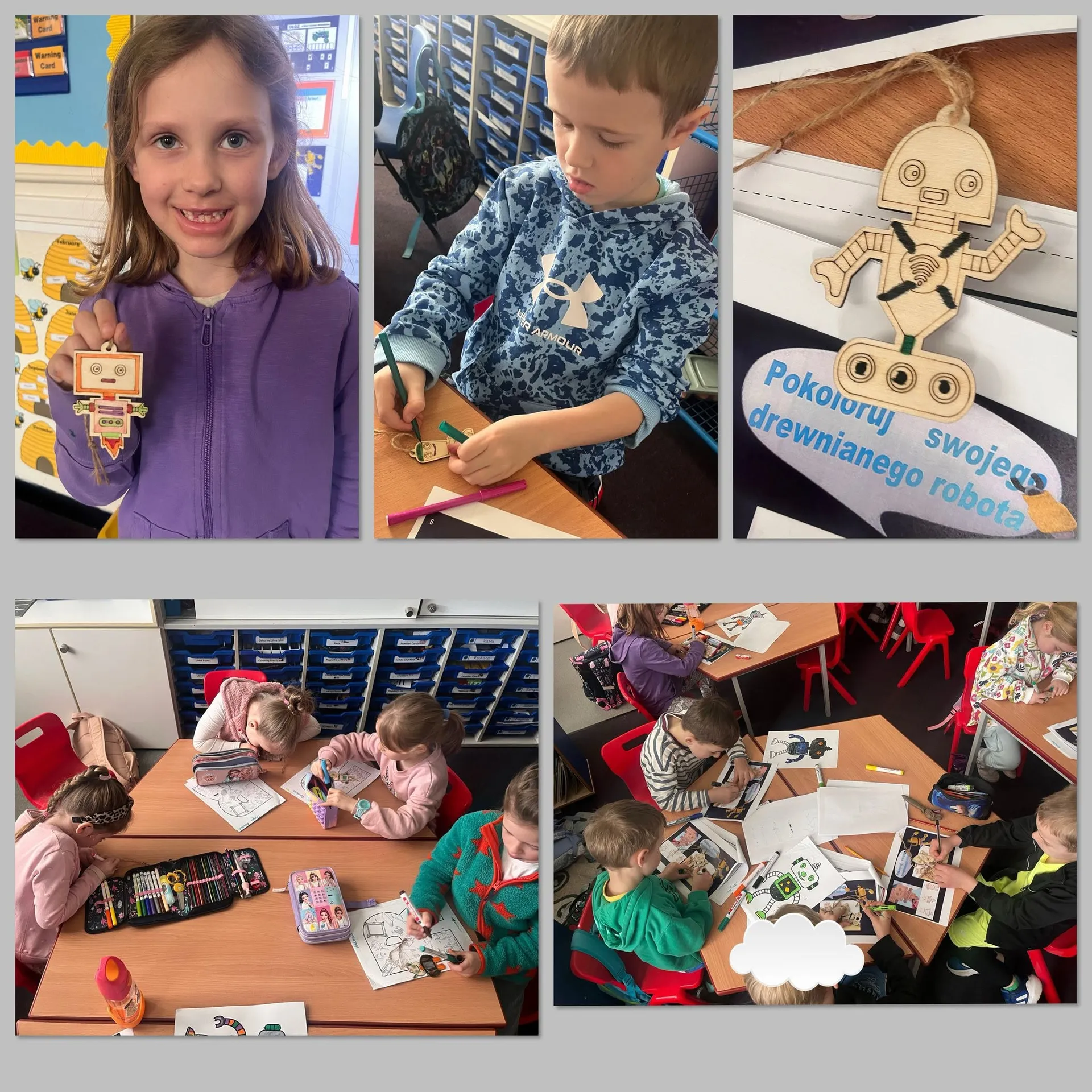


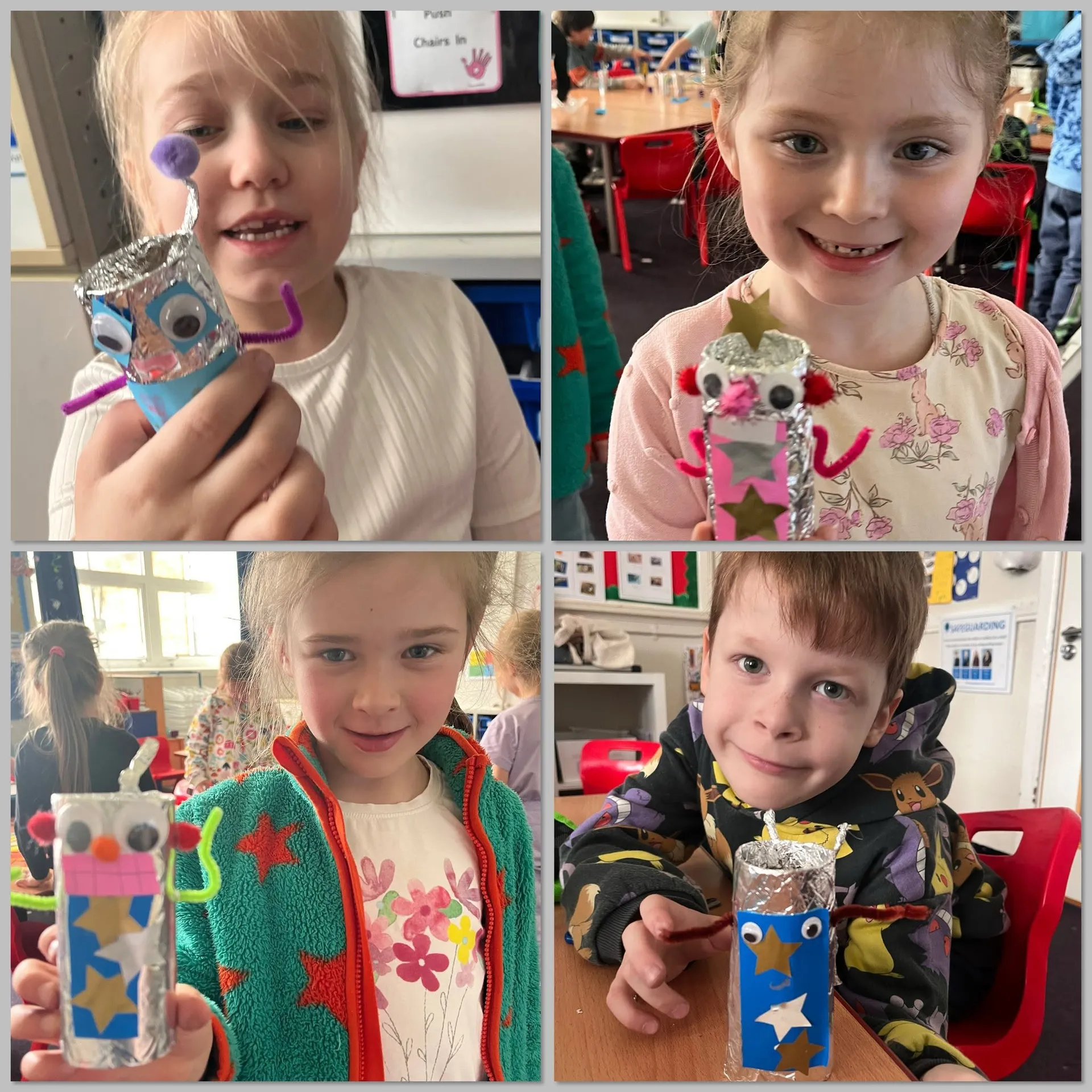
Robots were the stars of Saturday’s lessons in one of our classes. They helped the pupils learn the sound R – the one at the beginning of the word ‘robot’.
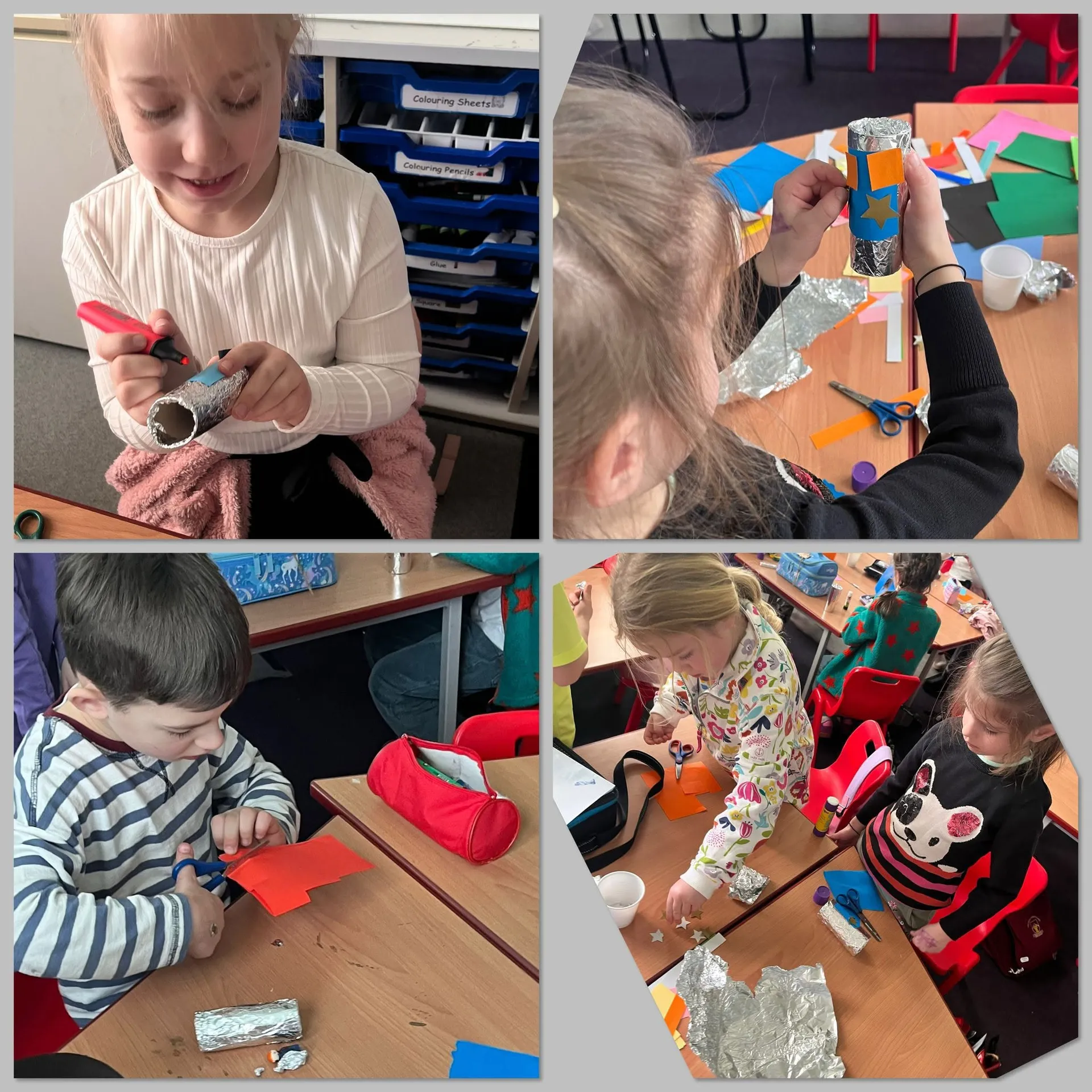
The children danced with robots and painted wooden robot figures, and also built their own creations from cardboard tubes, aluminium foil, coloured paper, pipe cleaners and googly eyes. The finished robots stood in a row on the desks.
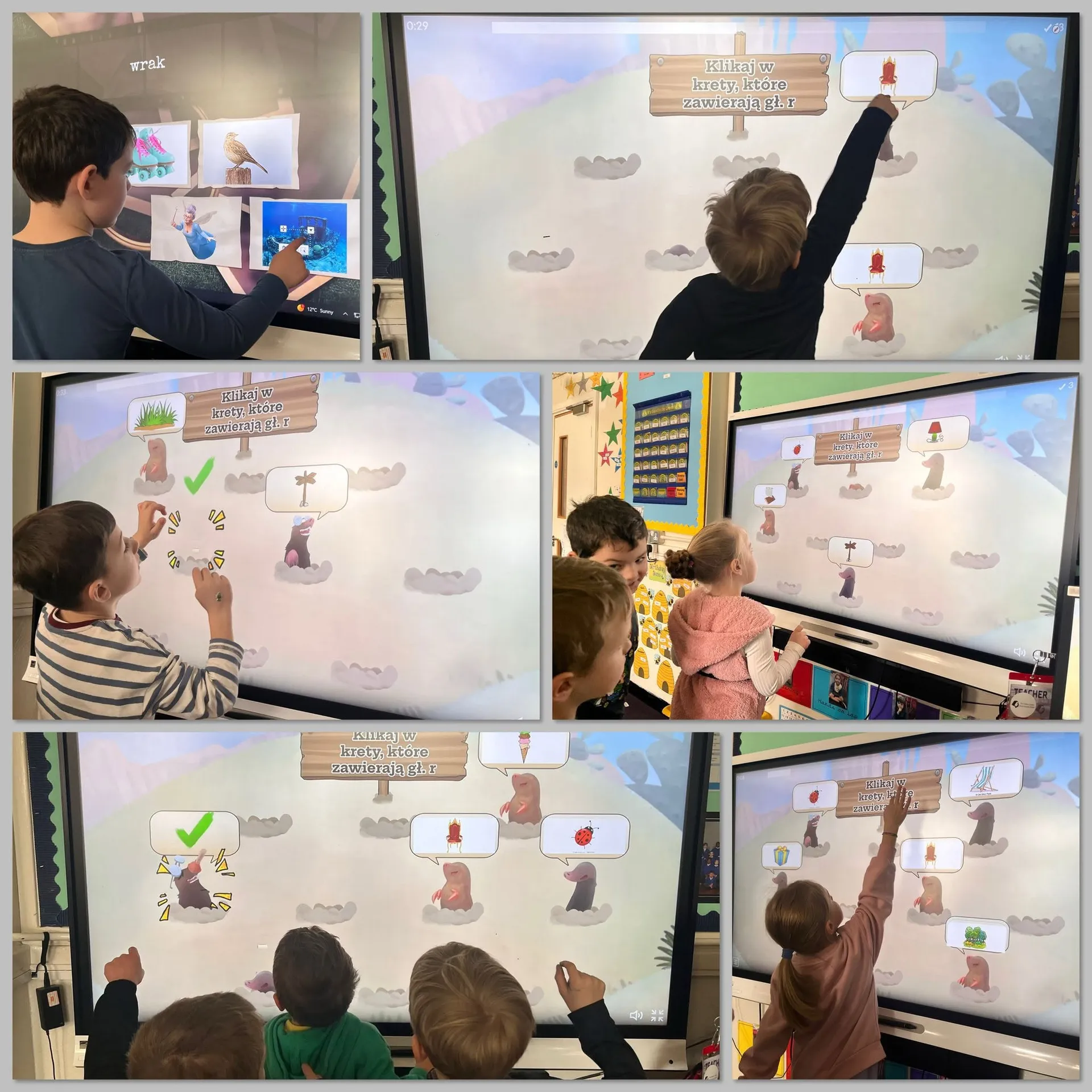
There was also plenty of reading and writing practice. At the interactive whiteboard, pupils made the names of pictures from letters, counted the syllables, sounds and letters in words, and traced letters. They completed their worksheets at lightning speed – so that there would be time left for catching moles with the letter R in a game on the interactive whiteboard.
The sound R can be a challenge for children. The Polish ‘r’ is trilled – the tip of the tongue vibrates just behind the upper teeth – and sounds distinctly different from the English ‘r’, which is why children growing up with two languages need many opportunities to hear and pronounce it. The word ‘robot’ itself has Slavic roots: it first appeared in the play ‘R.U.R.’ by the Czech writer Karel Čapek in 1920 and comes from the word ‘robota’, which in Czech meant forced labour or serfdom, while in Polish it simply means ‘work’.
The Saturday flew by. More photographs of the robots and their builders can be viewed in the gallery.