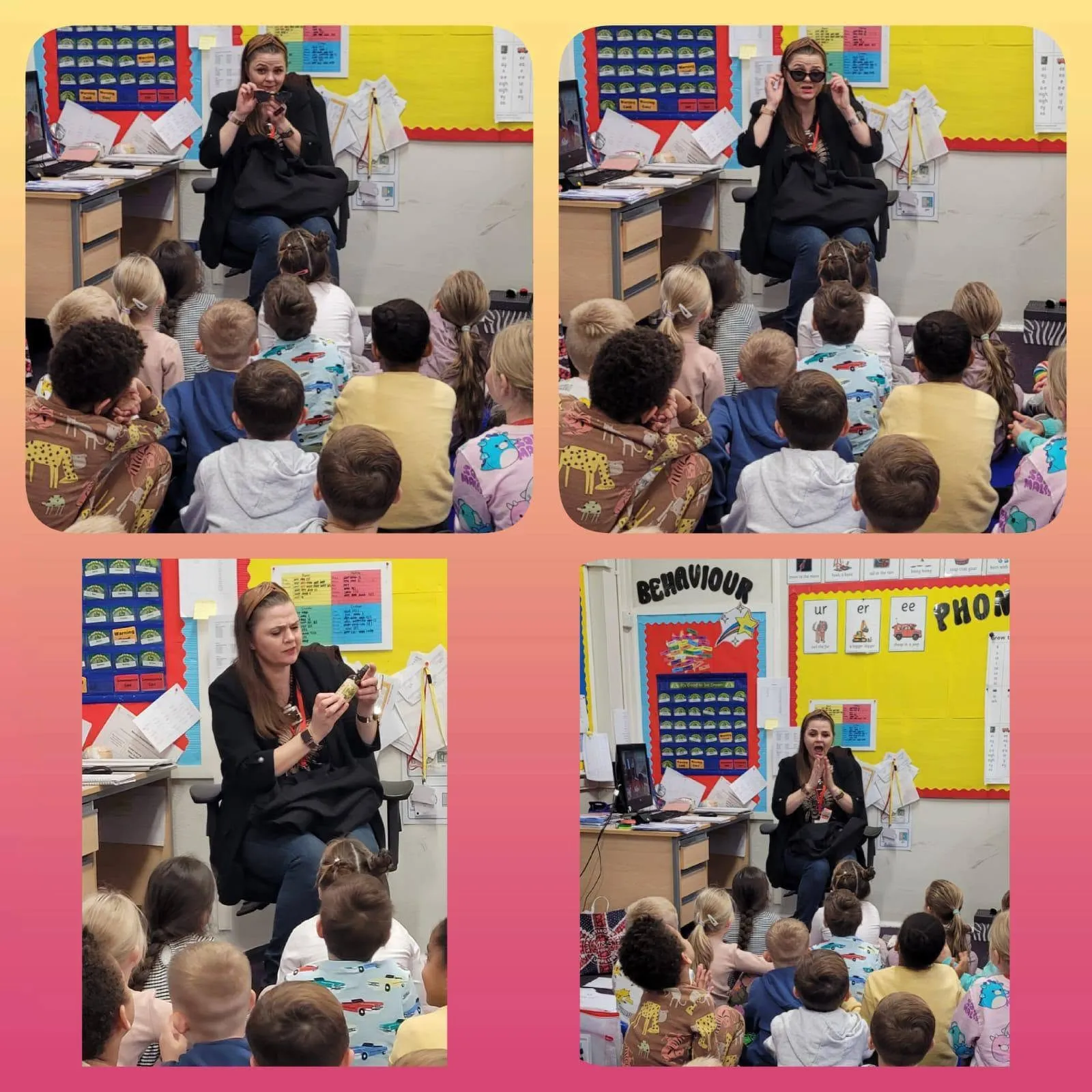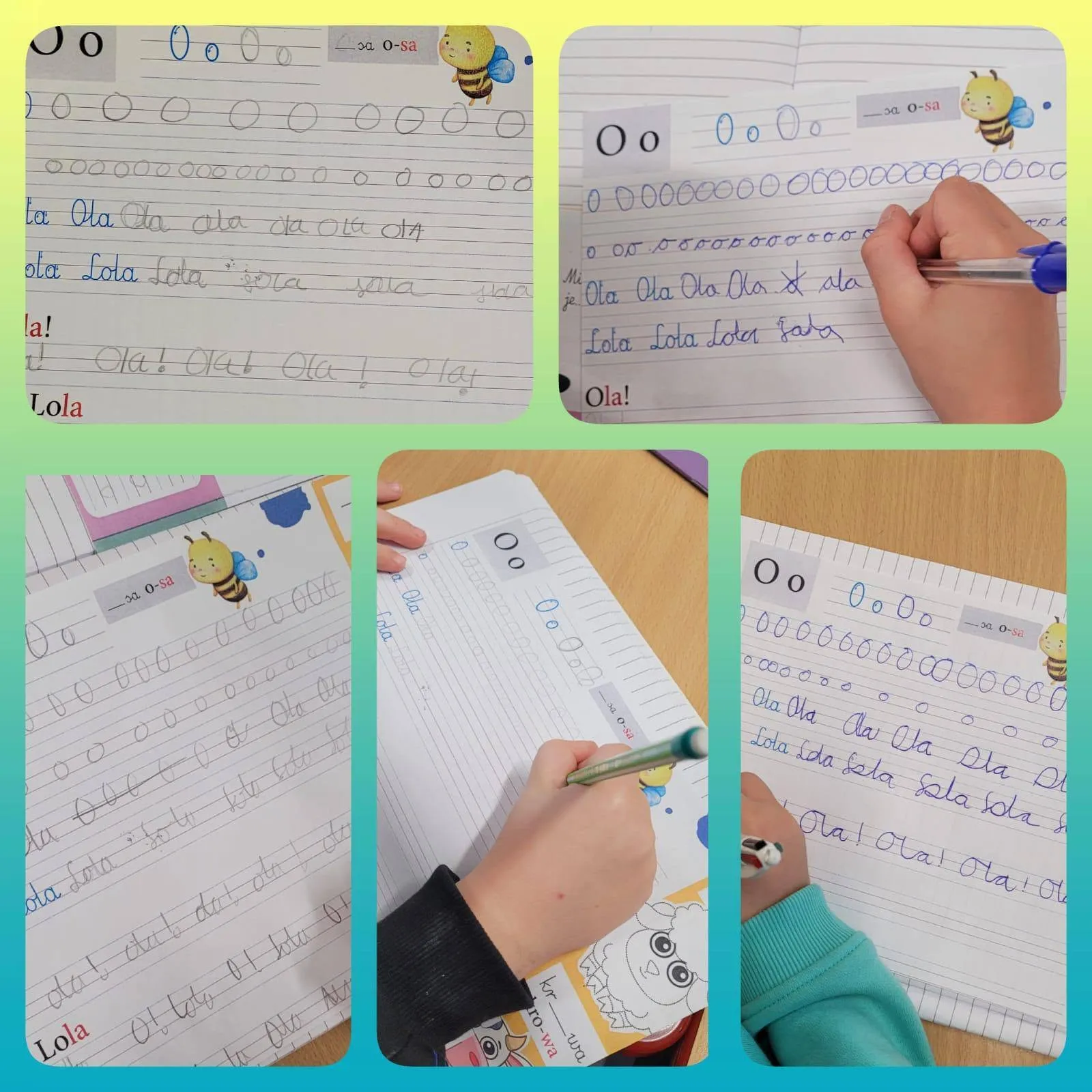


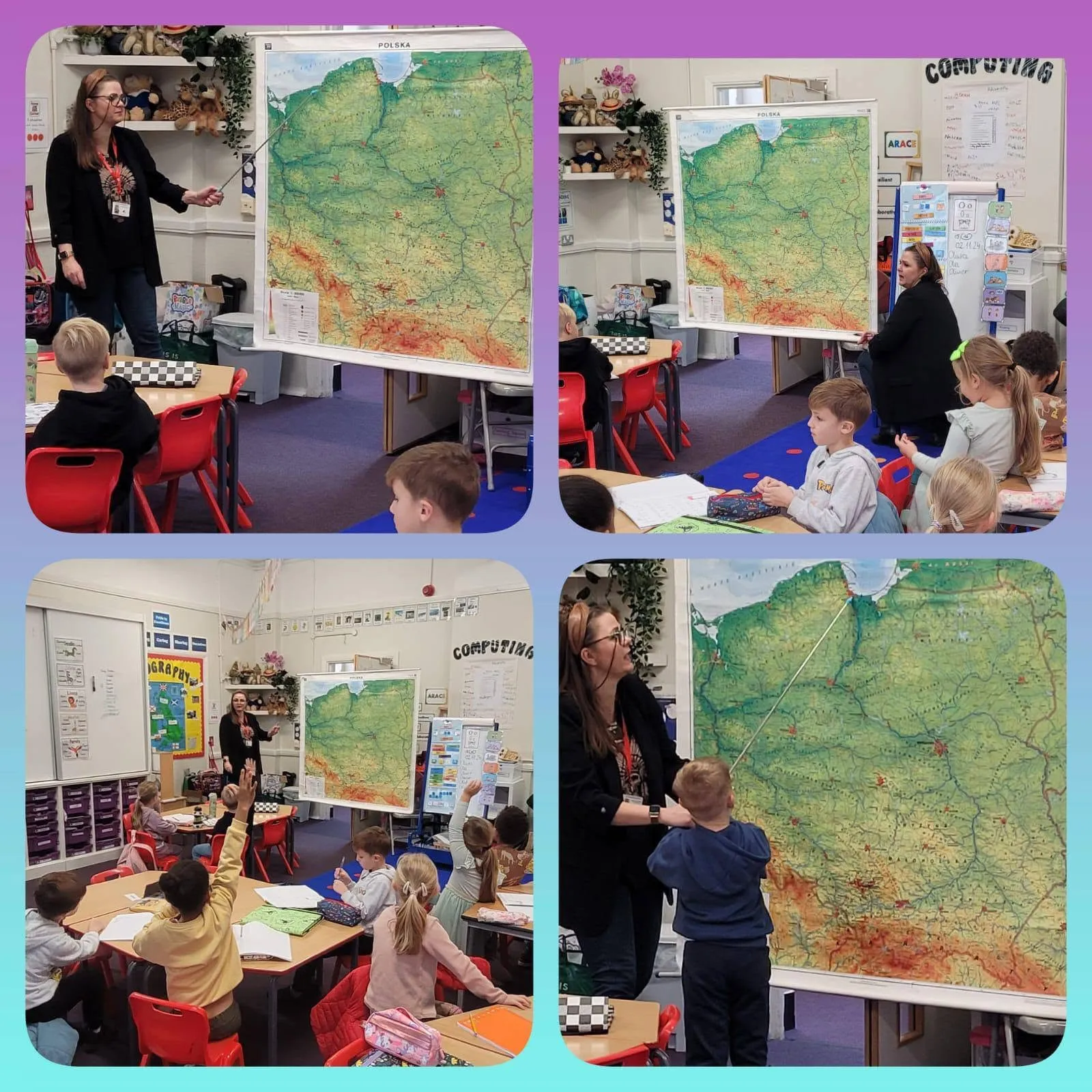
Saturday's lessons in class A2 began with learning the letter O, which in many words forms a syllable on its own – as in ‘o-gon’ (tail) or ‘o-ku-la-ry’ (glasses).
The magic bag and the map of Poland
In the ‘magic bag’, objects beginning with O were waiting. The pupils guessed their names together and divided the words into syllables, e.g. obrus (tablecloth), ołówek (pencil), ogórek (cucumber), okulary (glasses), oczy (eyes), ogon (tail), orzeł (eagle), olejek (oil), opaska elastyczna (elastic bandage) and odżywka (conditioner). The class then learnt about Poland's borders and its neighbours – Germany, the Czech Republic, Slovakia, Ukraine, Belarus, Lithuania and Russia – and found cities beginning with O, including Olsztyn, Ostrołęka, Ostróda and Opole.
The children listened to Ms Jola and, together with her, divided more words containing the letter O into syllables, and then read Julian Tuwim's poem ‘Okulary’ (‘Glasses’). Its hero, Mr Hilary, searches for his glasses, which are on his nose the whole time. The class concluded that each of us sometimes looks for something – just like Mr Hilary. The lessons were rounded off with worksheets and a song about the newly learnt letter, which got everyone moving.
Remembering our loved ones
After the lunch break, the conversation was about longing. The children were keen to talk about whom and what they miss: some their grandmas and grandads, relatives and cousins, others Poland and their grandma's cooking. The class discussed which Polish holidays fall on 1 and 2 November and watched a short report on how they are observed in Poland and in other countries. In Polish tradition, All Saints' Day and All Souls' Day are a time for visiting the graves of loved ones and lighting grave candles (znicze), and the evening glow of thousands of lights in cemeteries is one of the most characteristic images of the Polish autumn.
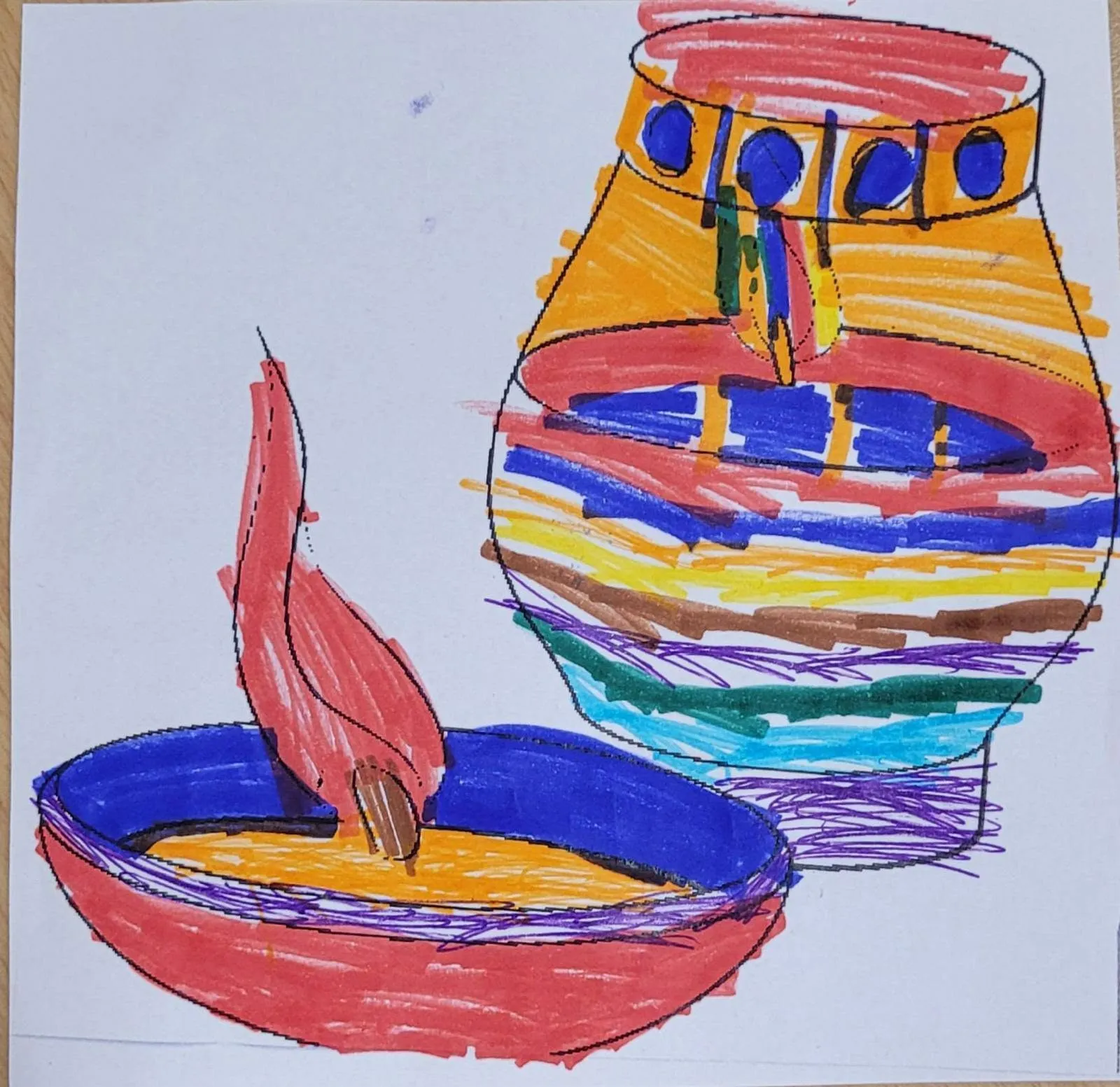
Finally, the pupils coloured in drawings of grave candles – as a sign of remembrance of the loved ones whose graves they had not been able to visit.