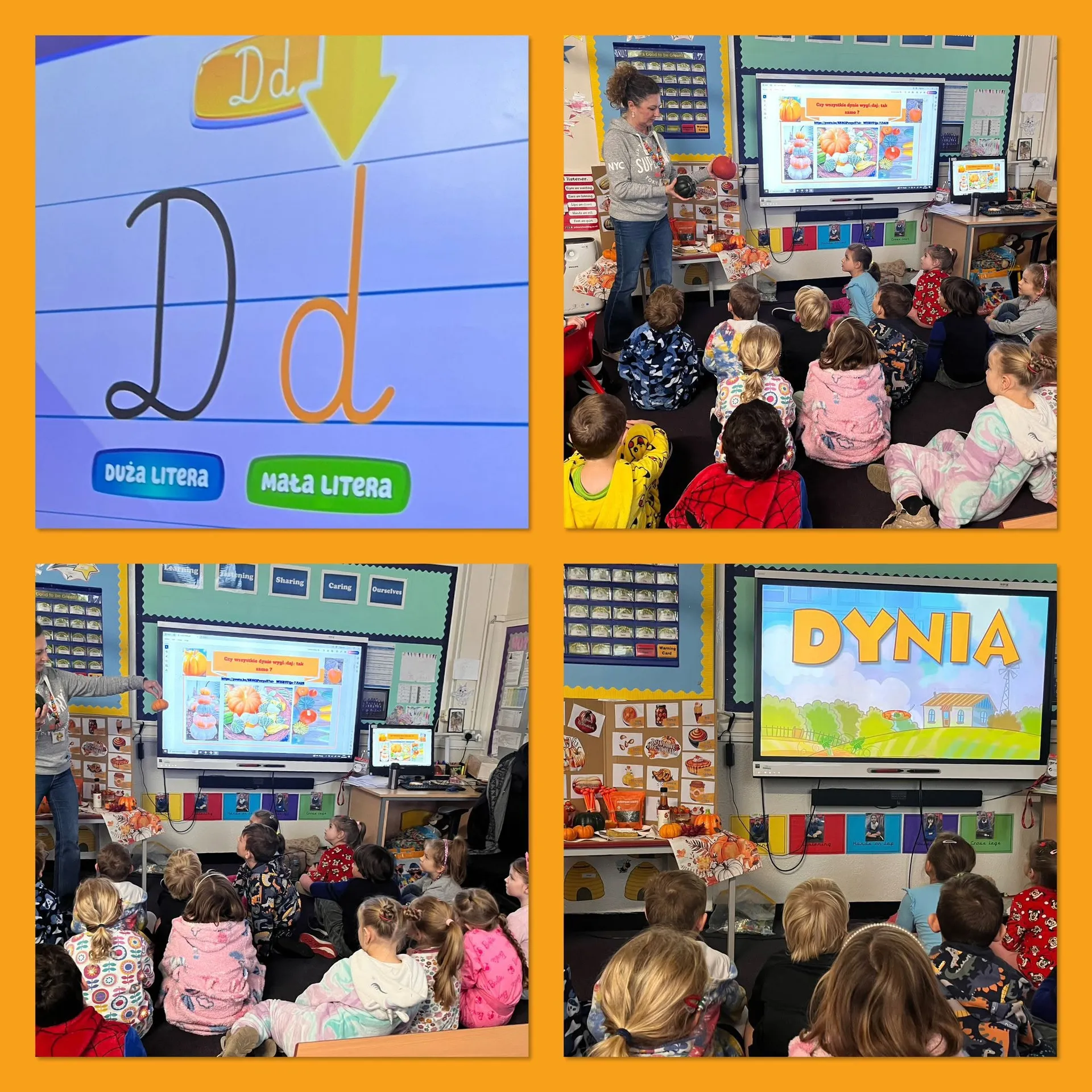


Saturday's lesson was all about pumpkins. What can you make from one? Is it healthy? Is it a vegetable or a fruit? The lesson revolved around questions like these, and it was visited by Dynia Dorotka (Dorotka the Pumpkin), accompanied by a variety of different pumpkins. Pupils learnt lots of interesting facts about pumpkins.
See, touch and taste
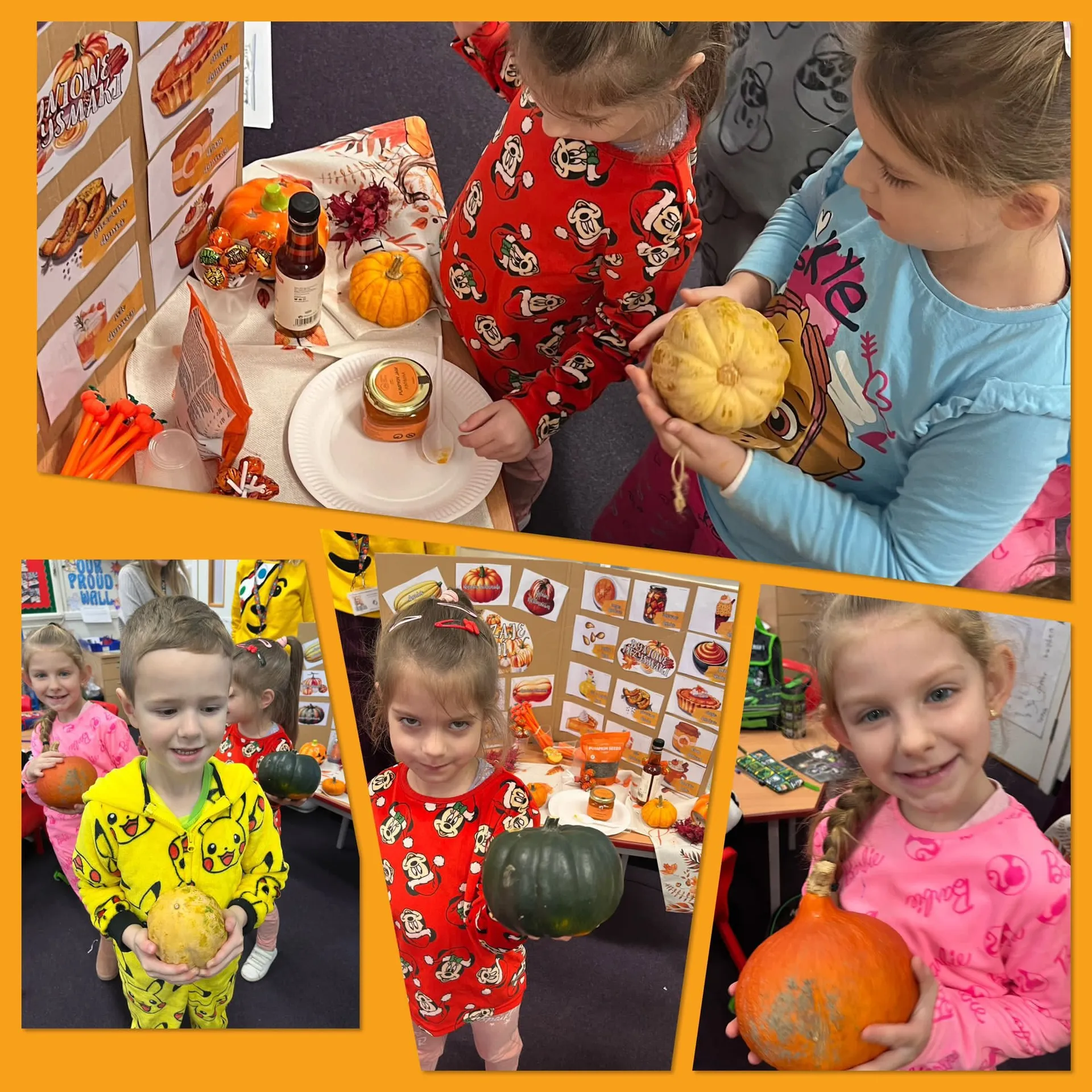
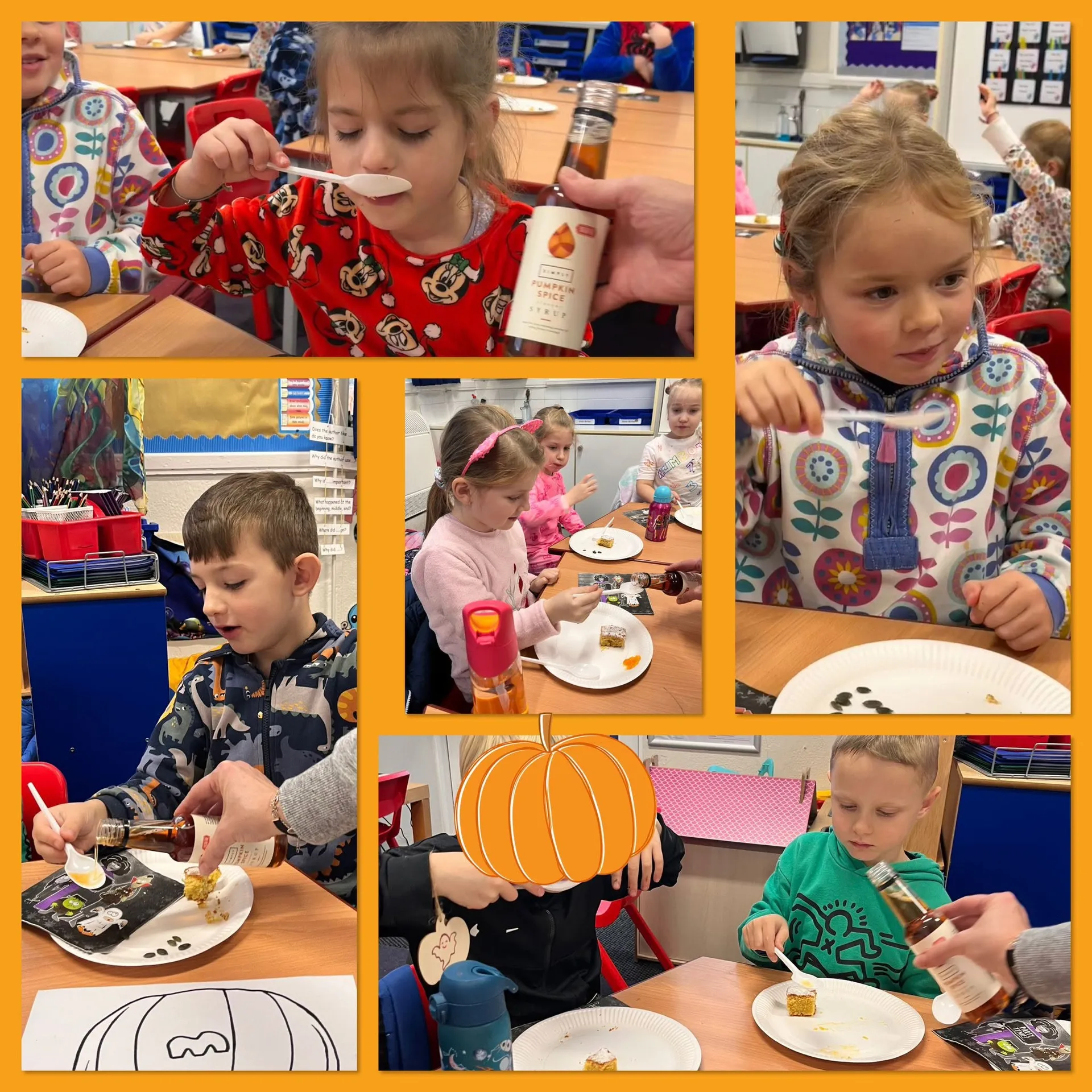
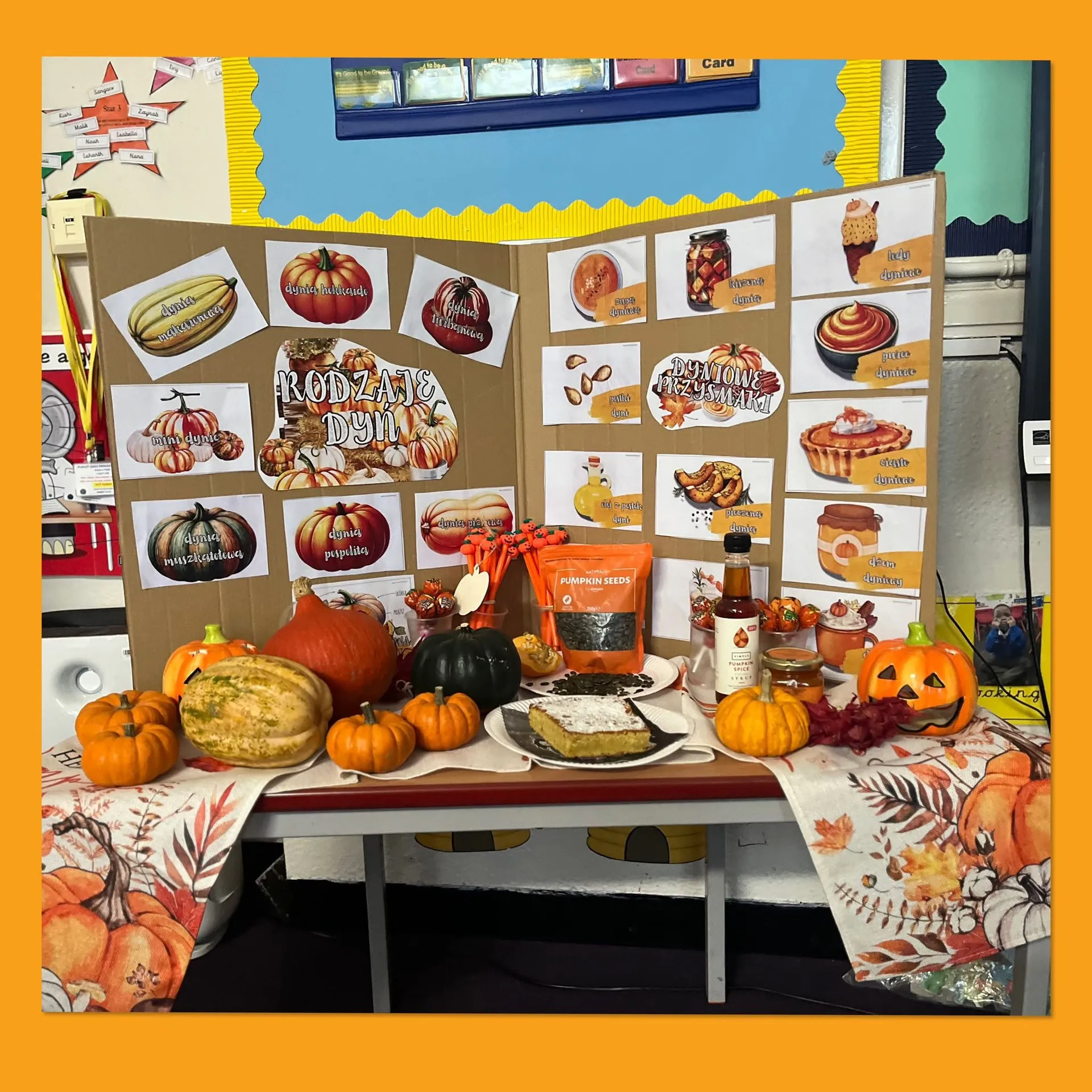
At a display set up in the classroom, next to posters showing dishes and preserves made from pumpkin, the children could look at pumpkins of different shapes and colours, pick them up and even find out what pumpkin treats taste like. Waiting to be tasted were pumpkin cake, pumpkin seeds, pumpkin jam and syrup, and even pumpkin lollipops.
The question of whether a pumpkin is a vegetable or a fruit has an interesting answer. Botanically speaking, a pumpkin is a fruit – it develops from a flower and contains seeds – but in the kitchen it is treated as a vegetable. The orange flesh of many varieties owes its colour to carotenoids, and pumpkin seeds have long been a prized snack. Pumpkin also has a permanent place in Polish cuisine: pumpkin soup and pumpkin pickled in vinegar are classics of the autumn table.
D for Dynia Dorotka
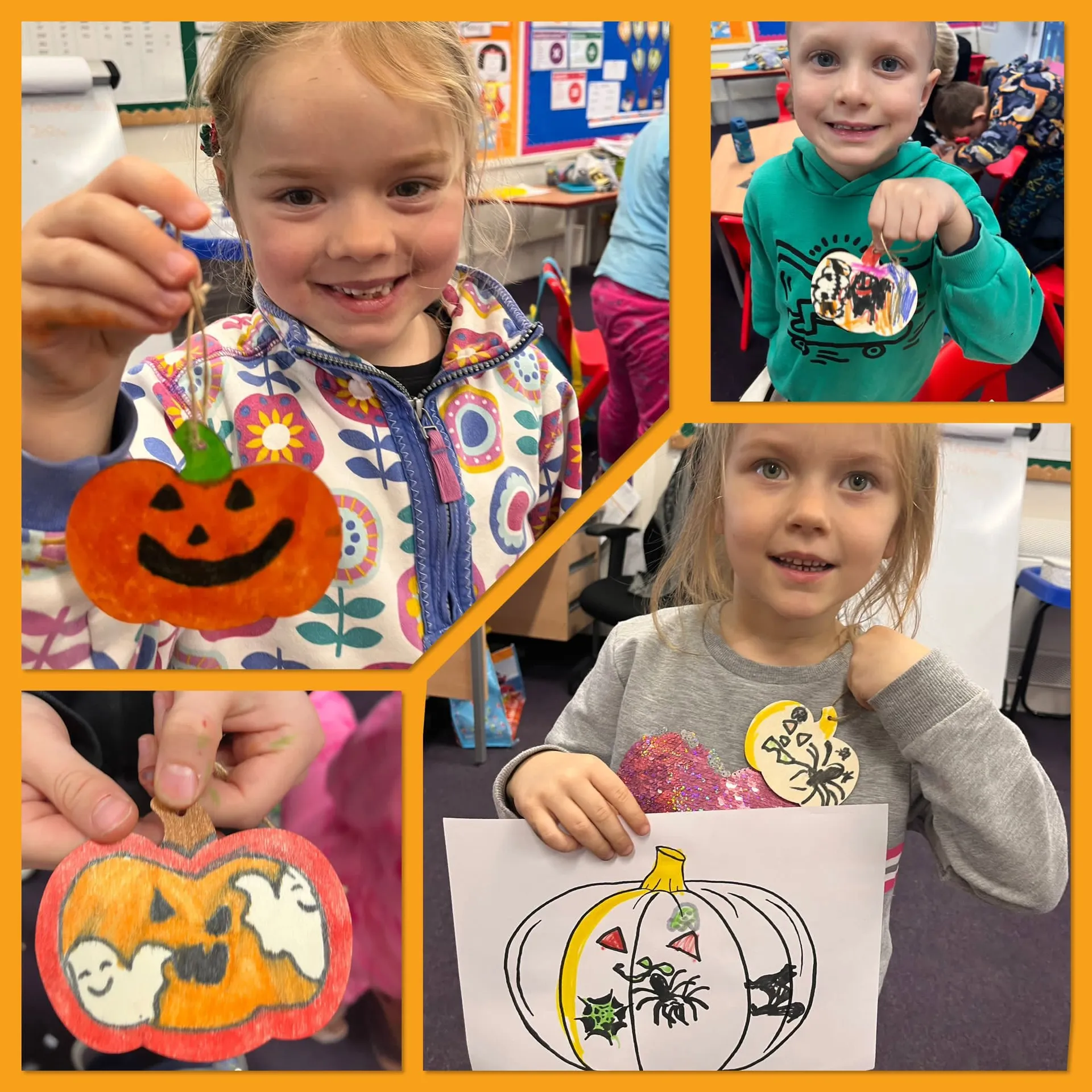
The star of the lesson also helped pupils learn the letter her name begins with. The children practised capital and lower-case D, looked for it in exercises on the interactive whiteboard and reinforced how to write it on worksheets. They also made colourful pumpkin-themed artwork. Associating a letter with a memorable character such as Dynia Dorotka makes it easier to remember, which particularly helps children learning Polish in a bilingual environment.
Photos from the display, the lesson and the tasting can be seen in the gallery.