

Saturday’s lessons were especially colourful – the class set off on a language journey to the jungle to learn the digraph ‘dż’.
Words with ‘dż’
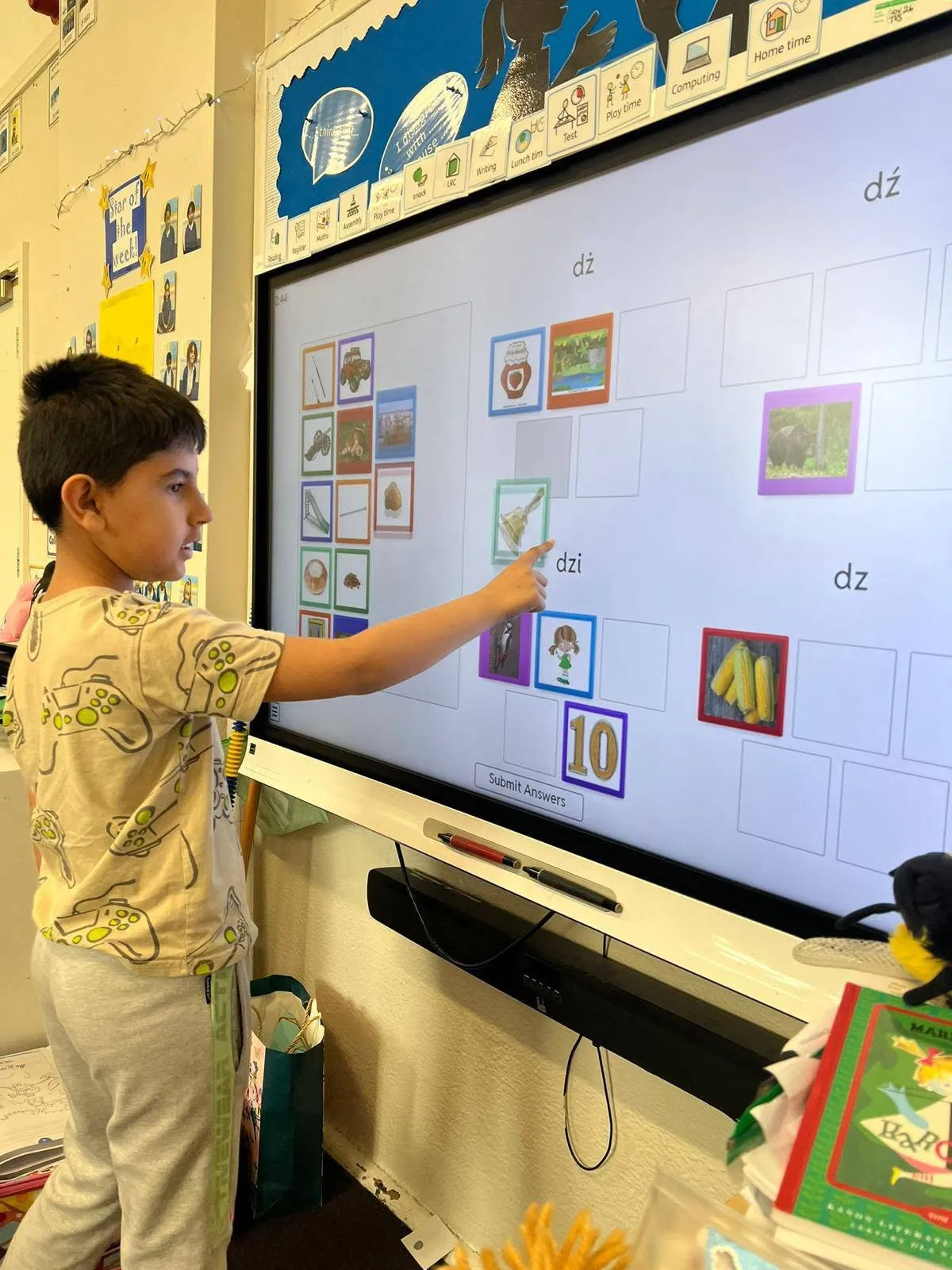
From the very start, the pupils took an active part in a brainstorm, suggesting words containing the newly learnt digraph. Together they broke them into syllables and discussed their meaning, and then made up their own sentences, developing their imagination and speaking skills. Although ‘dż’ is written with two letters, it stands for a single sound – you can hear it in the words ‘dżungla’ (jungle), ‘dżem’ (jam) and ‘dżdżownica’ (earthworm). At the interactive whiteboard, the children also practised telling it apart from similar letter combinations, such as ‘dz’ and ‘dzi’, and a spinning wheel that picked words for revision helped to consolidate the vocabulary.
A film, a song and a test
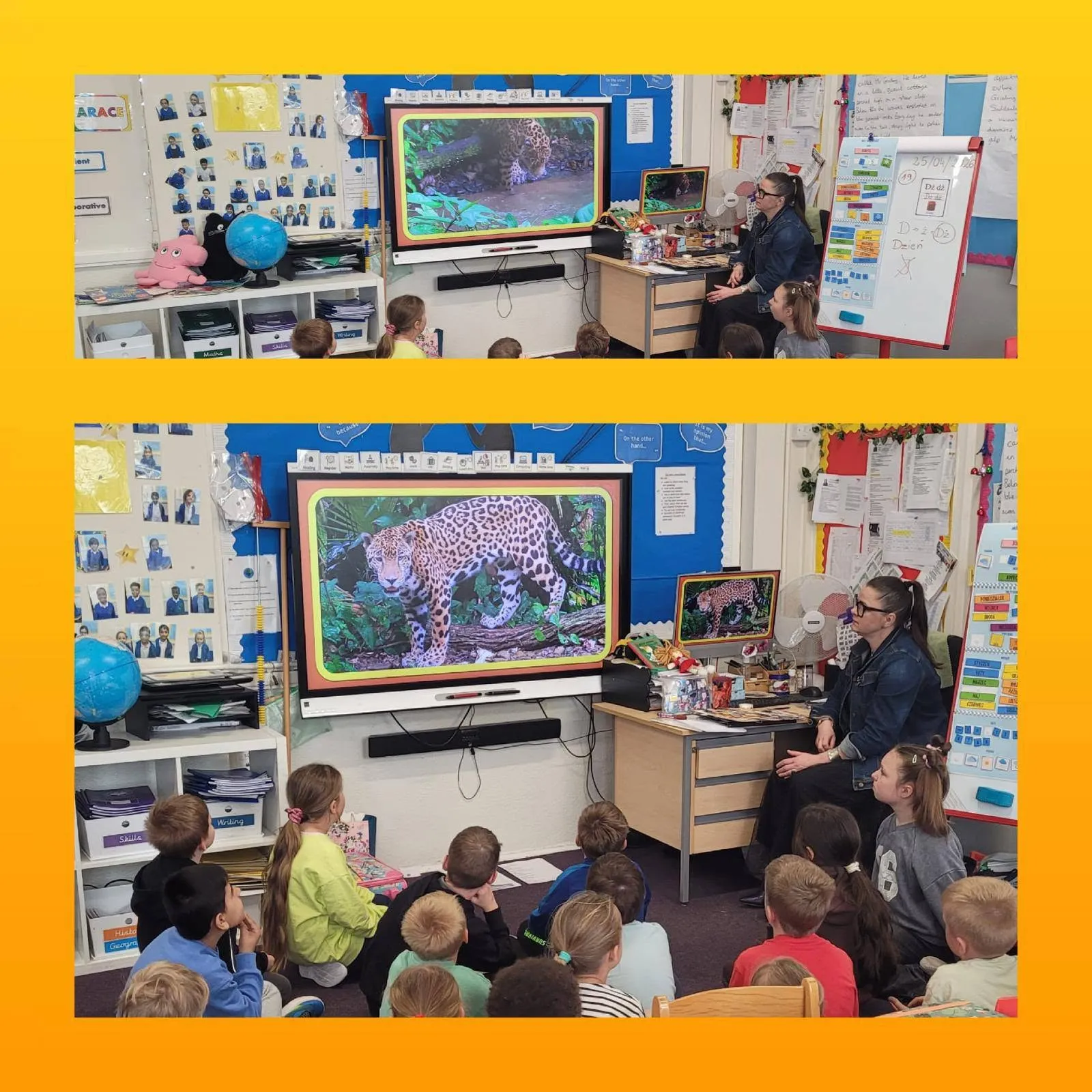
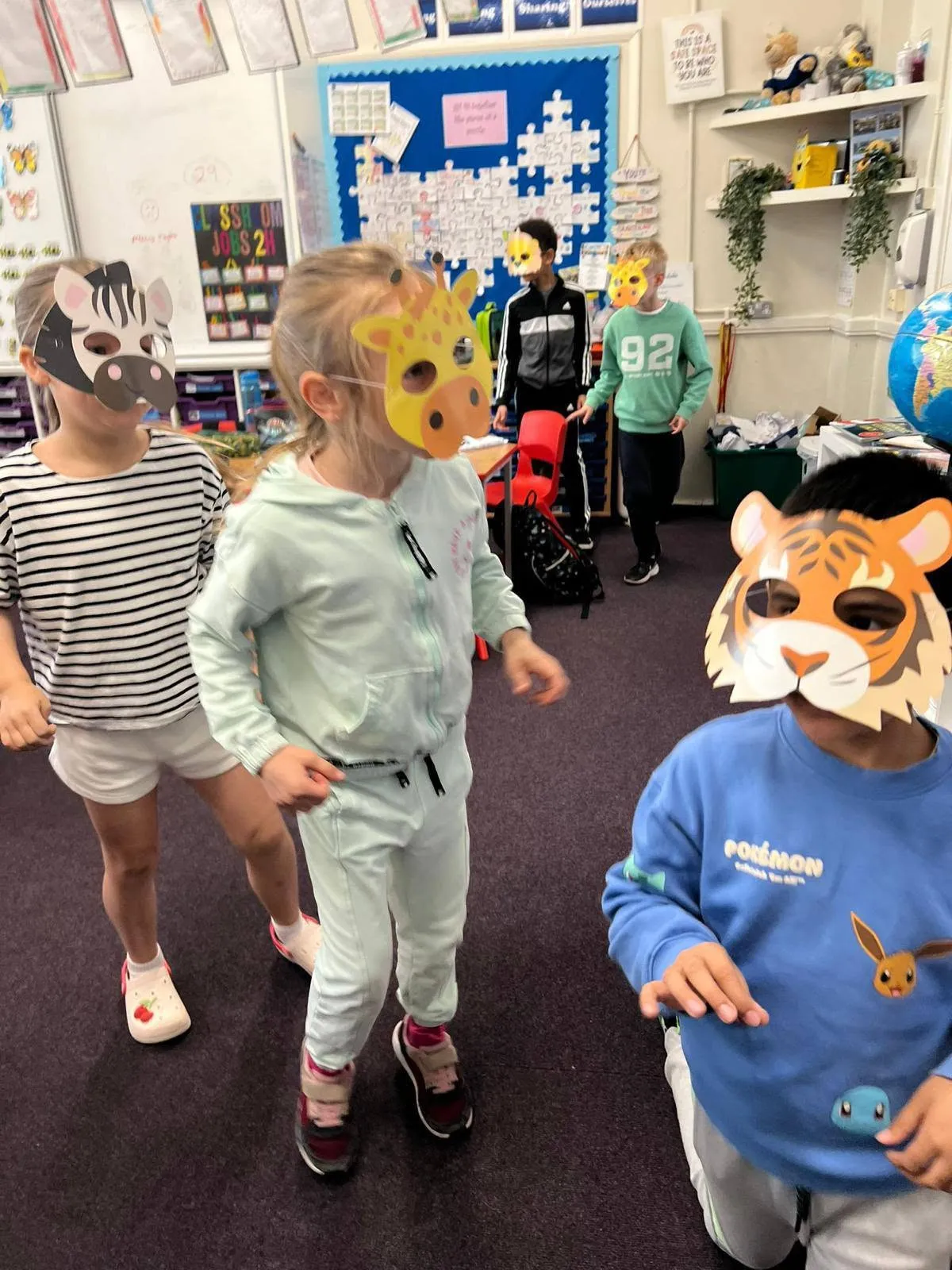
A short film about the jungle and its inhabitants provided the inspiration for further work. After warming up their hands, the pupils carefully completed their worksheets, consolidating what they had learnt. A cheerful song about jungle animals filled the classroom with laughter; the photos show the children and their teacher wearing colourful animal masks. The educational part was rounded off with a short test checking their knowledge of the digraph ‘dż’ – and the pupils did excellently.
Giraffes and the magic bead
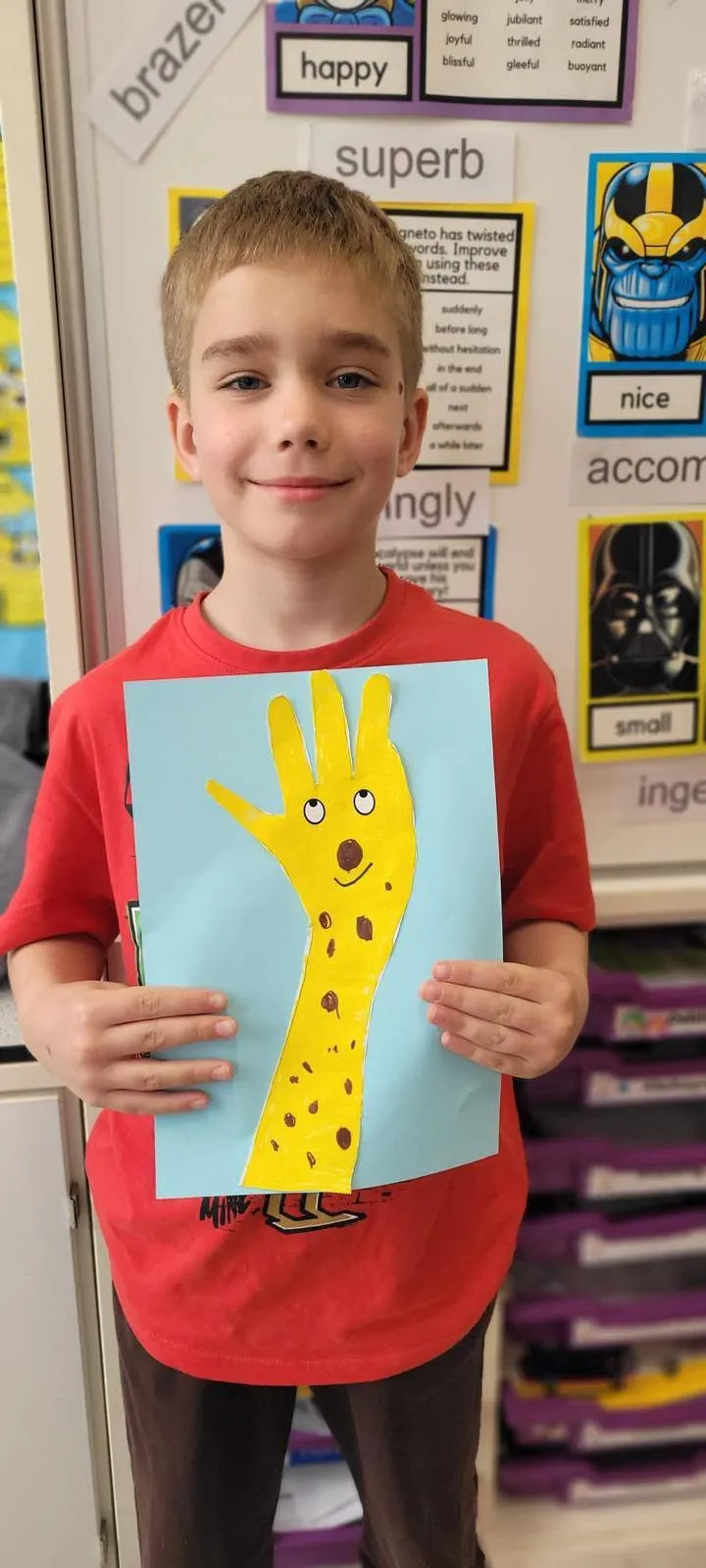
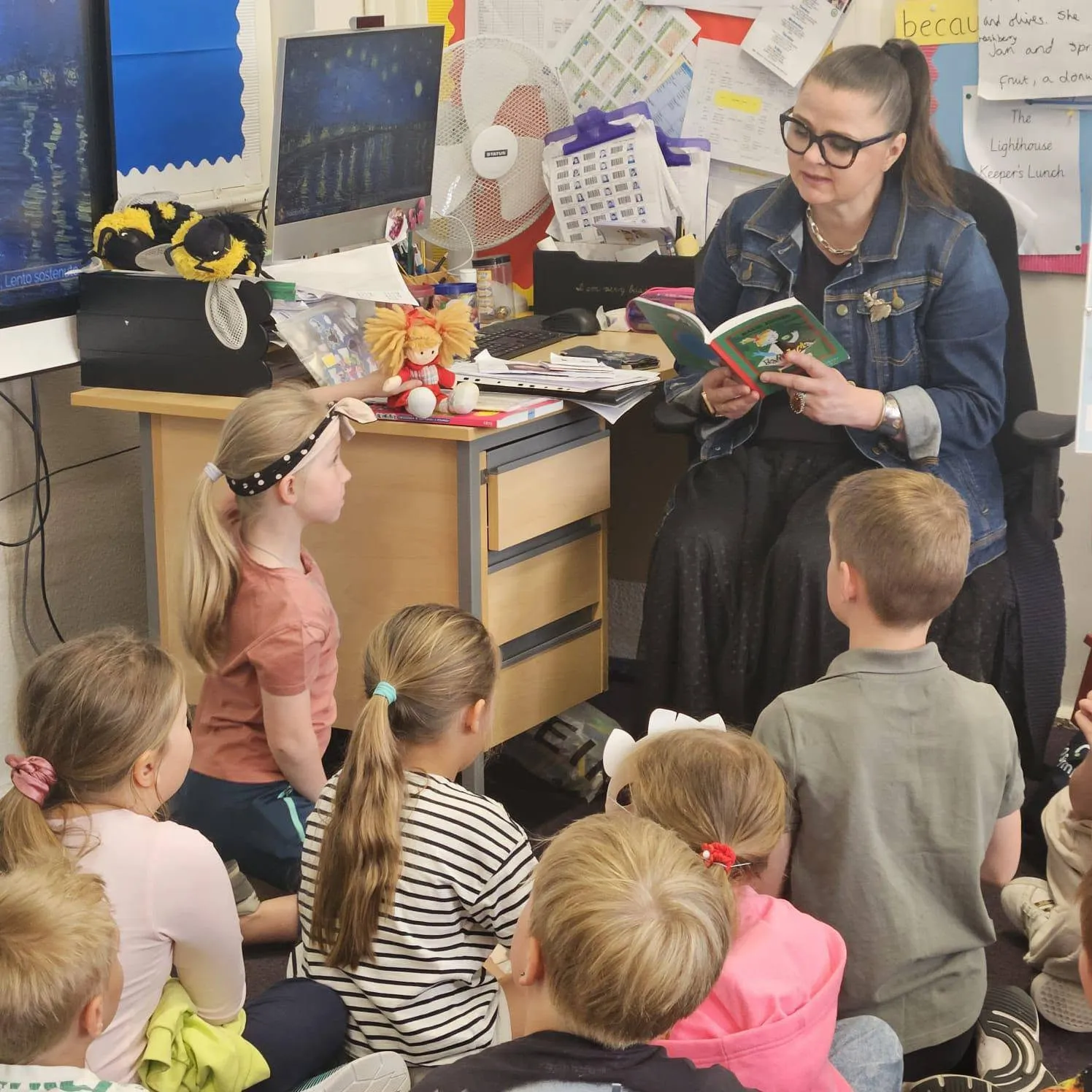
In the art part of the lesson, the class made colourful giraffes from traced hands, which took them even deeper into the jungle atmosphere. To finish, the pupils returned to their class reader ‘Karolcia’ (a Polish children’s novel), discovering the heroine’s final adventures. In Maria Krüger’s novel, a magic blue bead grants the little girl’s wishes – and just such a bead appeared in the classroom too. It was passed from hand to hand, and each pupil could pause for a moment, think of their dream and make a silent wish in their heart. Now everyone is impatiently waiting for their dreams to come true.