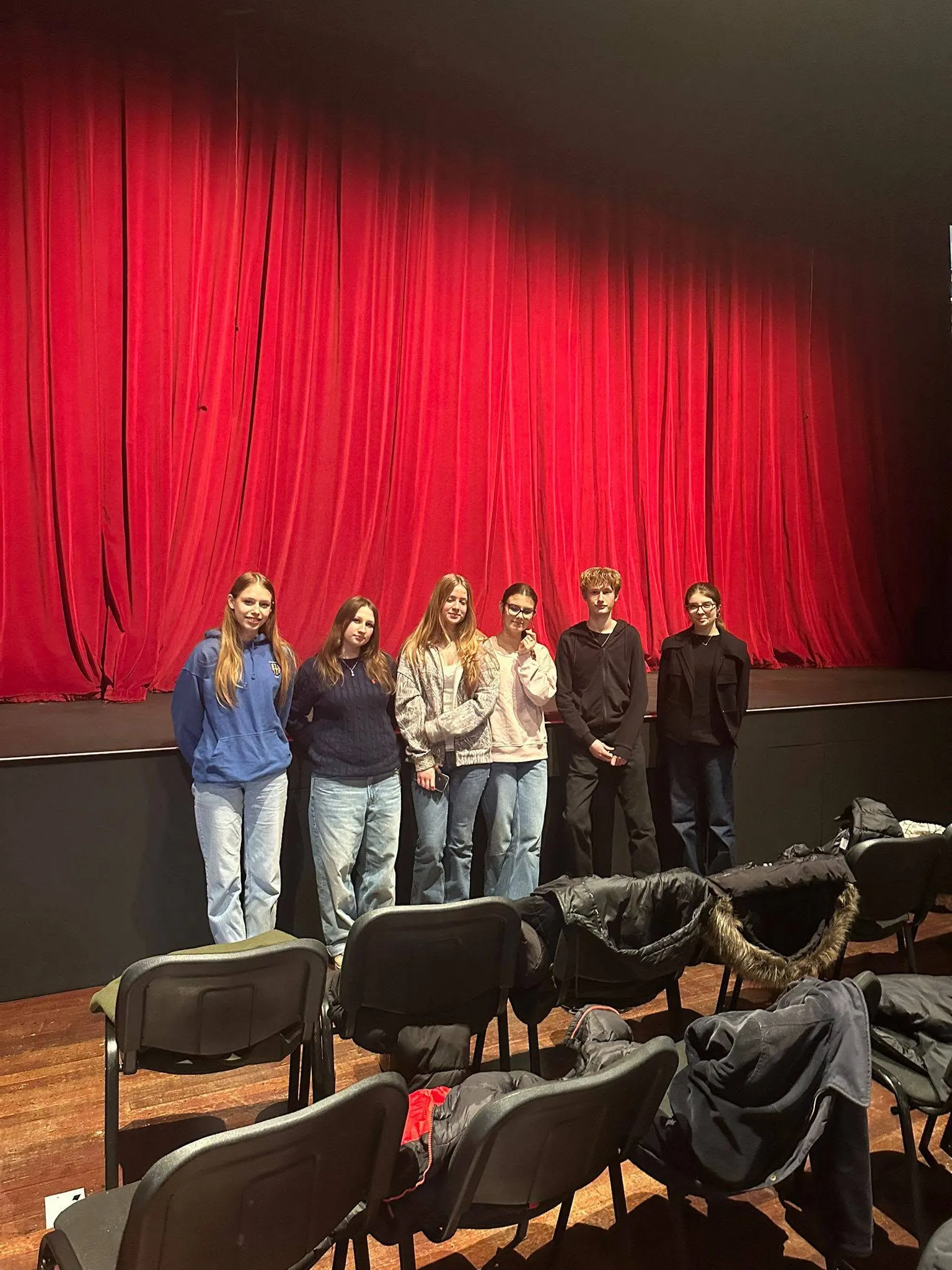


In a special Valentine's atmosphere, pupils from our school watched a performance of Sławomir Mrożek's ‘Tango’ – a play that, despite the passing years, still provokes, moves and prompts reflection.
A set text brought to life
The chance to see on stage a text that we analyse and discuss in lessons was an extraordinary experience. In a live theatrical interpretation, the emotions, intergenerational tensions, irony and the grotesque gained real dramatic power.
Sławomir Mrożek (1930–2013) wrote ‘Tango’ in 1964. In it, the young Artur rebels against his parents, who have rejected all norms and conventions, and tries to restore the old order at home. His efforts end in defeat, and power is seized by the boorish Edek, who in the finale dances the title tango with Uncle Eugeniusz. For decades the play has been part of the canon of Polish literature, and it still raises questions about the limits of freedom and the meaning of tradition. Mrożek, who also wrote ‘Policja’ (The Police), ‘Emigranci’ (Emigrants) and the short stories in the collection ‘Słoń’ (The Elephant), lived outside Poland for many years – in Italy, France and Mexico.
Meeting the actors
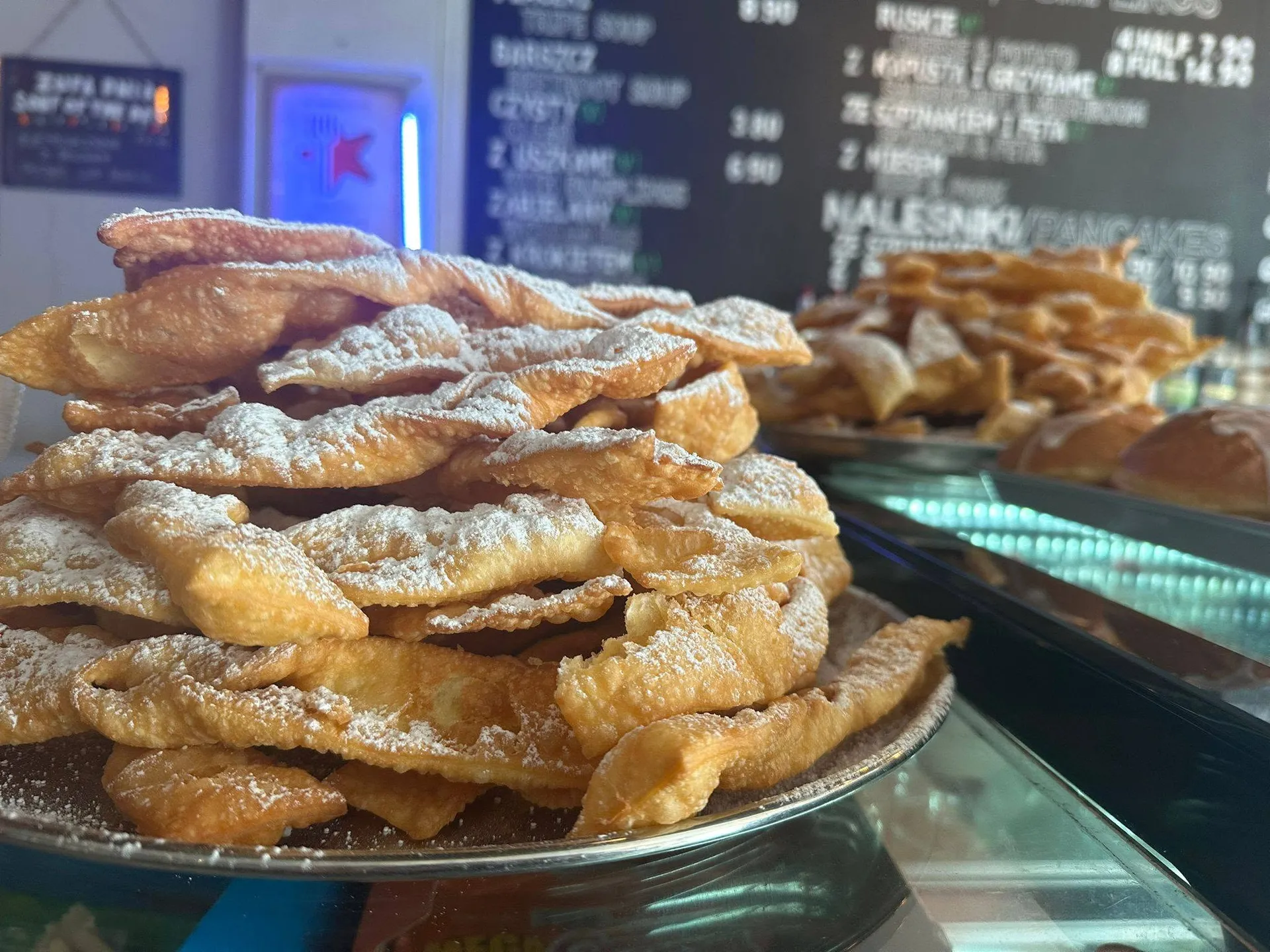
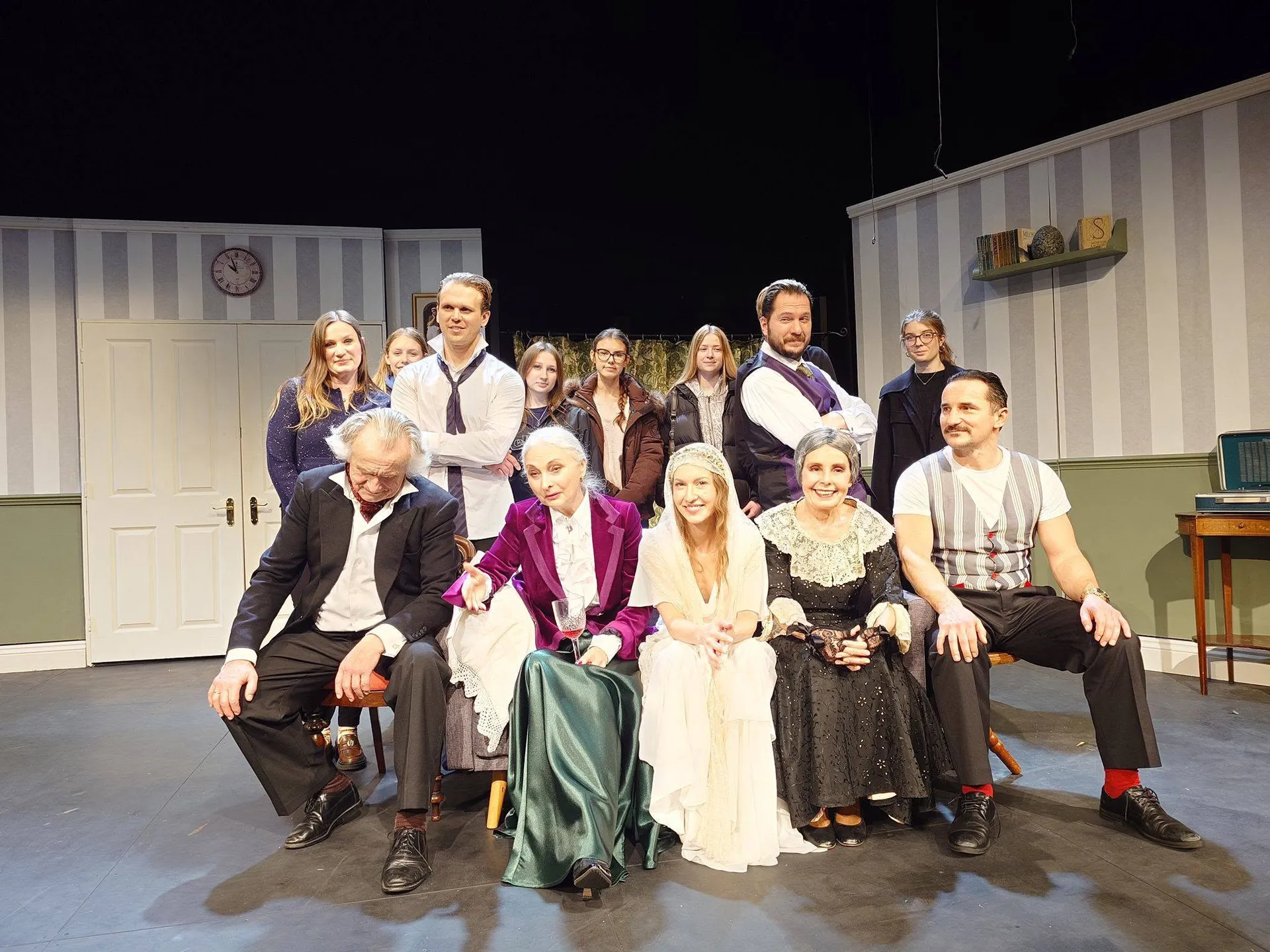
After the performance, the pupils met the actors and had photos taken with them on stage, among the set. We thank the actors for the conversation and the inspiration. A carnival touch to the day came from faworki – a traditional treat, also known as chrust, which in Poland is fried especially on Fat Thursday and in the last days of carnival.
St Valentine's Day, celebrated on 14 February, became firmly established in Poland at the end of the 20th century. Valentine's Day, however, is not only a celebration of romantic love, but also of love for culture, language and the shared experience of art. We are glad that we can build these experiences together. We thank the pupils for their attendance and their mature conduct during the outing.