

Students in class A-level 2 went to the theatre to see an excellent production of Sławomir Mrożek's ‘Tango’. The performance made a strong impression on them: they responded very positively both to the acting and to the issues the play raises.
A play about rebellion and power
‘Tango’, published in 1964, is one of the most important plays of post-war Polish literature and is on the set reading list of Polish secondary schools (licea). In it, Mrożek portrays a family in which the parents have rejected all norms and conventions. Their son Artur rebels against this unlimited freedom and tries to restore the old order, but in the end power is seized by the primitive and ruthless Edek. The play closes with a scene in which Edek and Eugeniusz dance the title tango to the tune of ‘La Cumparsita’. Its grotesque form conceals serious questions about freedom, tradition and the roots of violence.
Sławomir Mrożek (1930–2013) was a playwright, prose writer and satirical cartoonist, known for his absurd humour and irony. For many years he lived outside Poland, including in Italy, France and Mexico. In emigration he also wrote the play ‘Emigranci’ (‘The Emigrants’, 1974) about two men who have left their homeland.
Talking to the actors
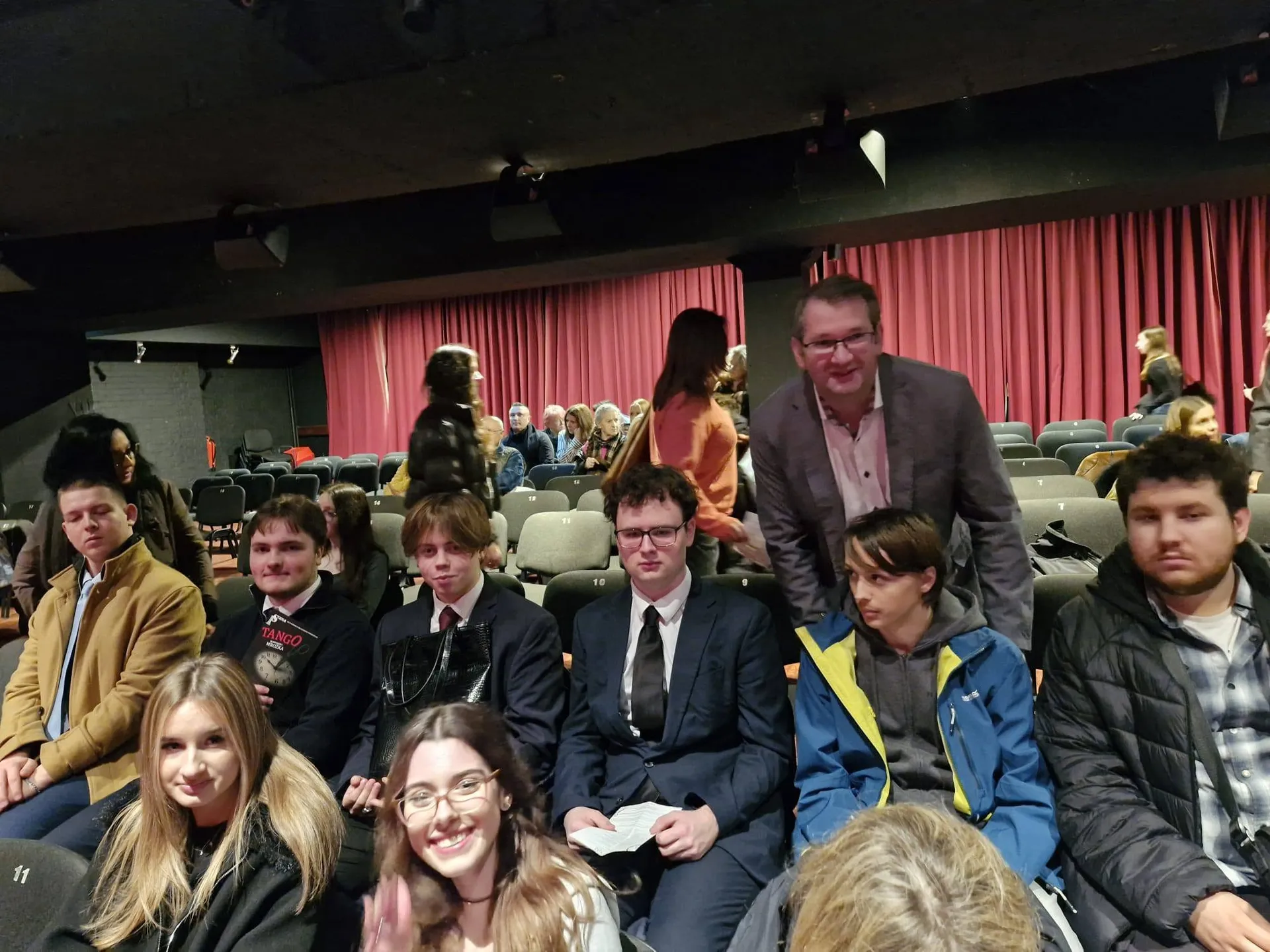
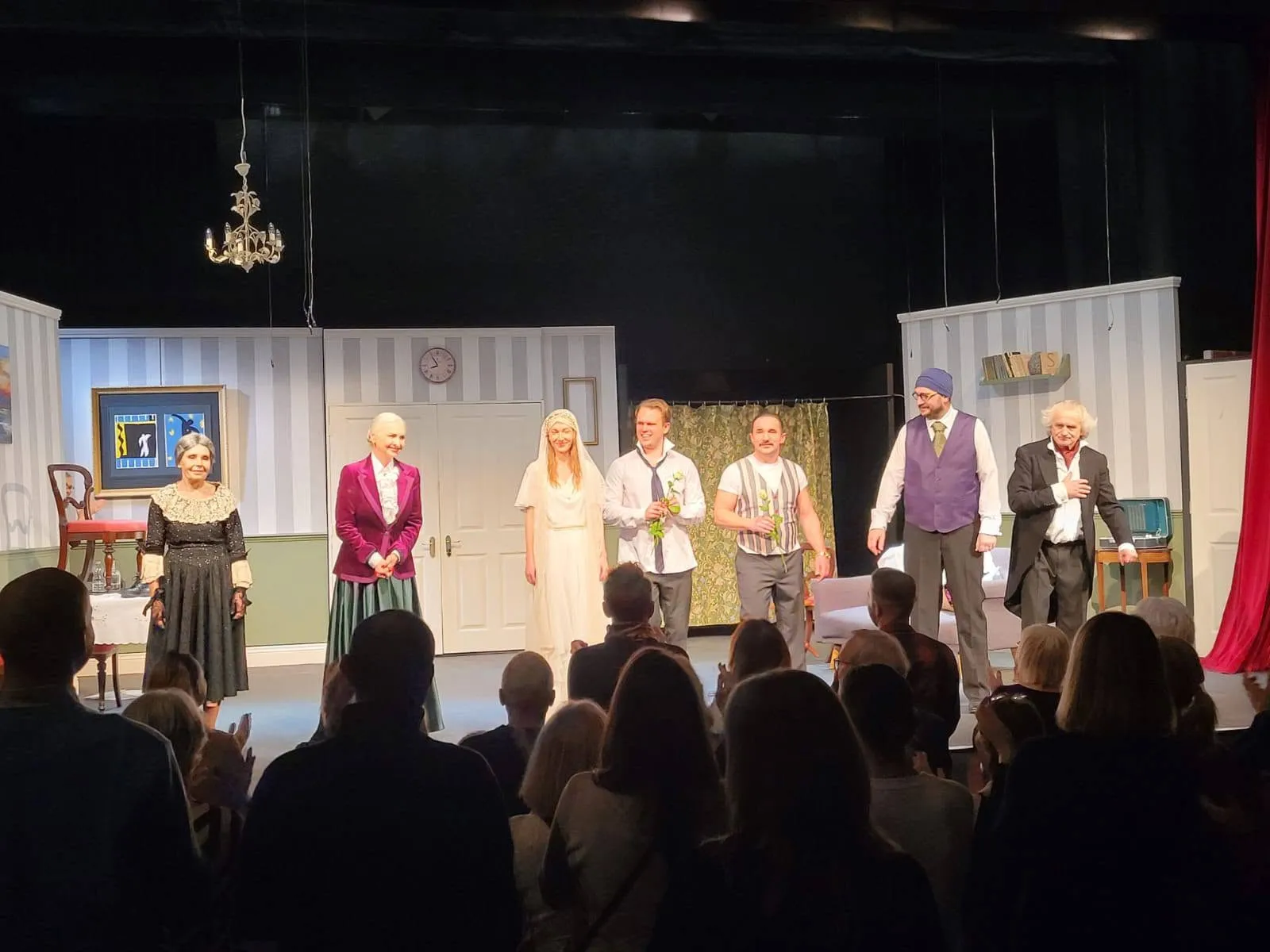
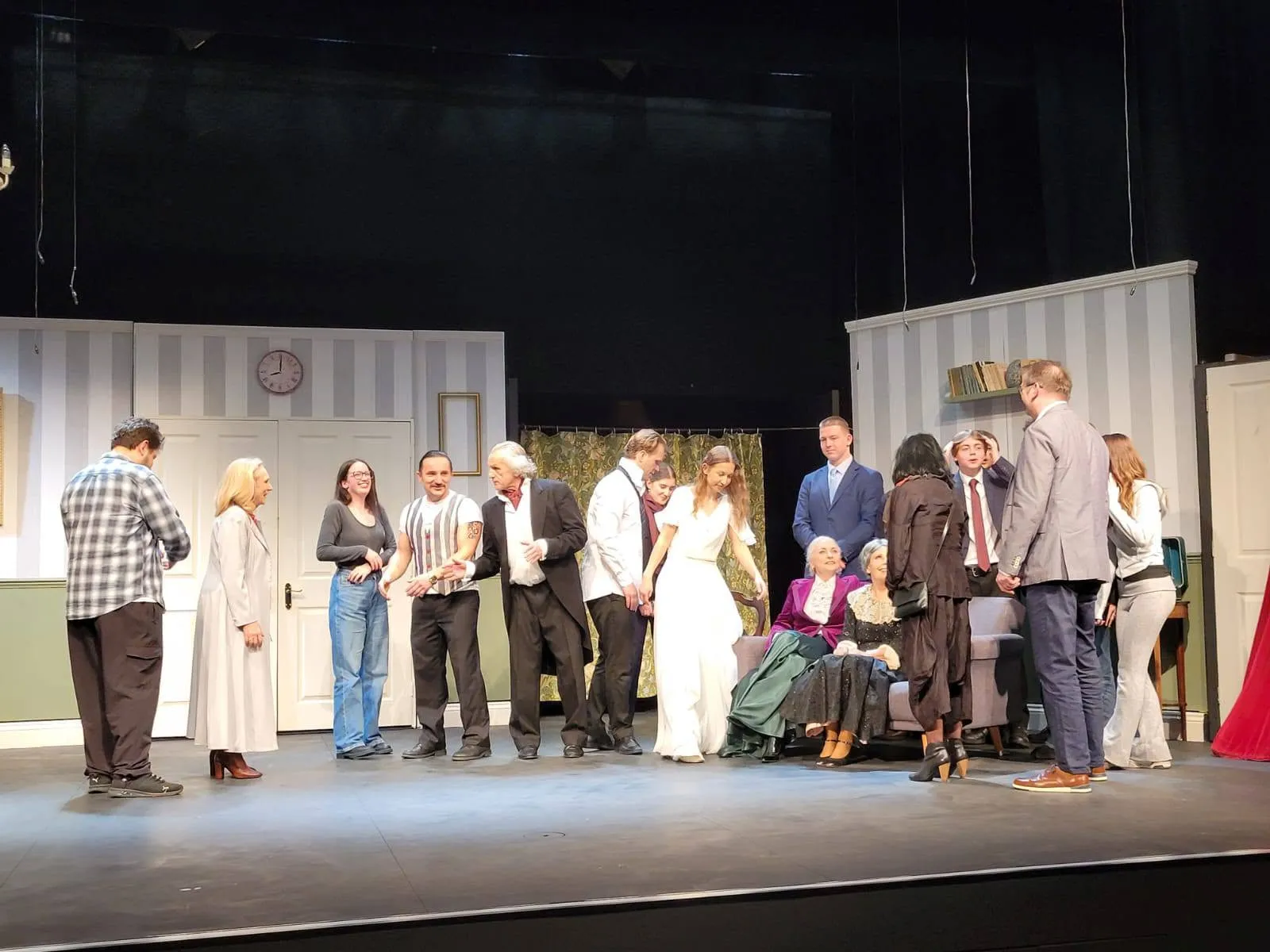
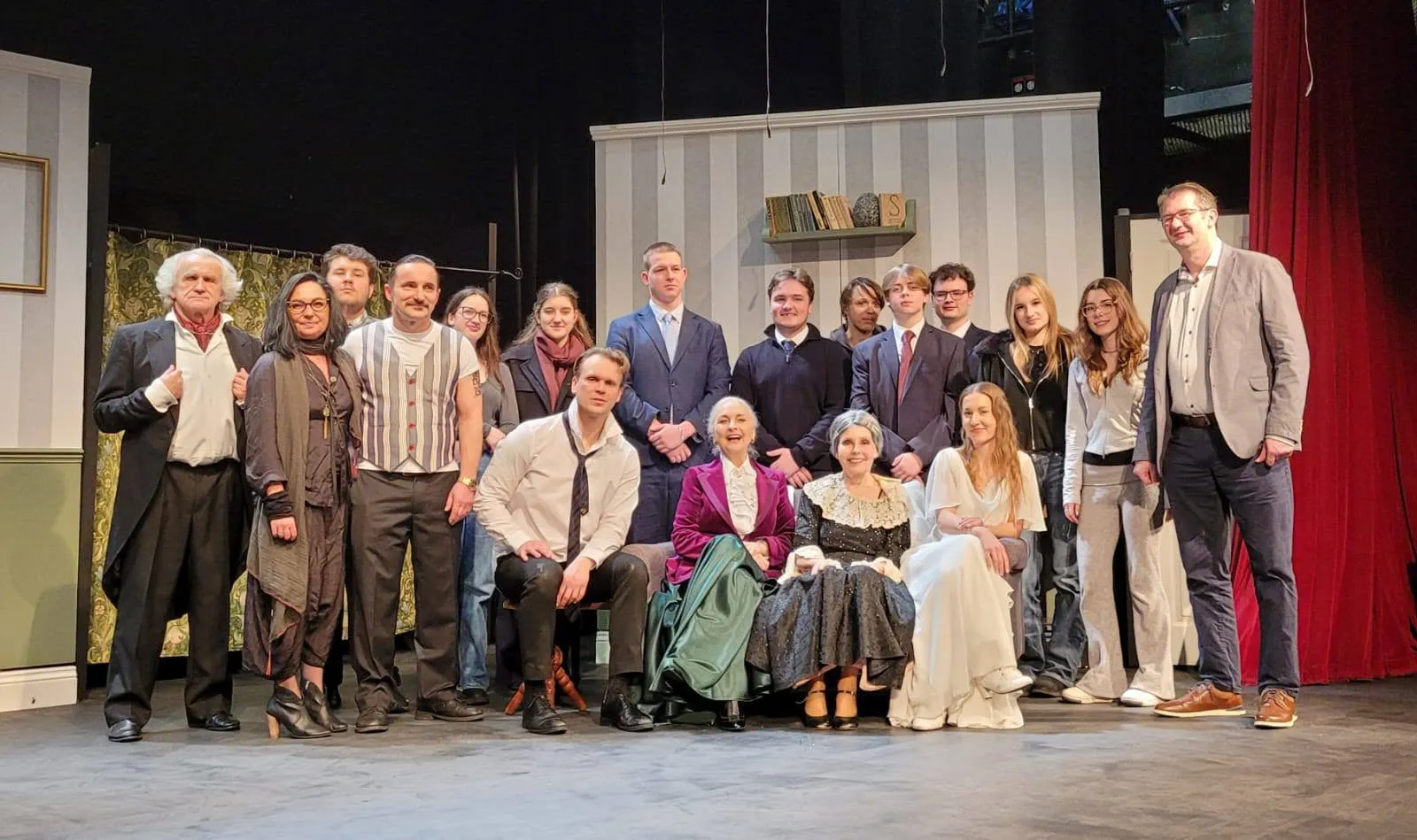
After the performance, the students had a unique opportunity to meet the actors. They talked about what goes on behind the scenes of their work and asked questions about the interpretation of the play – it is in the theatre that one sees most clearly how many interpretative decisions lie behind every role. The photos show the students in the audience, the actors taking their bows and a souvenir shot of the class with the cast on stage.
Encountering a play on stage allows us to see the text differently than when simply reading it. It was an inspiring experience that will stay in the students' memories for a long time.