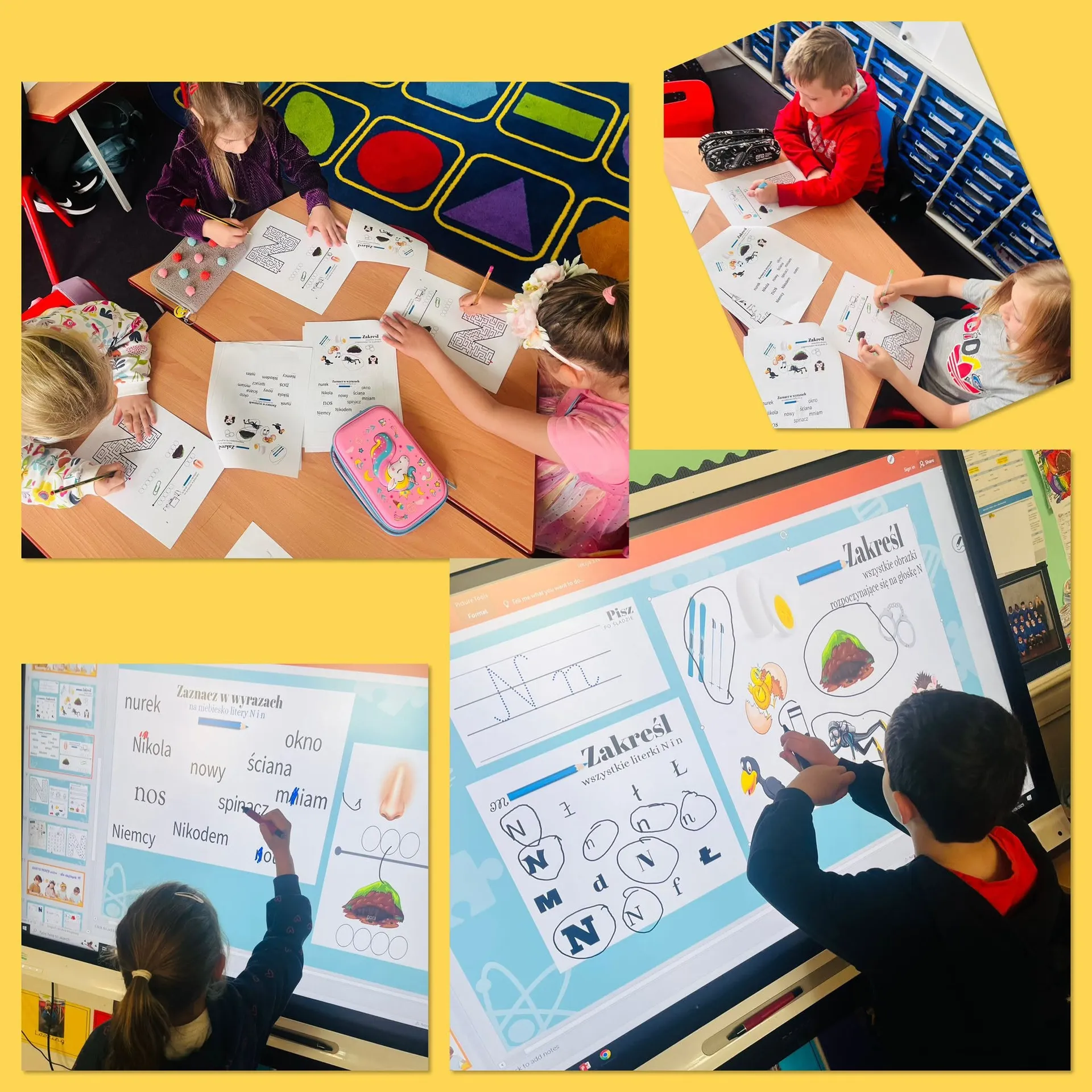


The class’s new friend, Smoczek Alfabetek (the Little Alphabet Dragon), introduced the pupils to the world of another letter and sound – N. He showed them what the letter looks like and taught the children new words. The pupils completed their worksheets unusually quickly that day, because a visit to an older class awaited them.
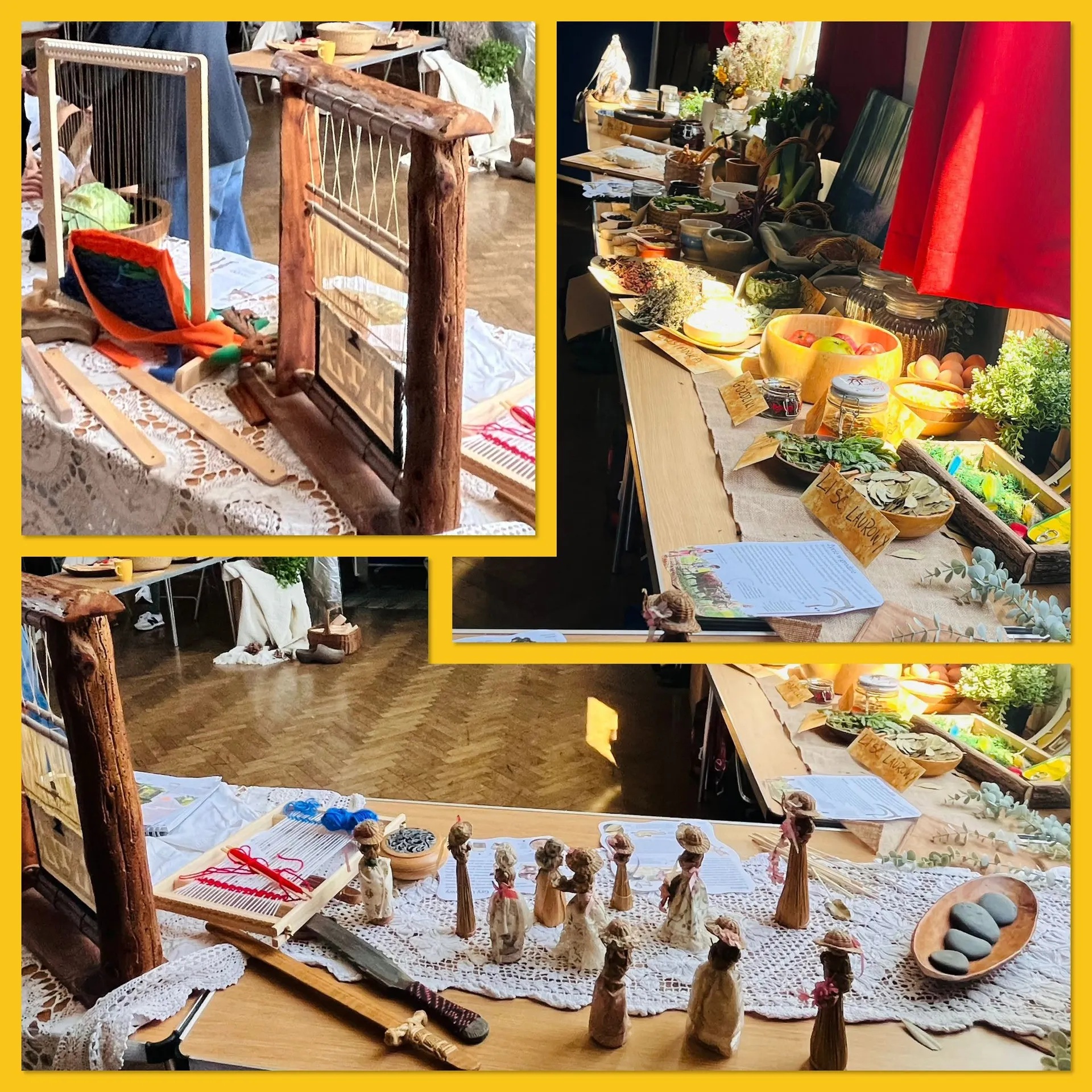
Class D showed their younger schoolmates what a Slavic village looked like. The visitors tasted podpłomyki (flatbreads) and looked at a wealth of interesting objects from olden times – the tables displayed wooden utensils and figures, among other things. The early Slavs lived in small settlements of wooden huts and supported themselves mainly by farming the land and raising livestock. The podpłomyk – a flat cake of flour and water, once baked directly on the hearth – is one of the simplest and oldest kinds of bread. Meetings between pupils from different classes also have educational value: older pupils consolidate their knowledge by sharing it with others, while younger ones learn about history in an accessible, hands-on way.
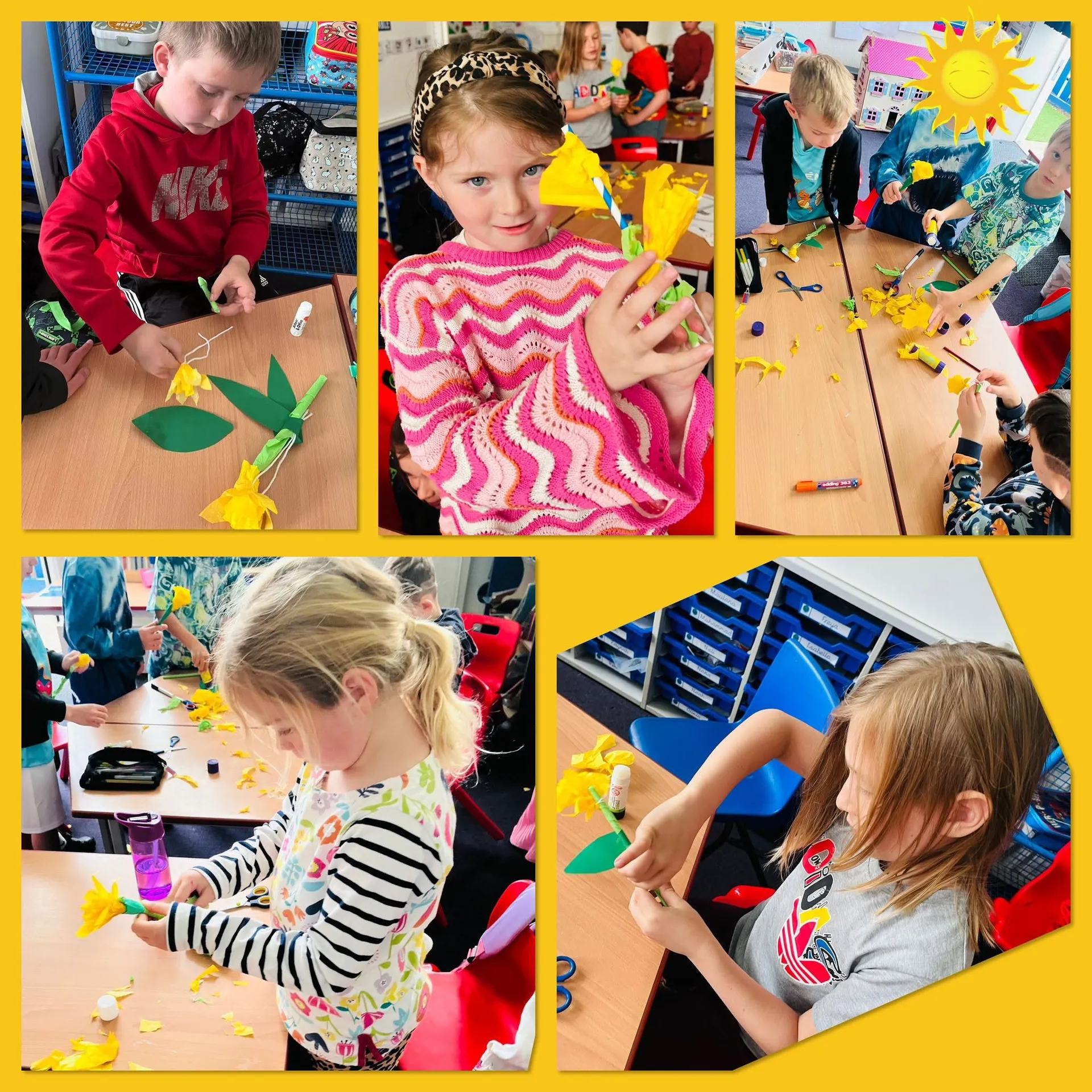
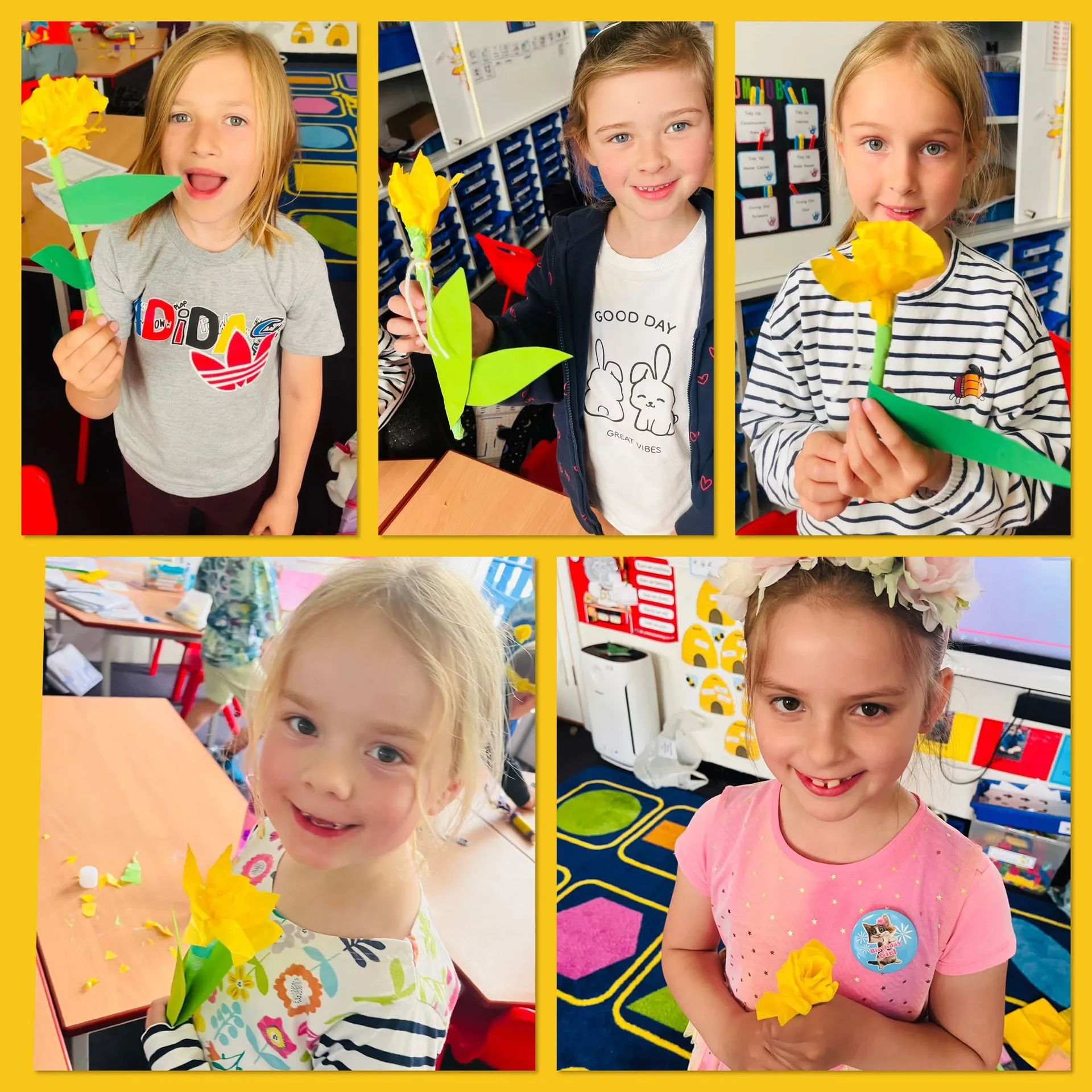
To end the day, the pupils made beautiful daffodils from crêpe paper – flowers whose Polish name, ‘narcyz’, also begins with the letter N. Around the shared tables, yellow flowers with green leaves took shape, which the children then held up for photographs. In early spring, daffodils bloom in great numbers in British parks and gardens. More photographs from the lesson can be viewed in the gallery.