

Family Day in the D classes took place in the setting of an old Slavic village. In the humble hut of Piast the Wheelwright (Piast Kołodziej) and Rzepicha, preparations were under way for the postrzyżyny of their son Siemowit.
The legend of Piast and Rzepicha
Postrzyżyny was an important day in the life of the family and of the boy, who was to pass from his mother's care into his father's. It was then that unexpected visitors arrived at the hut – wanderers who turned the poor family's life into a true Slavic idyll. The tables groaned with food that had mysteriously multiplied, and many years later Siemowit became a duke.
The legend of Piast, Rzepicha and the mysterious guests was recorded at the beginning of the 12th century by Gallus Anonymus. According to the chronicle, before reaching Piast's hut the wanderers had been turned away from a feast given by Duke Popiel. Piast is regarded as the legendary forefather of the Piast dynasty, and postrzyżyny – an old Slavic rite of a boy's first haircut – marked a symbolic entry into the next stage of life.
A Slavic village in the school classroom
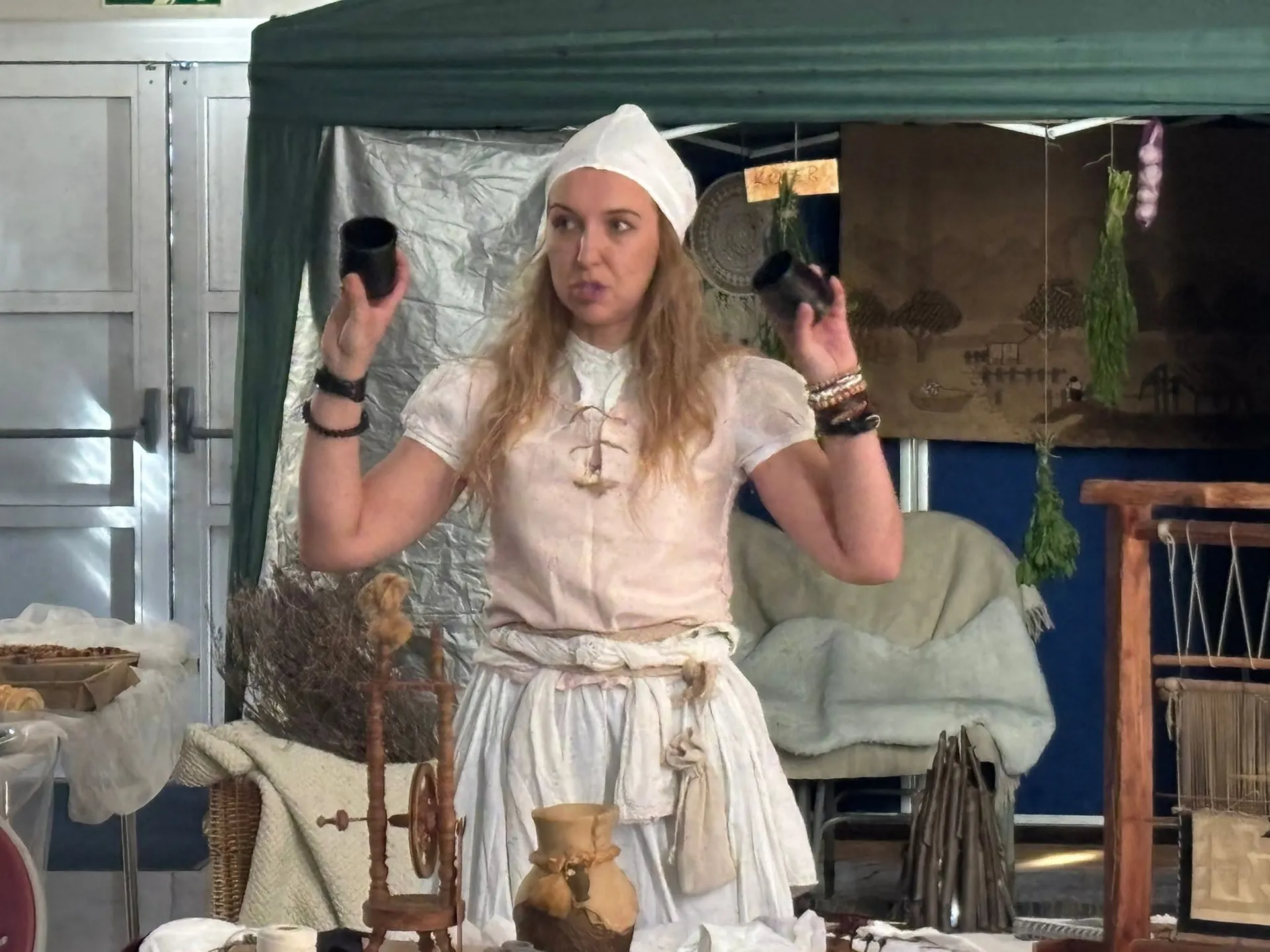
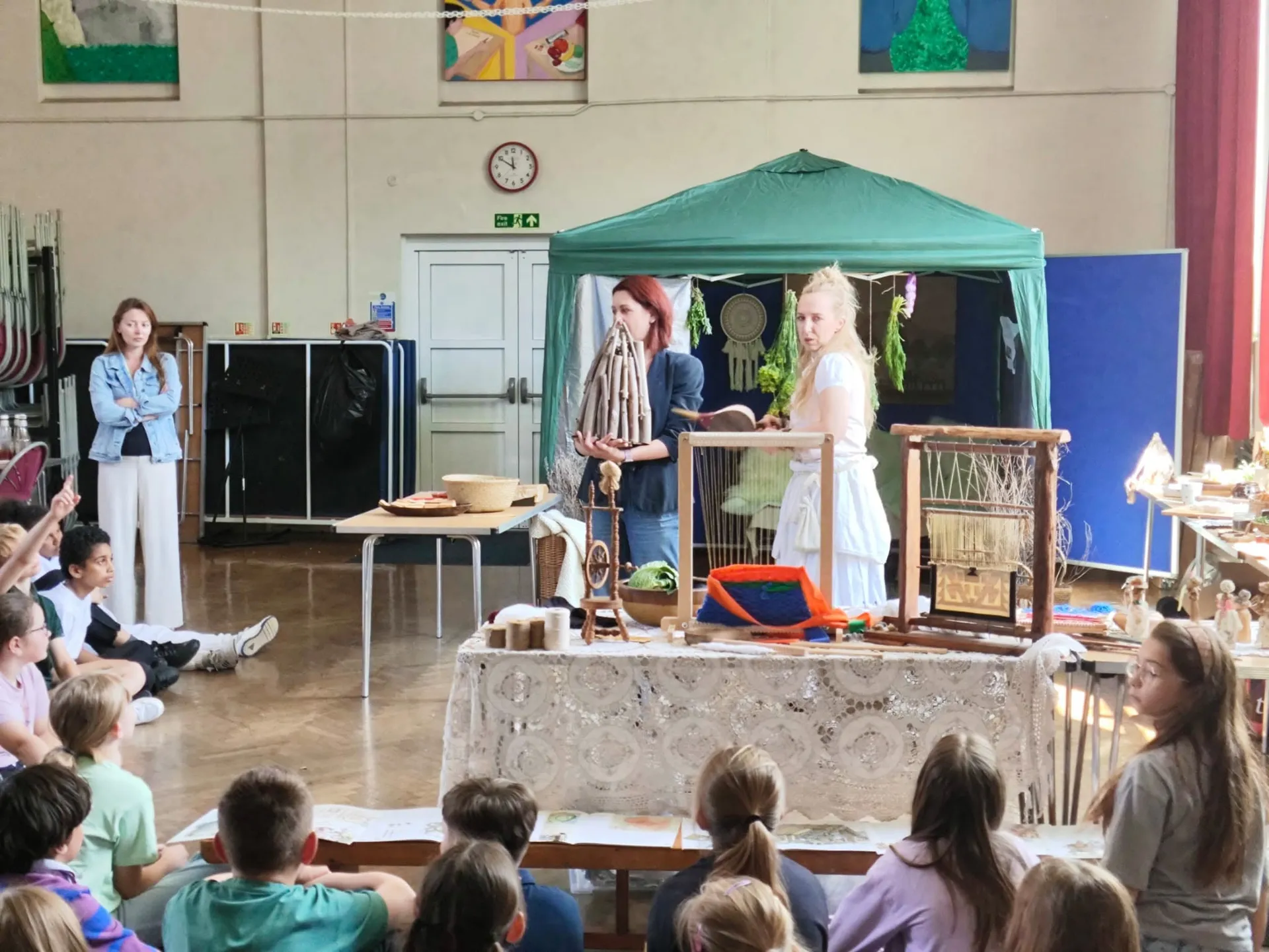
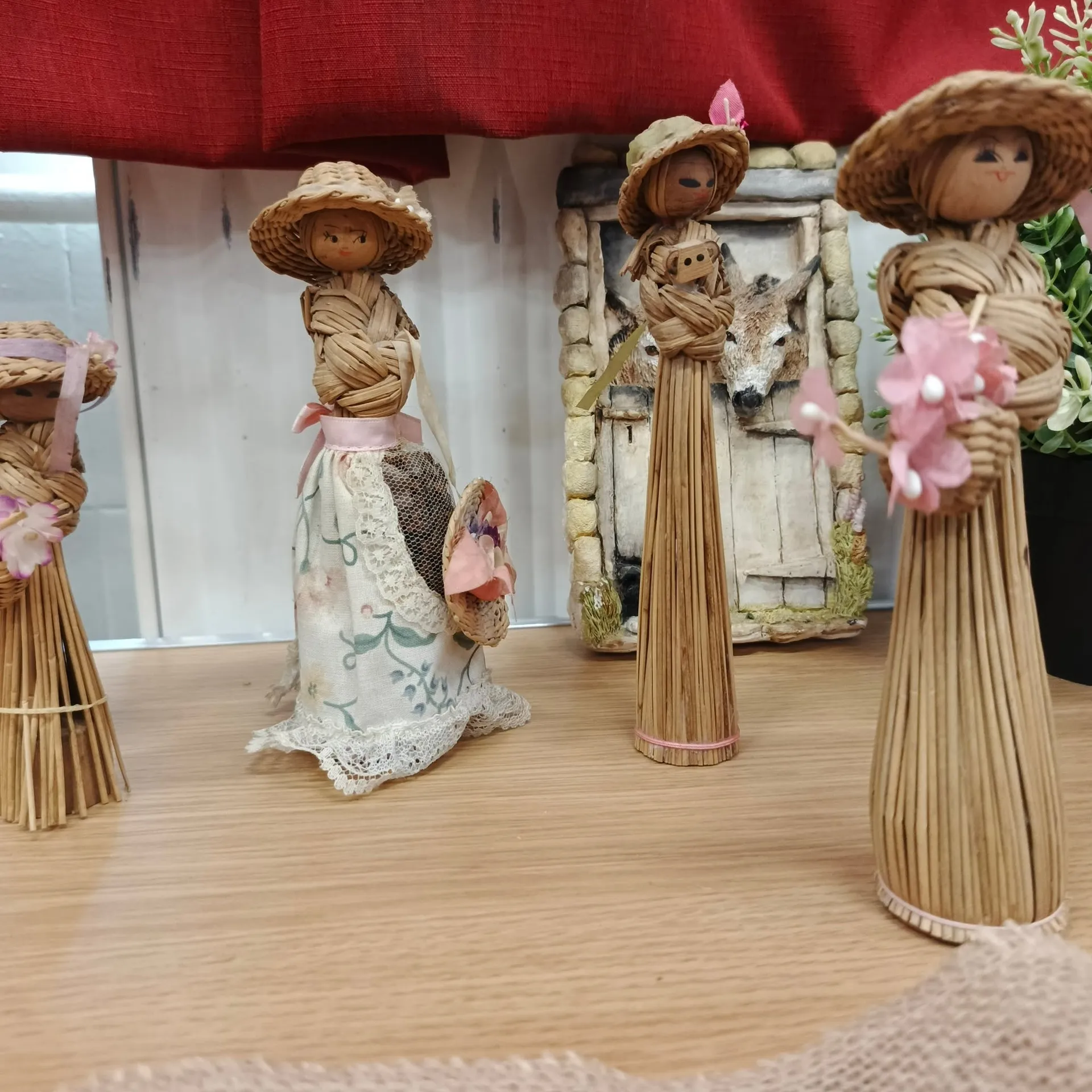
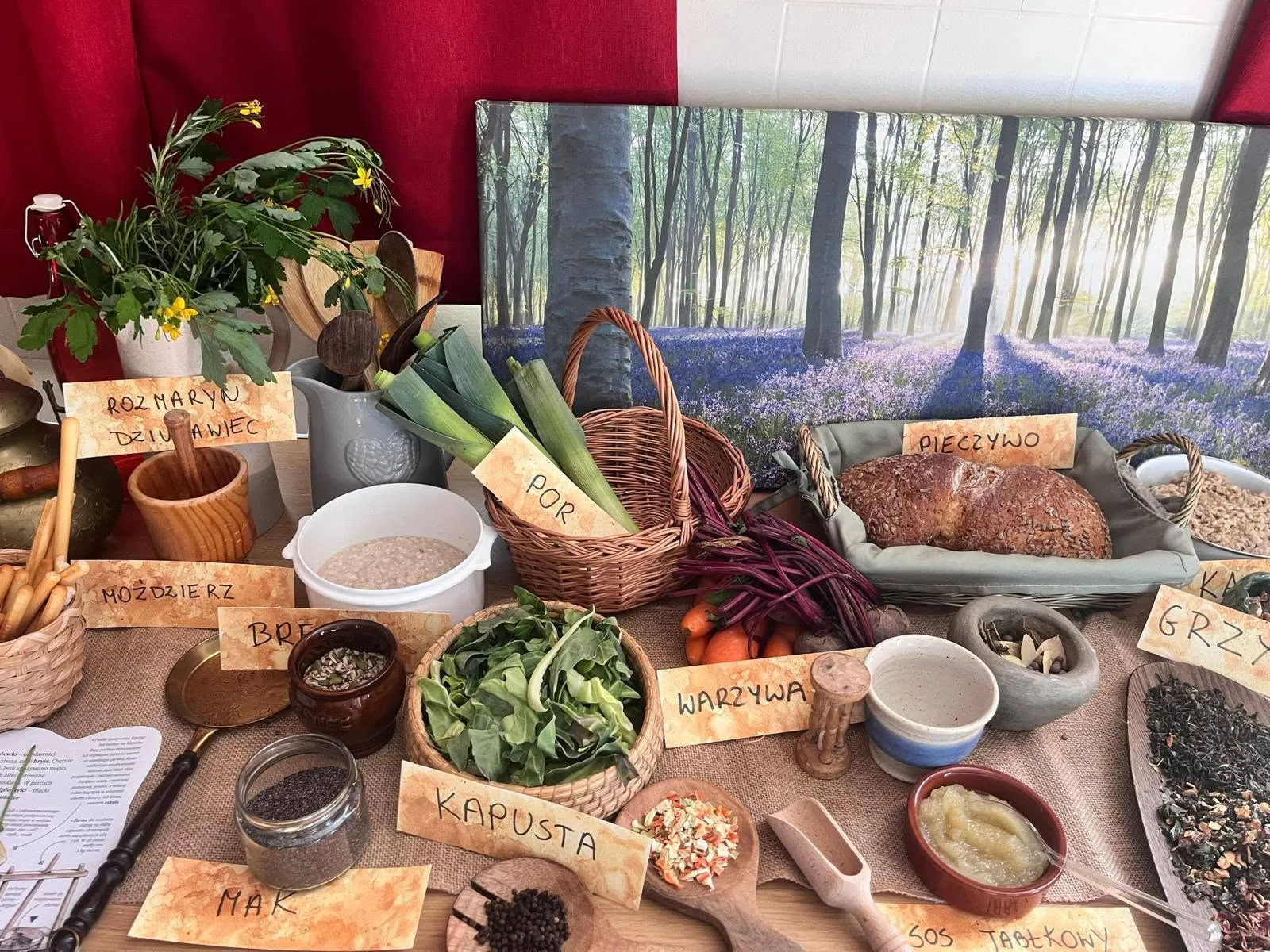
For the performance, a Slavic village was created in the classroom. The tables were laid – with handwritten labels – with bread, small flatbreads, flour, cabbage, leeks, groats and dried herbs, and beside them stood straw dolls, jugs, baskets and wooden dishes. There was also a loom, a spinning wheel, a pile of wood and a tent arranged to look like a hut. The loom and spinning wheel were a reminder that spinning wool and flax and weaving cloth were once everyday household tasks; herbs, in turn, were used both in cooking and in healing. The story was told by a narrator in a linen costume and white headscarf, while pupils listened sitting on the floor. The postrzyżyny ceremony itself was also acted out on stage, and a table of refreshments was prepared too.
More photos from the Slavic village and the performance can be seen in the gallery.