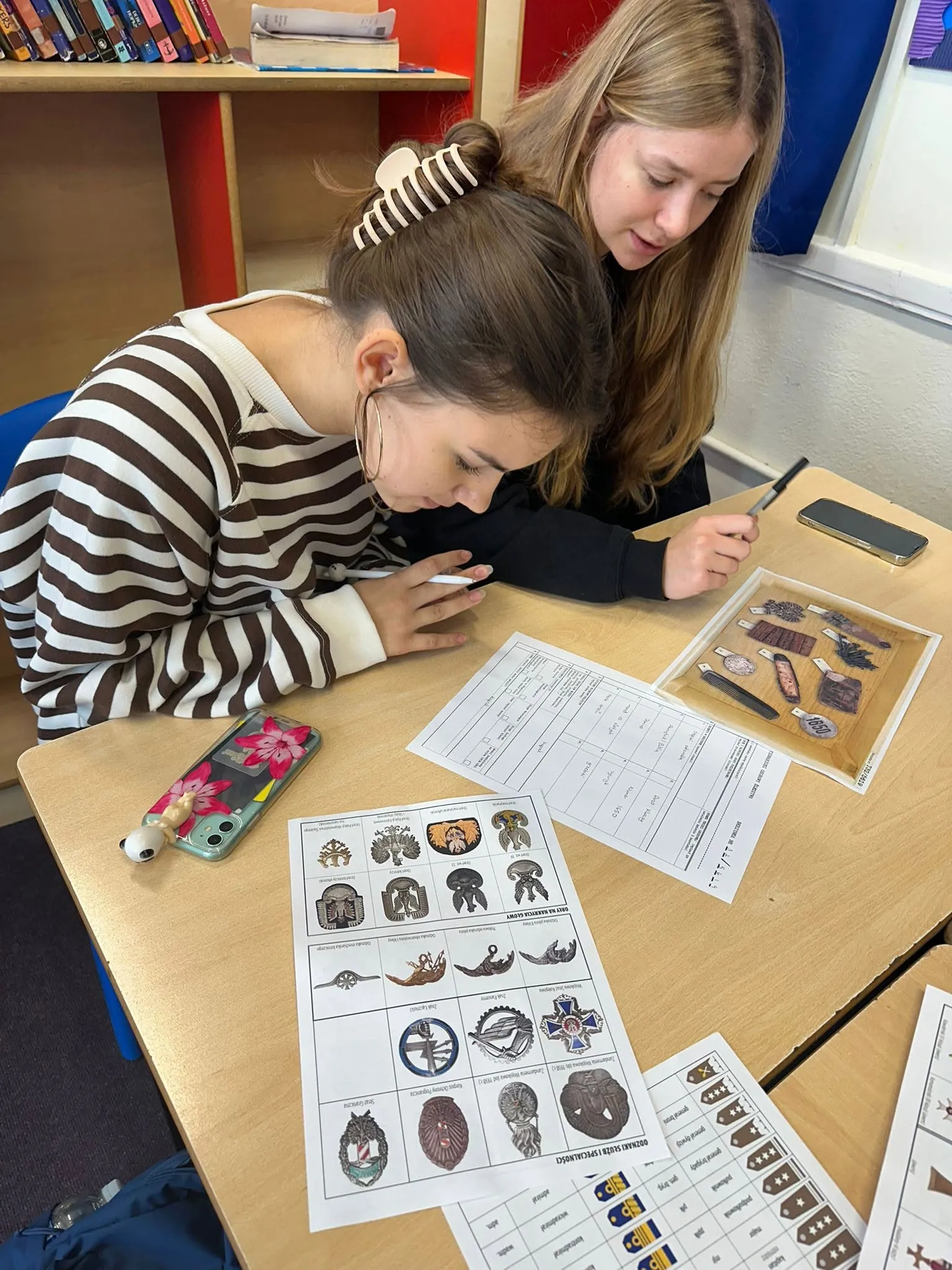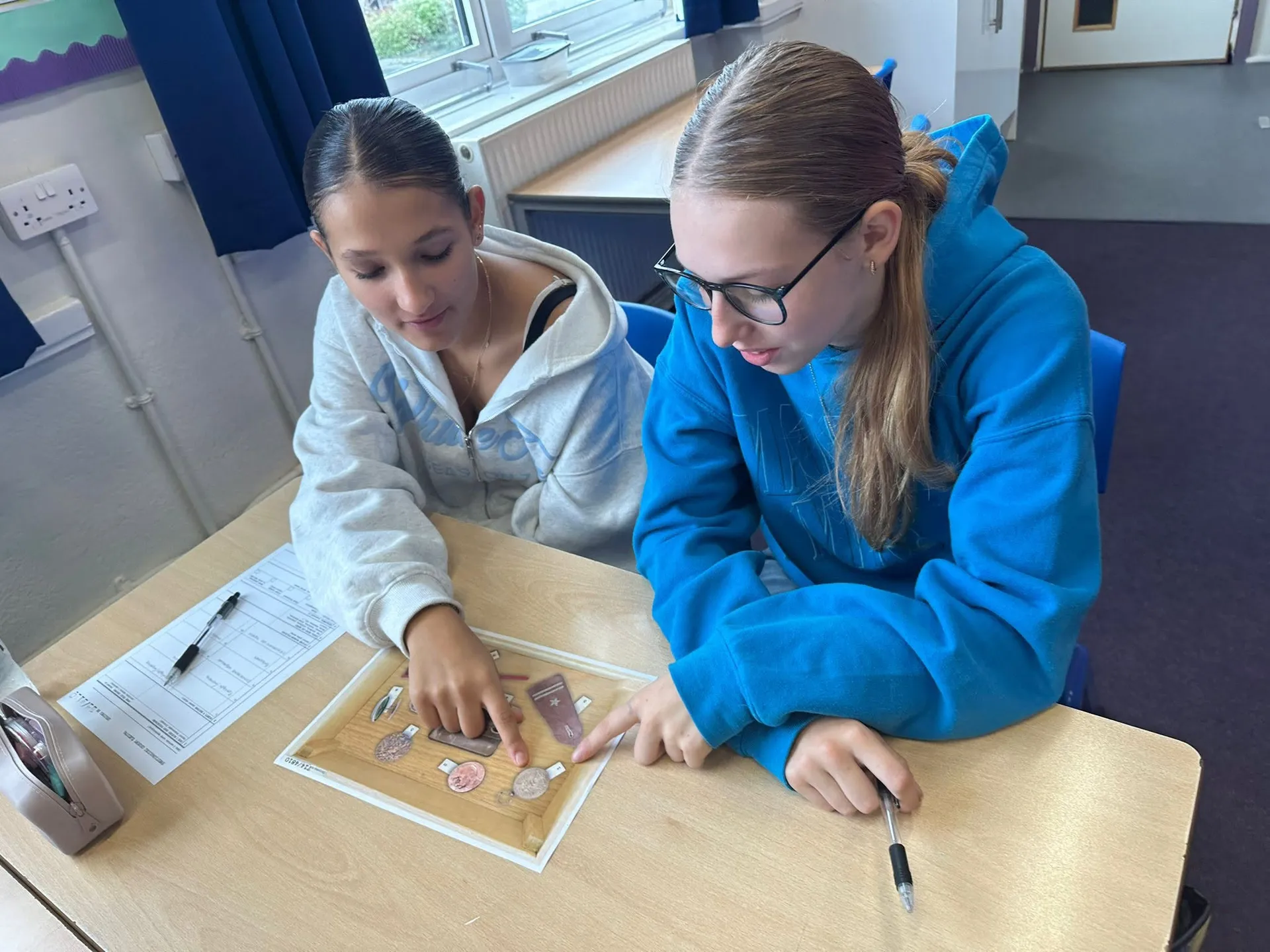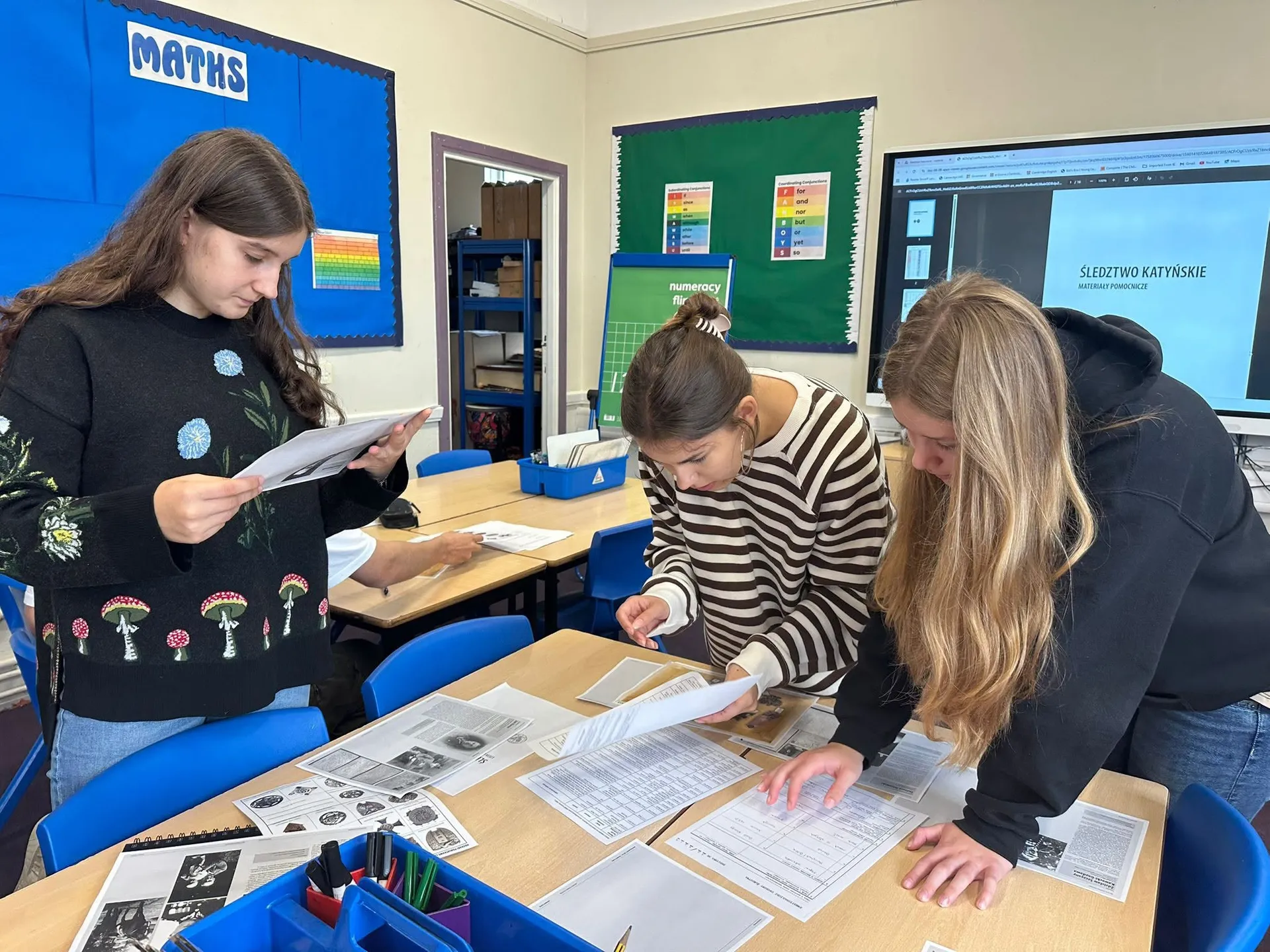


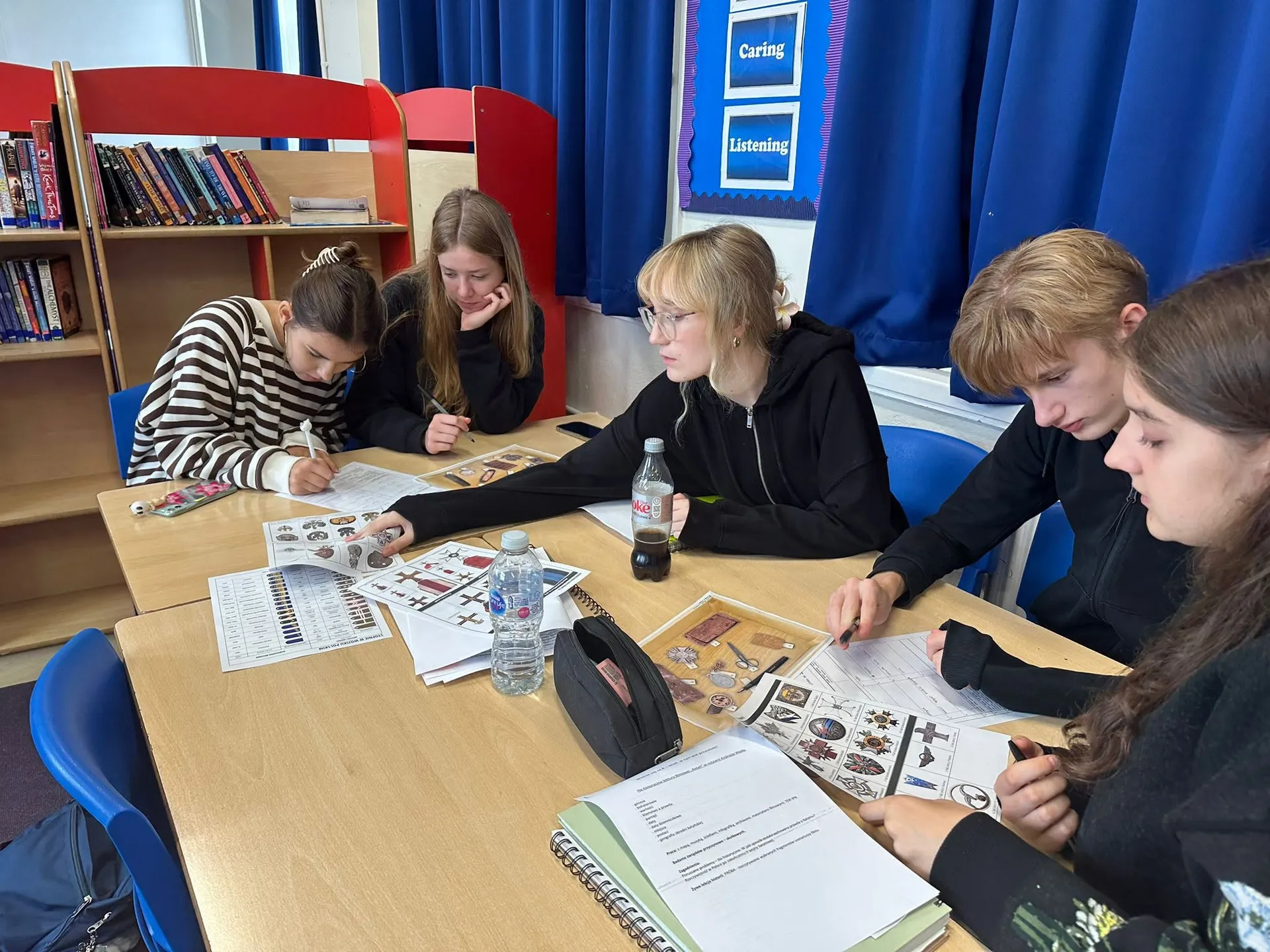
The A-level class began its series of lessons introducing the film ‘Katyń’ by working with ‘Katyń boxes’ – sets of photographs of personal belongings recovered from one of the mass graves. Using them, the students tried to identify real victims and gain a better understanding of their stories.
The students worked in pairs and small groups. They examined photographs of small personal belongings closely and matched them with worksheets. This experience allowed them to approach the subject in a more personal and immediate way – for behind every object there is a real person and their story. Uniform buttons, badges, documents and letters found during the exhumations still help to restore the memory of individual victims today.
In spring 1940, NKVD officers murdered around 22,000 Polish citizens – above all officers of the Polish Army, police officers and members of the intelligentsia – who were being held in camps and prisons. The crime takes its name from the Katyń Forest near Smolensk, where prisoners from the camp at Kozelsk were shot; victims from the other camps were killed in places including Kharkiv and Tver. For decades the truth about this crime was suppressed in the Polish People’s Republic, and the Soviet Union admitted to it only in 1990. The film ‘Katyń’, directed by Andrzej Wajda, whose father was one of the victims, premiered in 2007.
We thank the students for their commitment to these lessons, which opened a whole series devoted to the film.