

One snake (‘jeden wąż’)… two snakes (‘dwa węże’). This simple pair of words already shows what one of our classes was working on during Saturday’s lessons: the vowels ‘ą’ and ‘ę’, which pupils find very hard to remember.
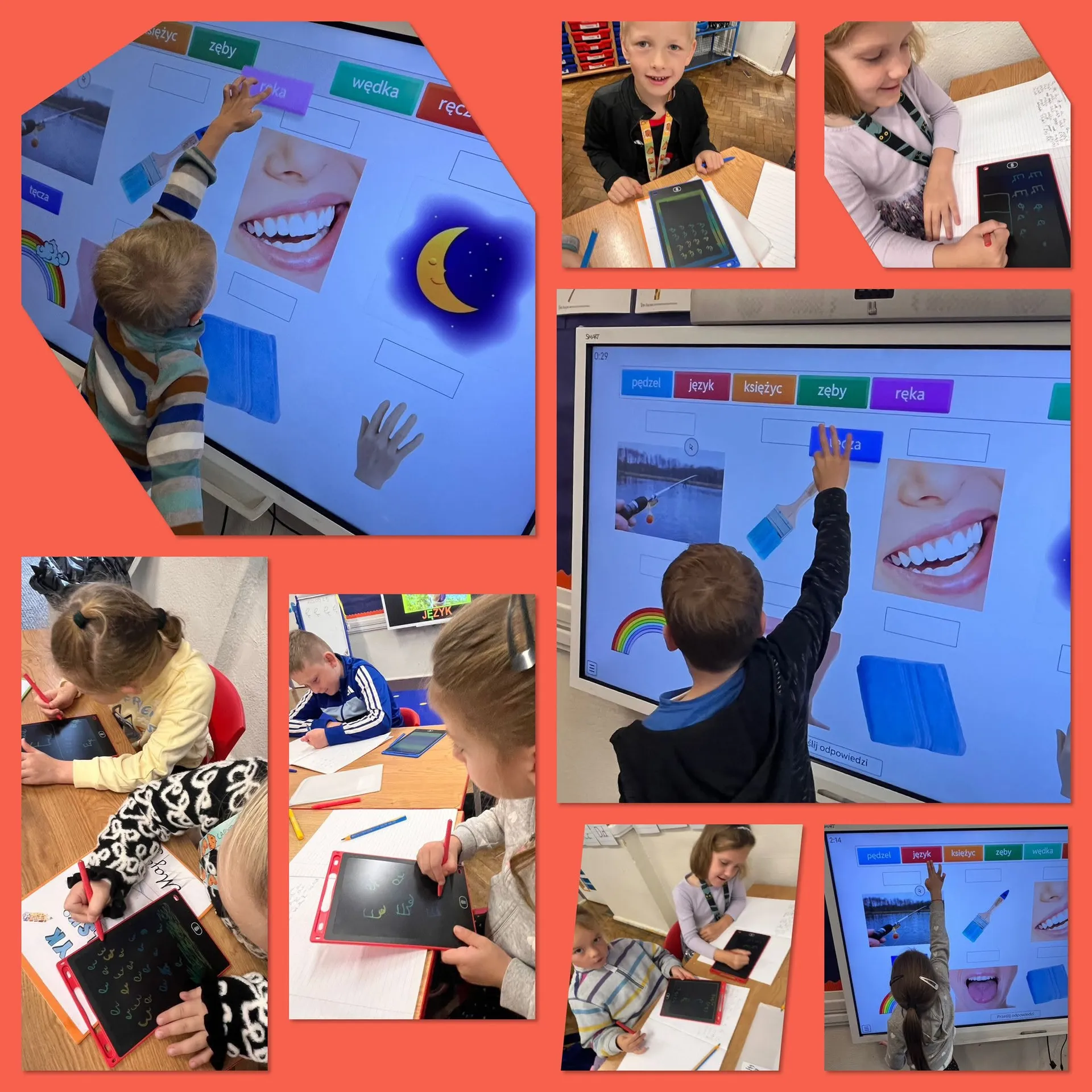
The pupils tried to learn how to pronounce both vowels, recognise them in a text and write them correctly. The exercises took place at the interactive whiteboard, where the children matched words to pictures, as well as in exercise books and on writing tablets. It was harder than ever, but the class managed it.
‘Ą’ and ‘ę’ are nasal vowels and among the most characteristic sounds of Polish. They have no equivalents in English, which is why children growing up in Great Britain need many opportunities to hear and say them. When writing, it helps to notice that in different forms of the same word ‘ą’ often alternates with ‘ę’ – as in the pairs ‘wąż – węże’ (snake – snakes), ‘ząb – zęby’ (tooth – teeth) and ‘dąb – dęby’ (oak – oaks).
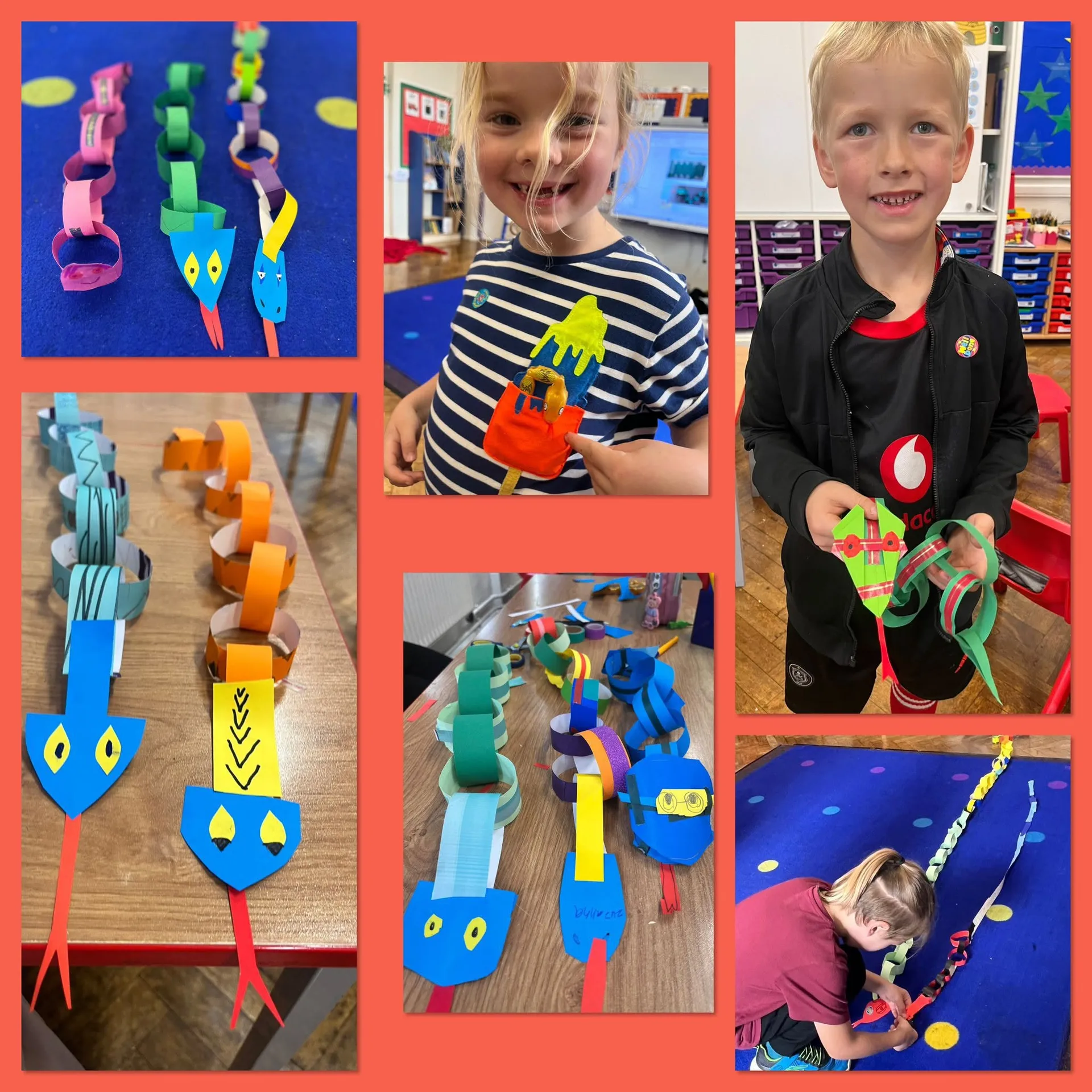
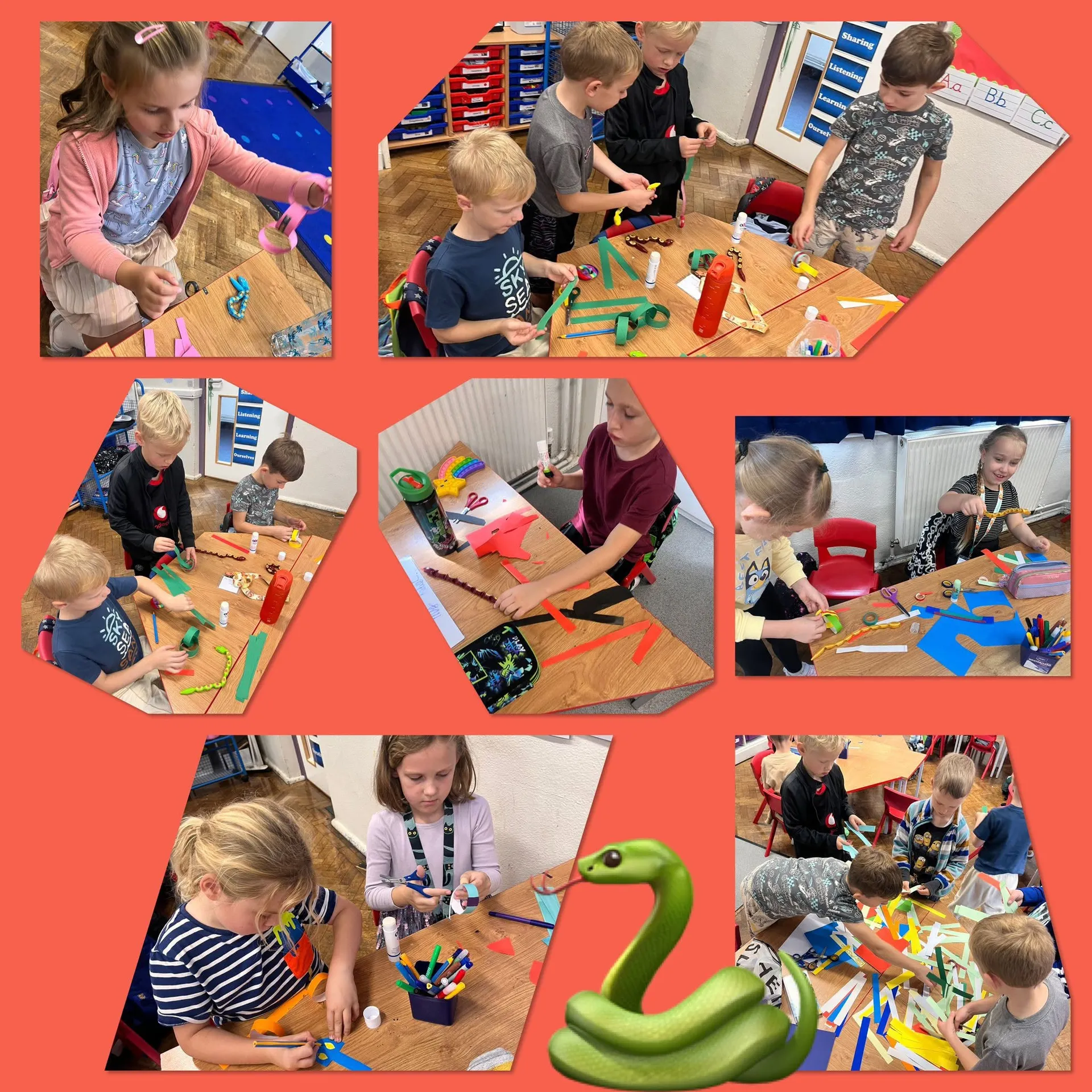
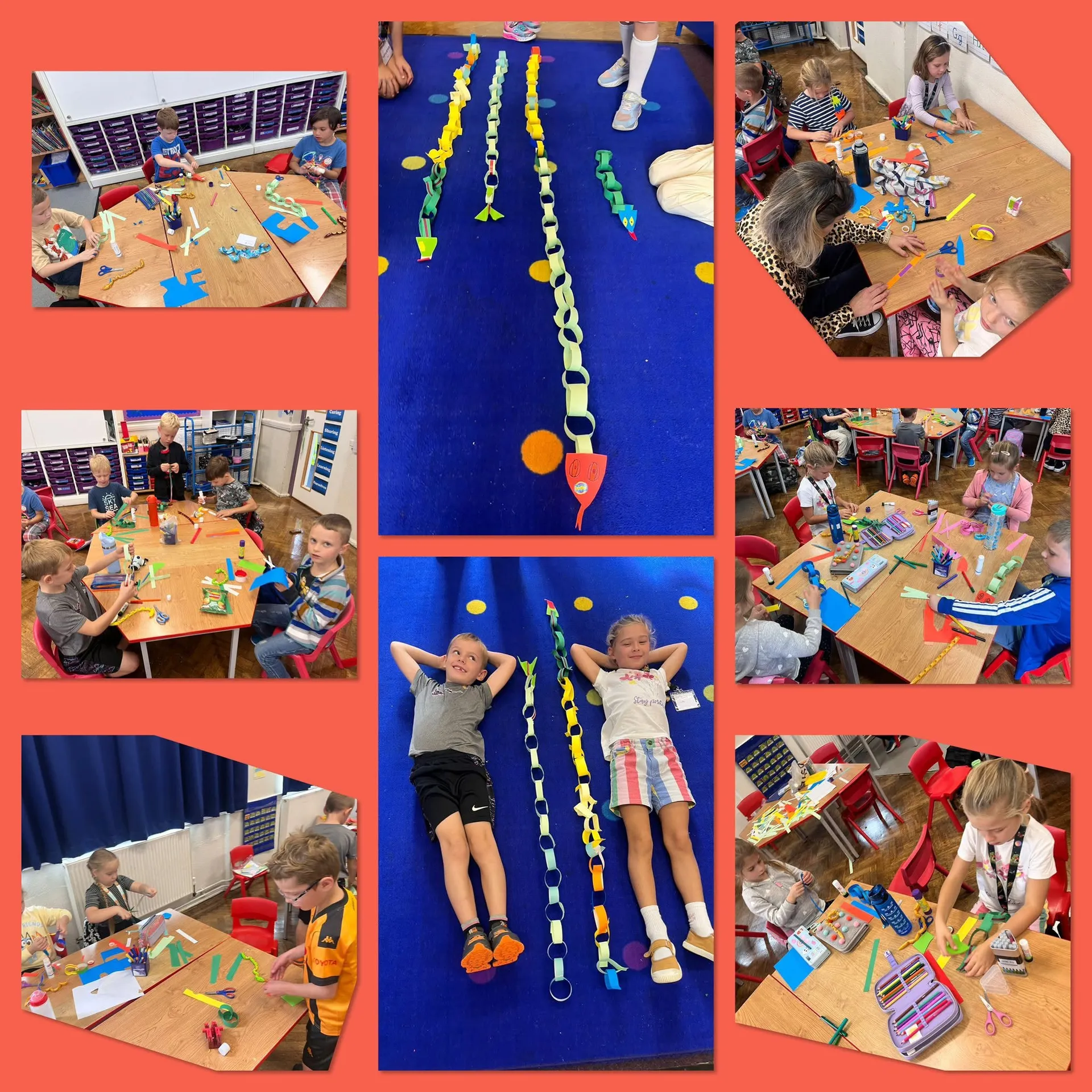
At the end of the day, the pupils made their own paper snakes, joining coloured strips into long chains finished with a head and a forked tongue. There was even a contest for the longest snake – the finished snakes were laid out on the carpet, and the pupils lay down next to them.
It was a truly hard-working and busy Saturday. More photographs from the lesson can be viewed in the gallery.