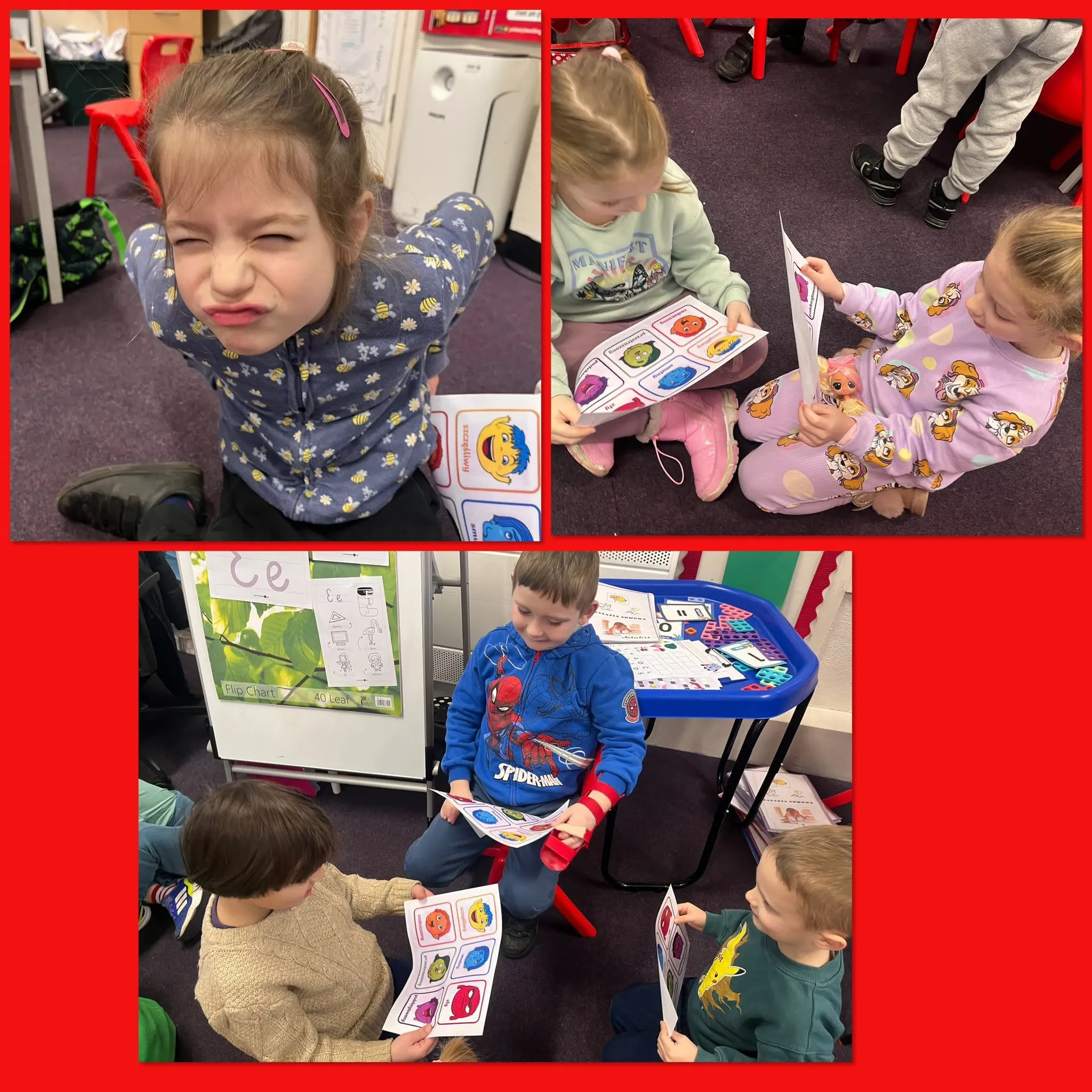


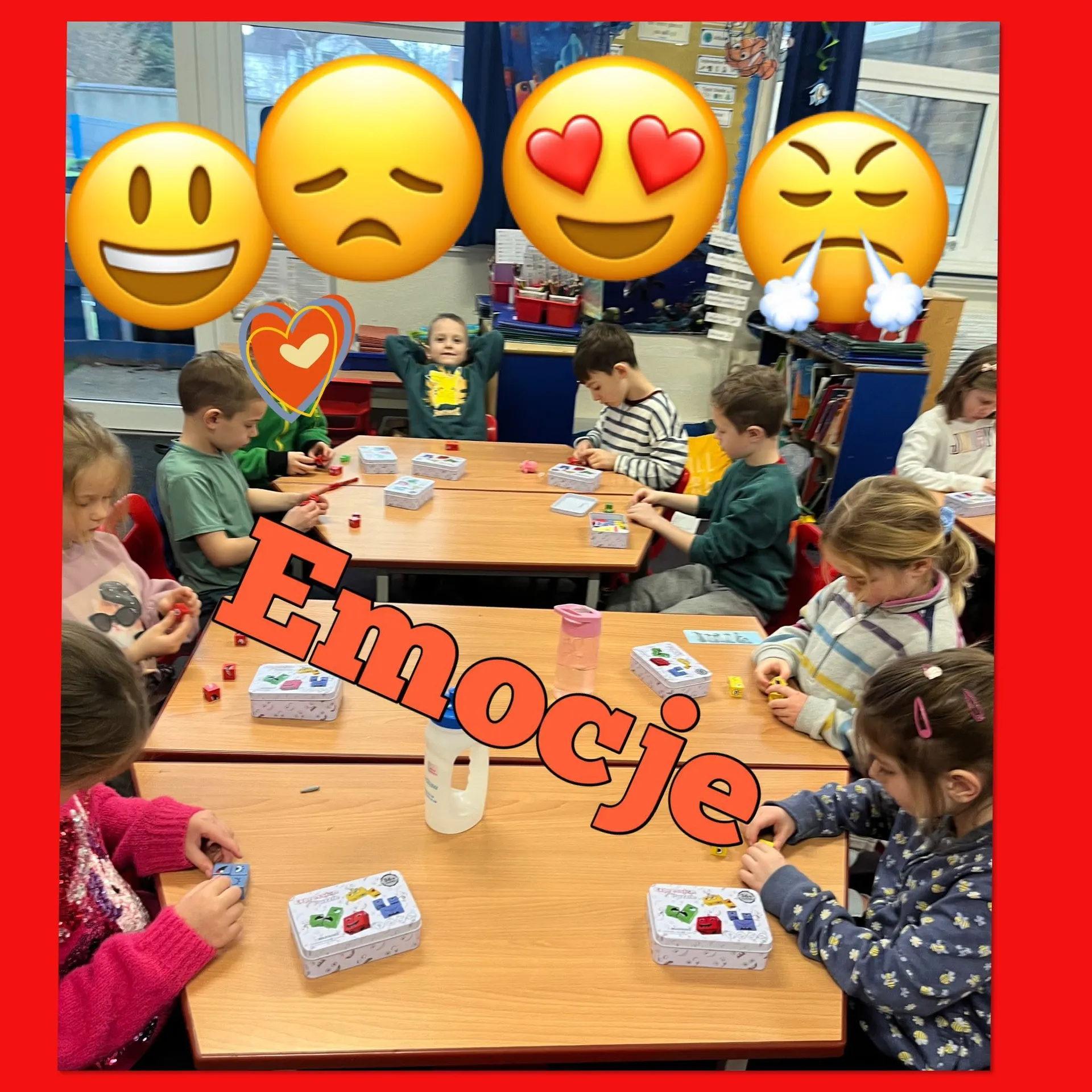
Joy, sadness, fear, surprise and anger – that ‘capricious lady’ – along with other emotions accompanied the pupils throughout their Saturday lessons.
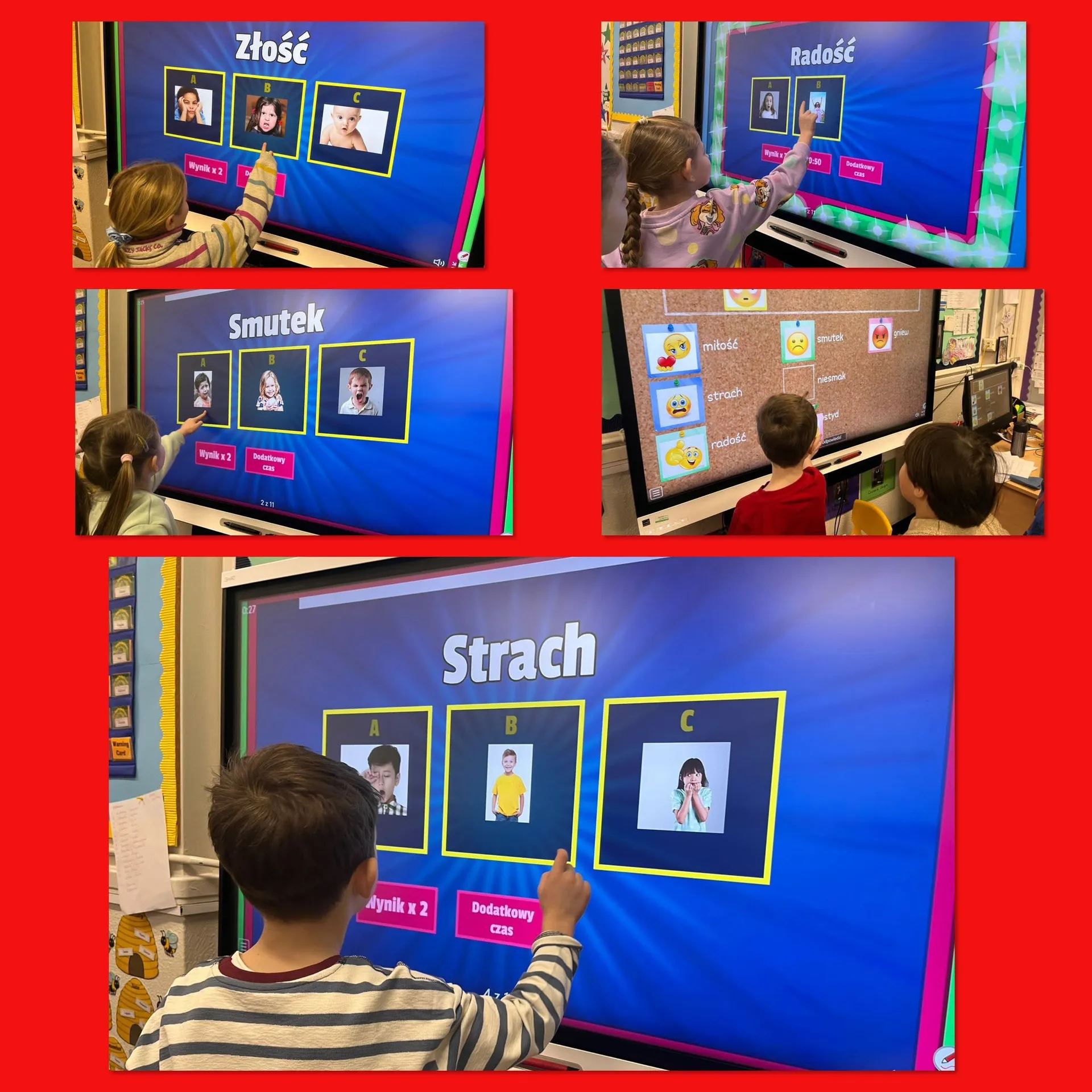
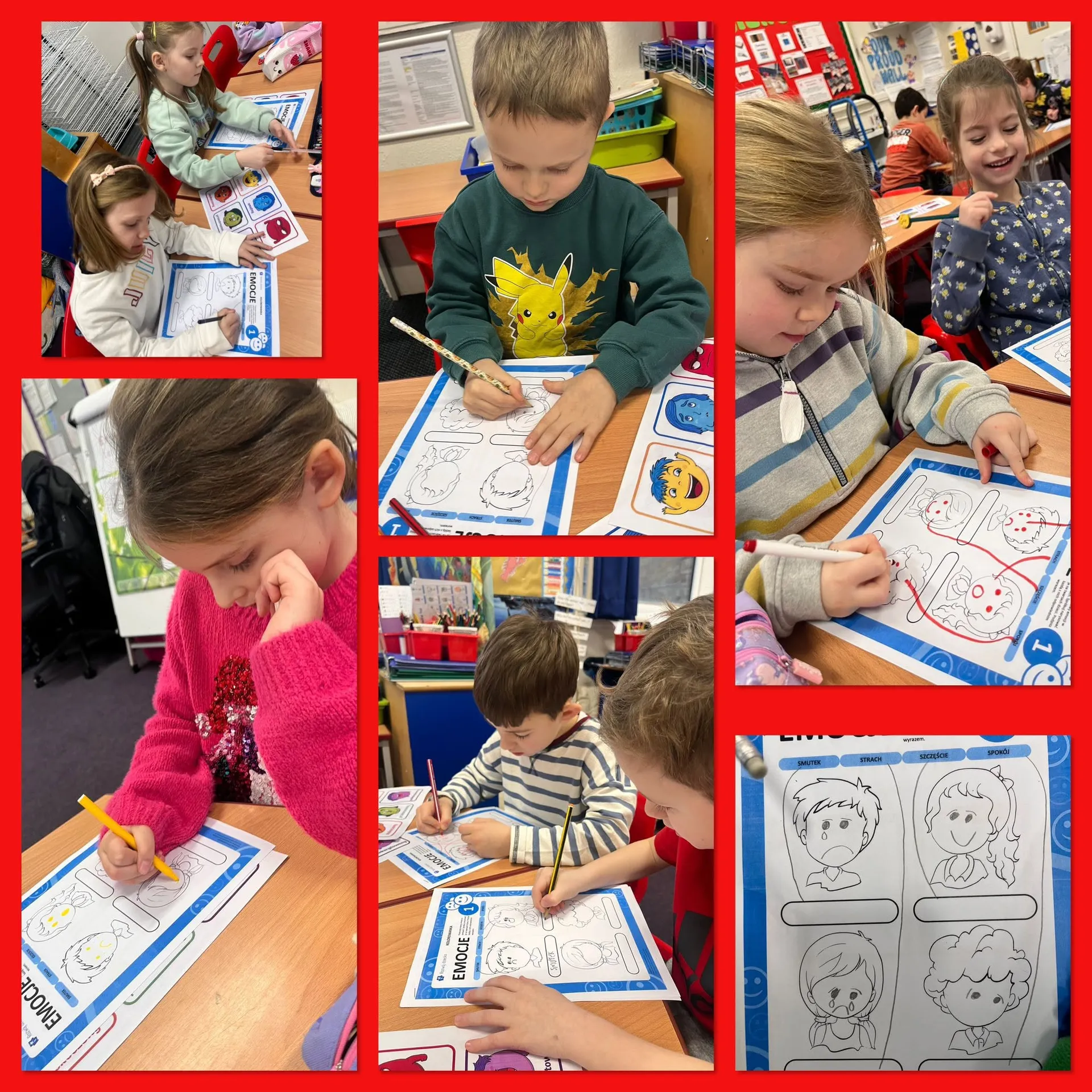
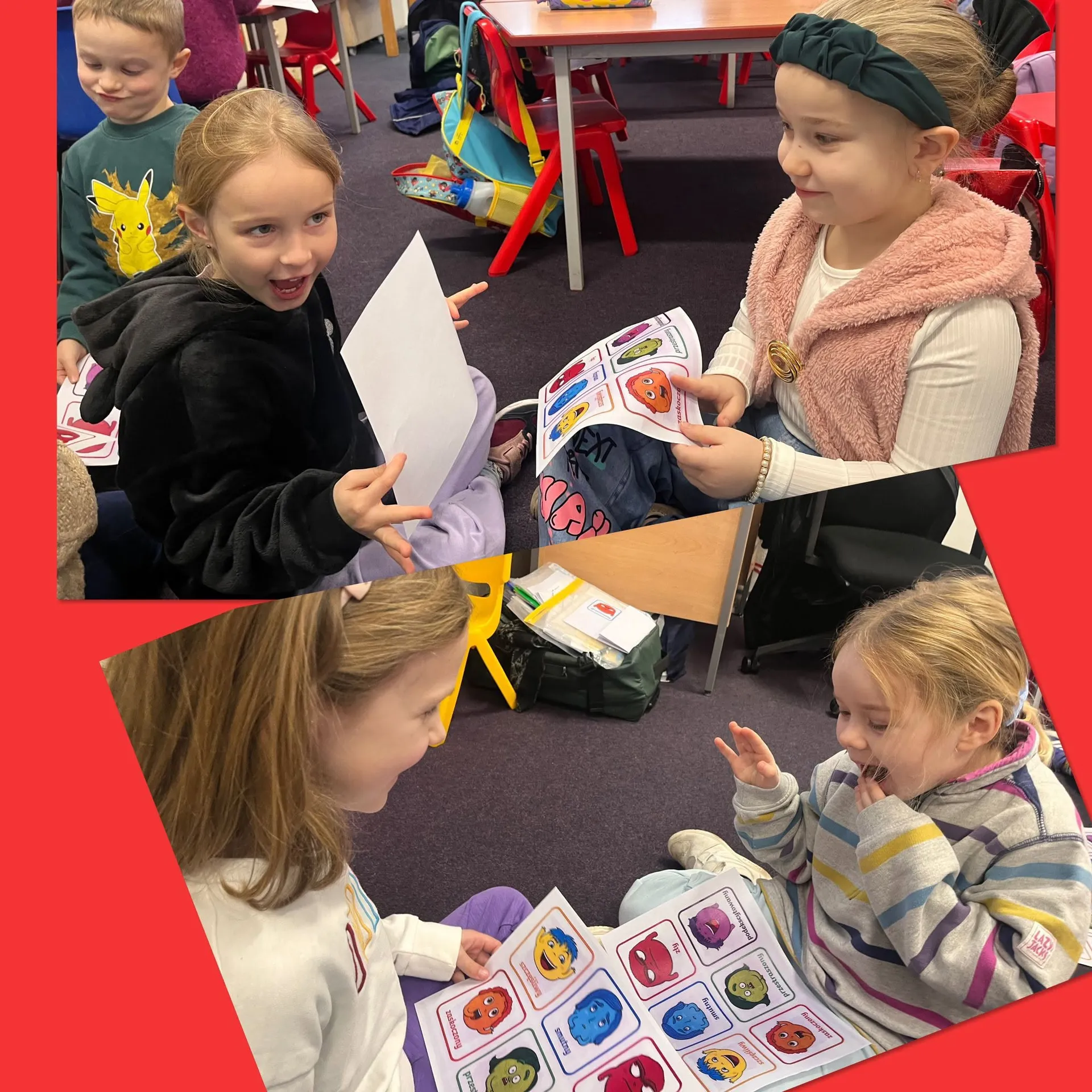
The children learnt to recognise emotions, sort them and show them on their faces, and in pairs they guessed which emotion a classmate was portraying. On the interactive whiteboard they matched photos of faces to the names of feelings – alongside fear and sadness there were also shame, sleepiness and surprise. The pupils also completed colouring sheets and worksheets featuring a variety of facial expressions.
The most fun came from colourful dice showing facial expressions. A face appeared on a card, and each player had to build it out of the dice as quickly as possible. The games then went home with the children.
Through emotions, the pupils arrived at the next vowel – E, with which the word ‘emocje’ (emotions) itself begins. Recognising it in jumbled letters and in words went smoothly and quickly.
Naming feelings is one of the most important language skills, and for children growing up with two languages it is particularly valuable: it allows them to talk in Polish not only about what they see, but also about what they feel. Play, movement and facial expressions also help them to remember new words. More photos from the lessons can be seen in the gallery.