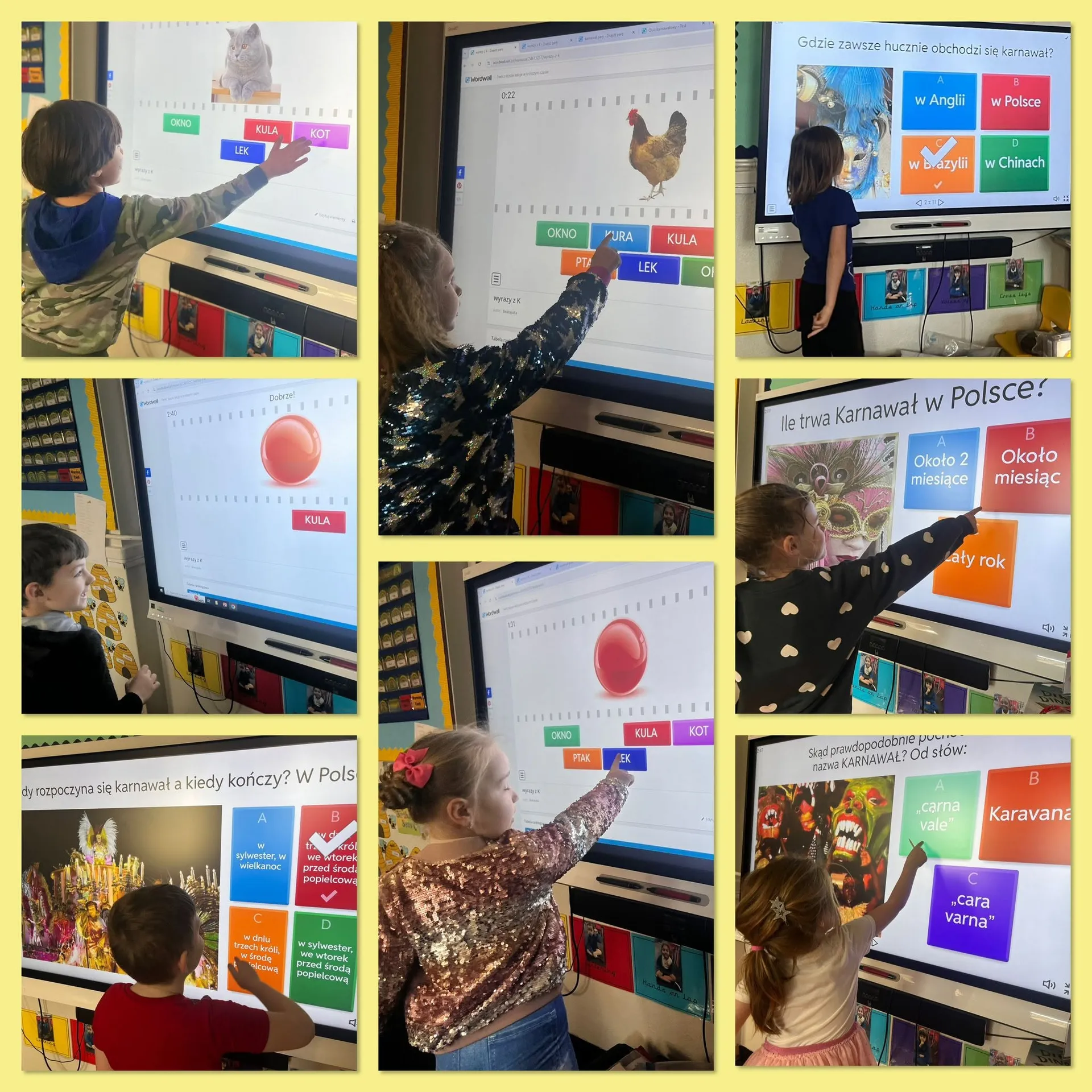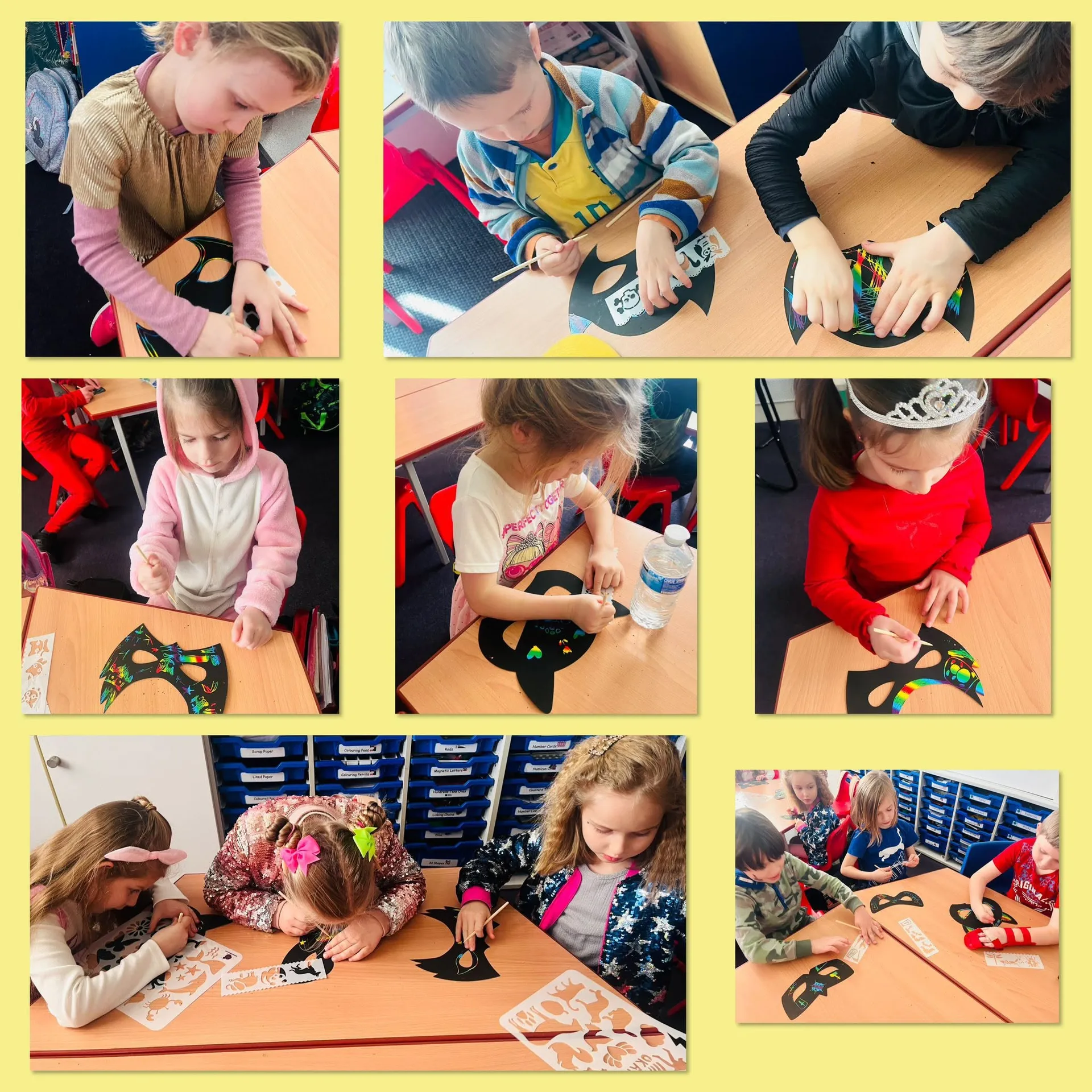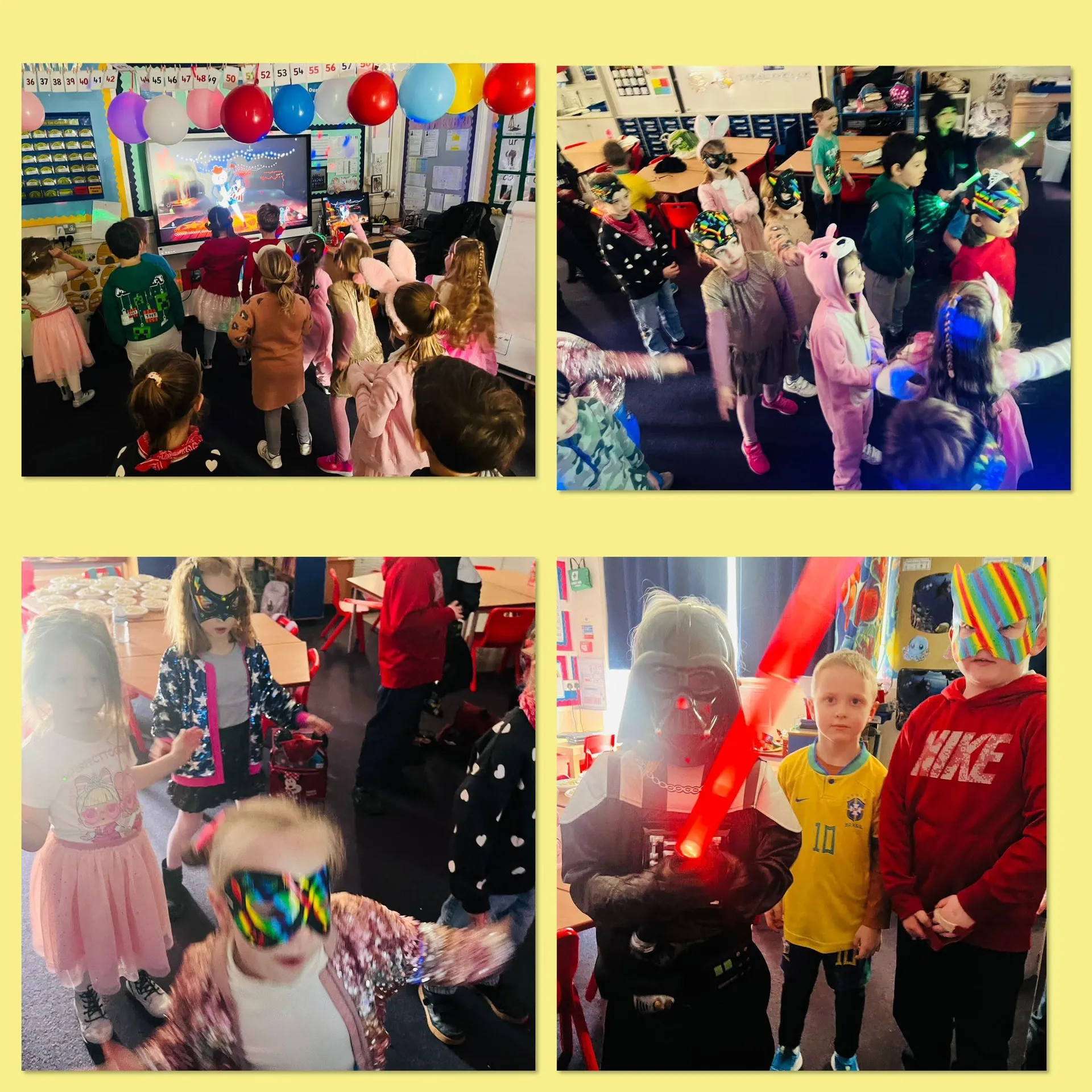


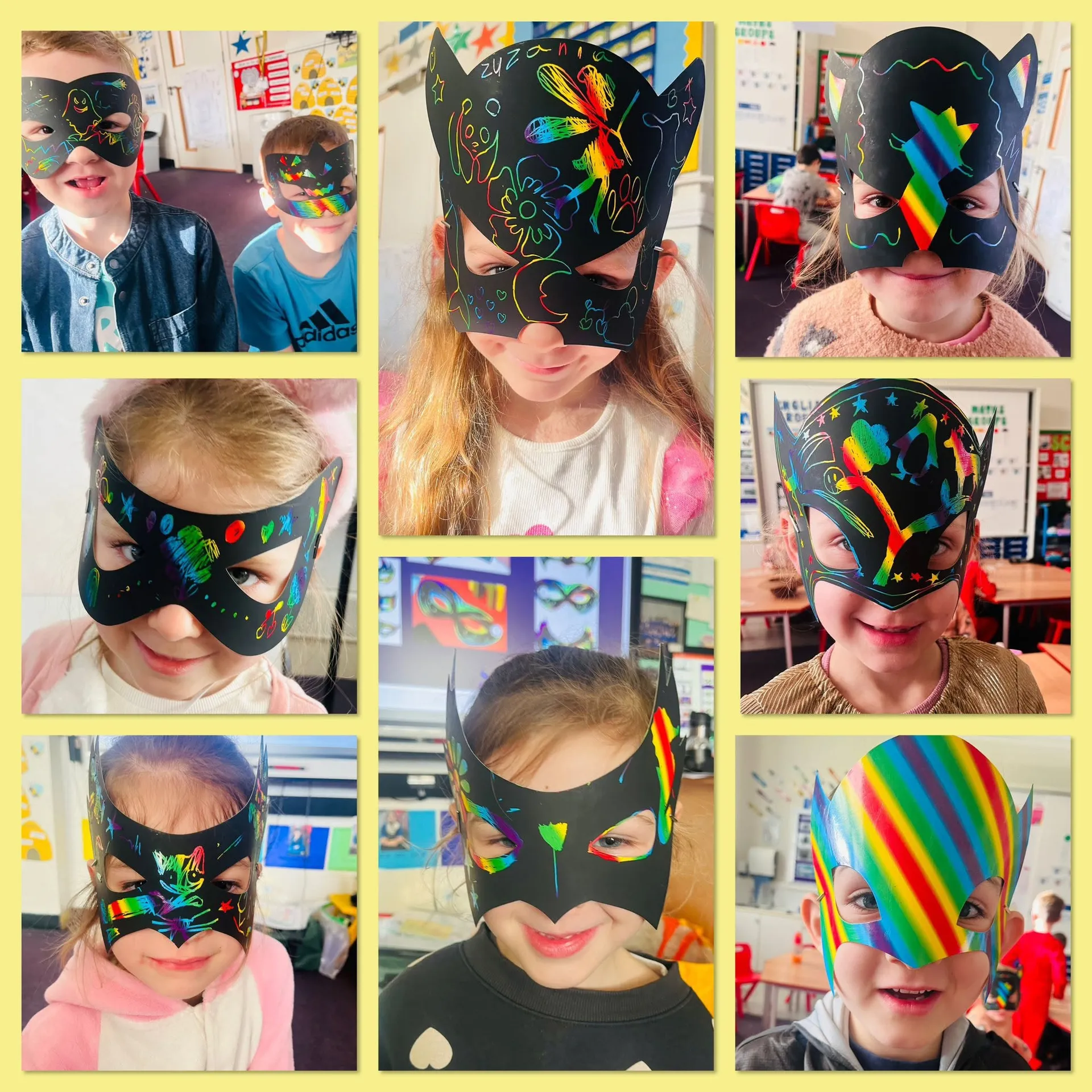
Carnival time in one of our classes combined fun with learning. Pupils learnt the sound K – as in the word ‘karnawał’ (carnival) – and, moving to a dance rhythm, tackled their worksheets, made carnival masks and took part in a class dance party.
The children practised the new sound in games on the interactive whiteboard, matching words to pictures, and consolidated it in worksheets: they wrote the letter K between handwriting lines and coloured in the illustrations. They also made black masks decorated with colourful rainbow patterns, which the pupils show off in the photos.
In Polish tradition, carnival, once also called zapusty, lasts from the Feast of the Epiphany (Three Kings' Day) until Ash Wednesday and has for centuries been a time of balls, sleigh rides (kuligi) and masquerades. Its best-known day is Fat Thursday (tłusty czwartek), when people traditionally eat pączki (doughnuts) and faworki (angel wings). Indeed, many a carnival word begins with the sound K – ‘kulig’ (sleigh ride), ‘kostium’ (costume) or ‘konfetti’ (confetti) – and the word ‘maska’ (mask) also contains the sound learnt in class.
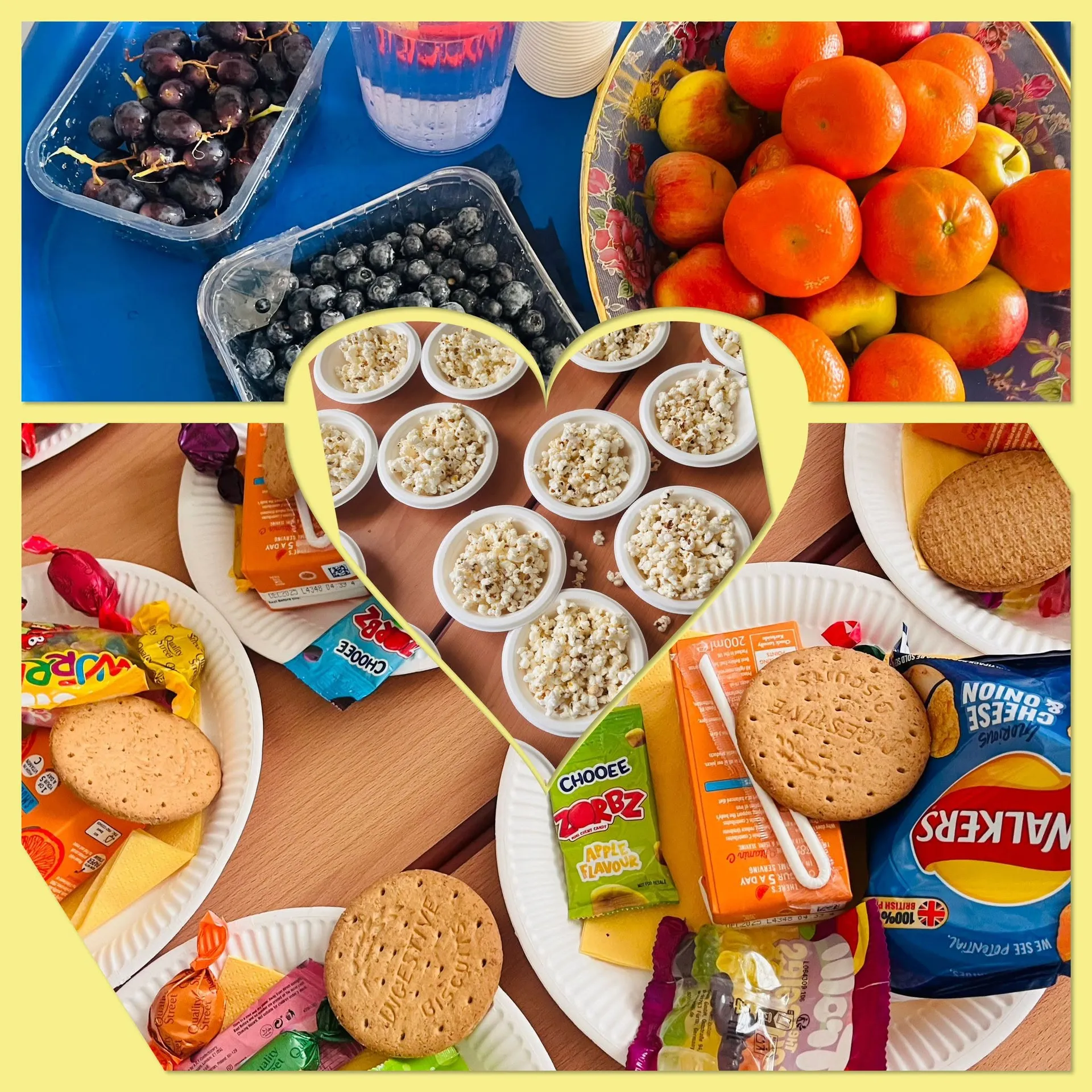
The dance party, in a classroom decorated with balloons and lit with colourful lights, took plenty of energy. The class would like to thank the Parents' Committee and parents very much for the snacks they provided, which helped everyone get through this dancing Saturday. More photos from the carnival lessons can be seen in the gallery.