

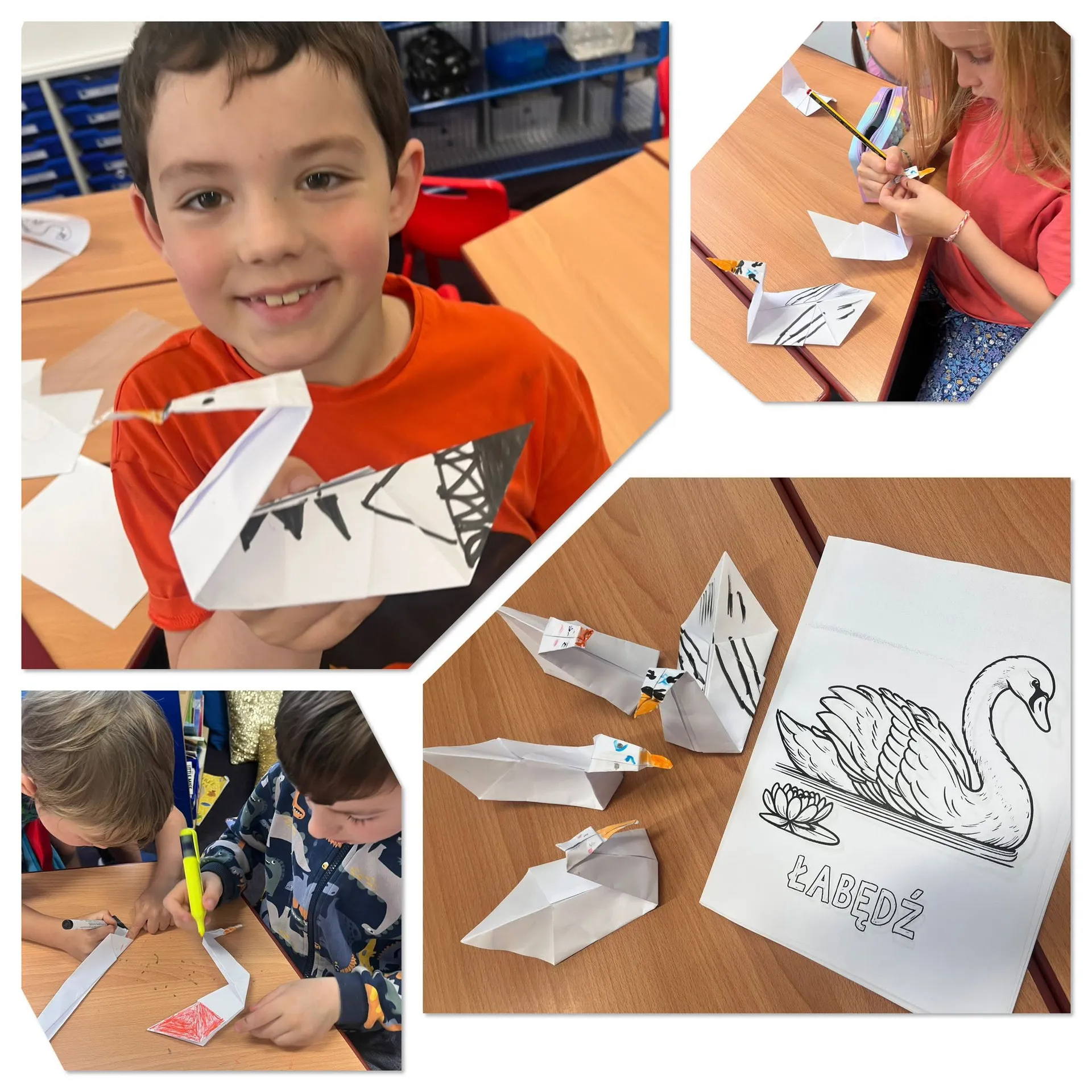
Was the Ugly Duckling in Andersen's fairy tale really ugly? What would we like to be when we grow up? What is the biggest waste of time? Can you make a swan out of paper? The pupils in one of our classes found the answers to these and other questions during their Saturday lesson.
Andersen's fairy tale and the letter Ł
The fairy tale by the Danish writer Hans Christian Andersen put the class in a storybook mood and began a day-long journey with the letter and sound Ł. The story of the chick that grew up among ducks, suffered many unkindnesses because it was different and finally turned out to be a beautiful swan has prompted readers for generations to reflect on how we judge others.
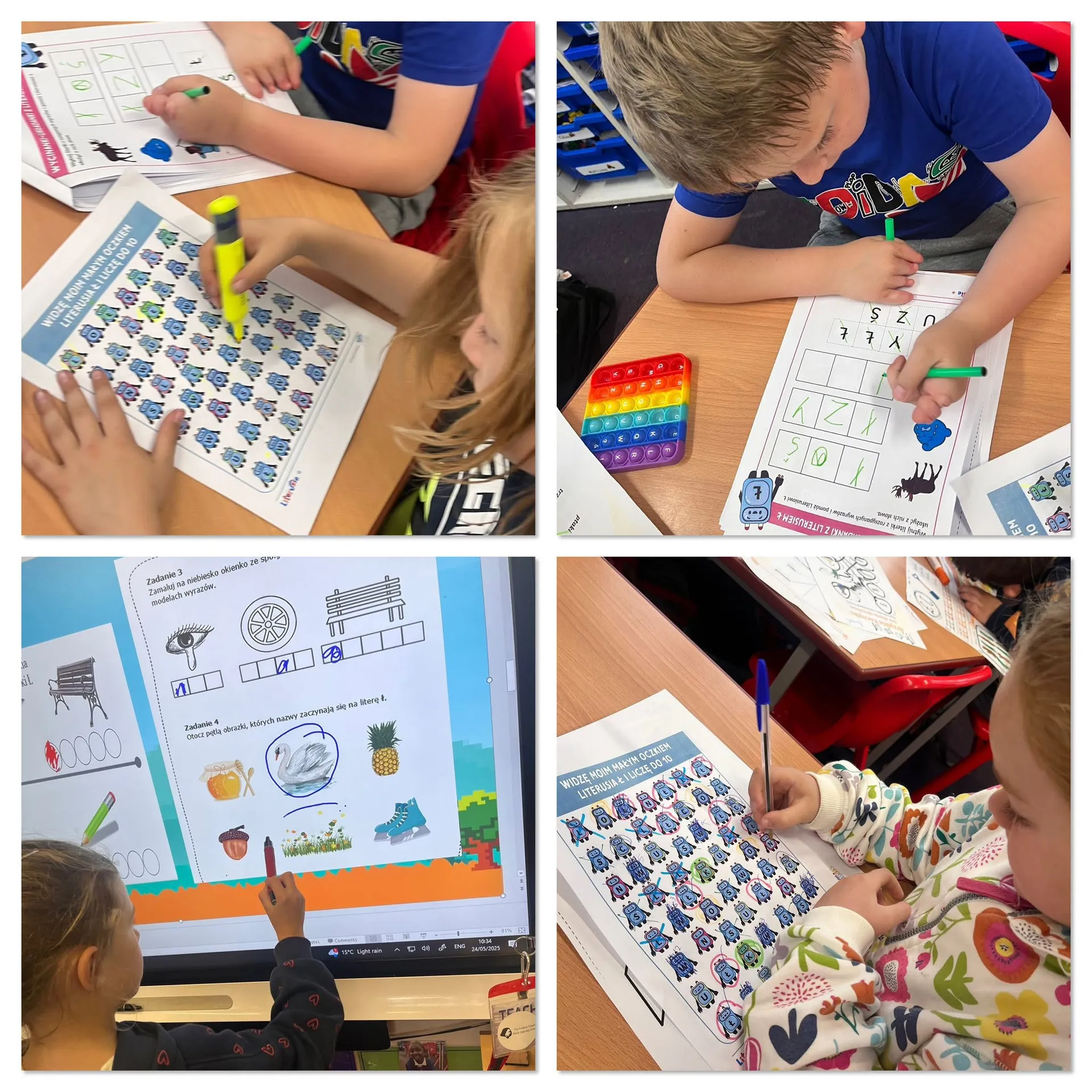
Ł is one of the letters most characteristic of the Polish alphabet. It does not exist in English, and today it is pronounced much like the English ‘w’ in the word ‘water’, which can be a source of mistakes for bilingual children. That is why it is worth practising recognising and writing it – for example with the word ‘łabędź’ (swan).
Paper swans
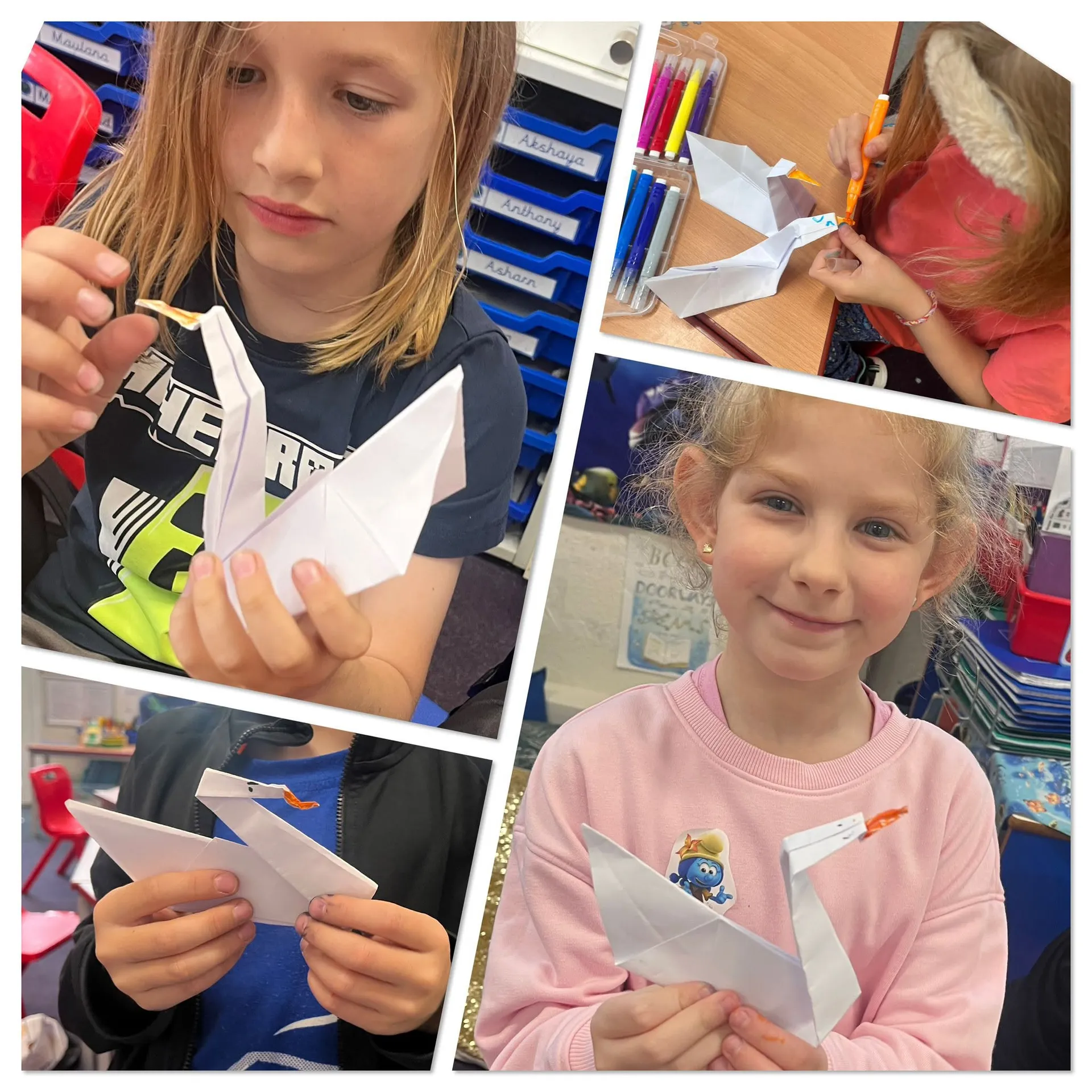
The pupils folded swans out of paper. Origami, the art of paper folding, requires precision and patience, and it is also good practice for manual dexterity. The children liked their finished work so much that they used it to create their own stories and games. There were also exercises with the new letter on worksheets and at the interactive whiteboard.
A bilingual read
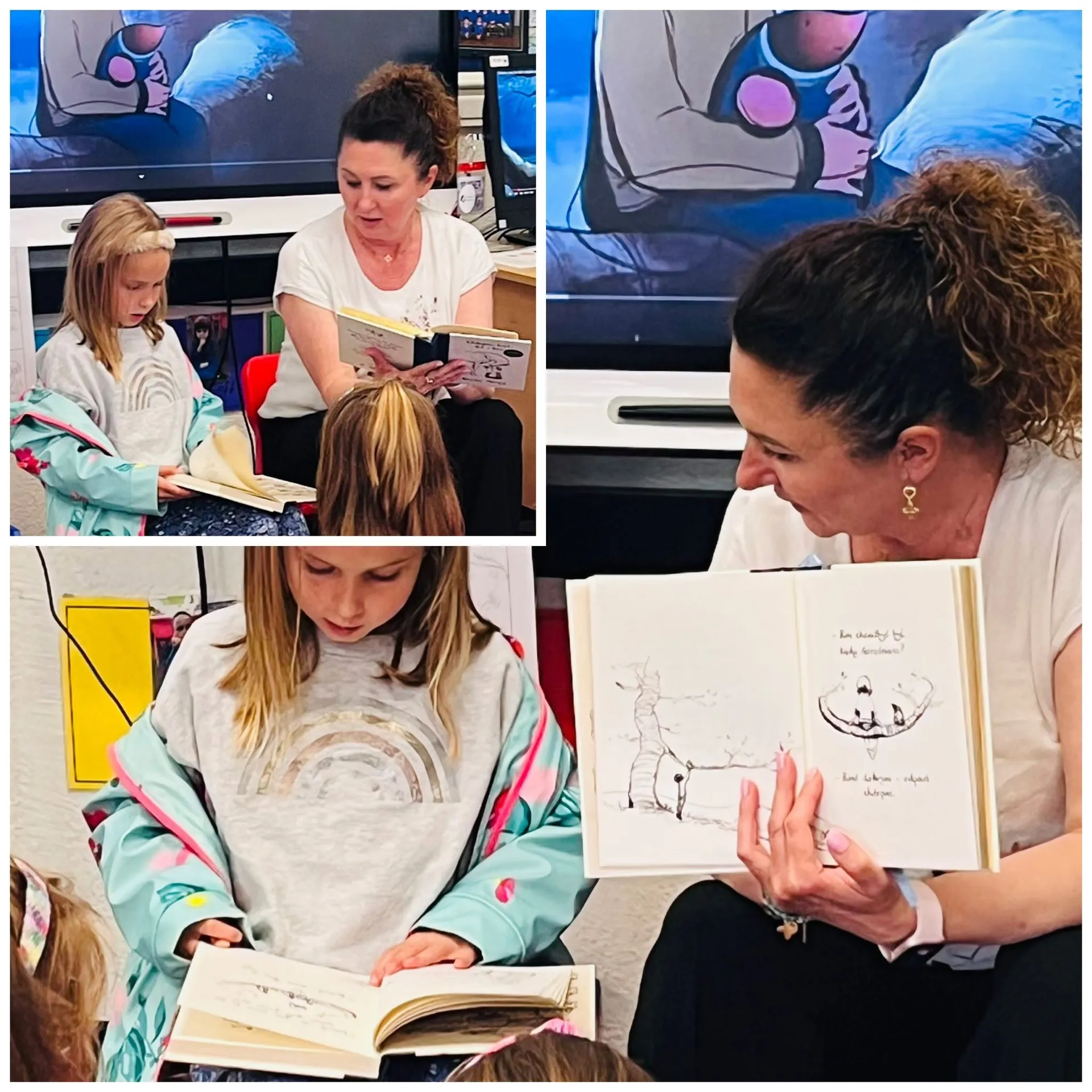
The class also began reading a new book together – ‘The Boy, the Mole, the Fox and the Horse’ by the British artist Charlie Mackesy, which introduces readers to a world of love, kindness and friendship. As it was read aloud, the pupils followed the text in their own copies. The class read the book in two languages, Polish and English, which led to a remarkable bilingual brainstorm. More photos from the lesson can be seen in the gallery.