

Another Saturday full of learning and discovery of the Polish language and culture is behind us. The pupils consolidated their knowledge of nouns and their genders, and then learnt about punctuation marks and about declarative, interrogative and imperative sentences.
Nouns and types of sentences
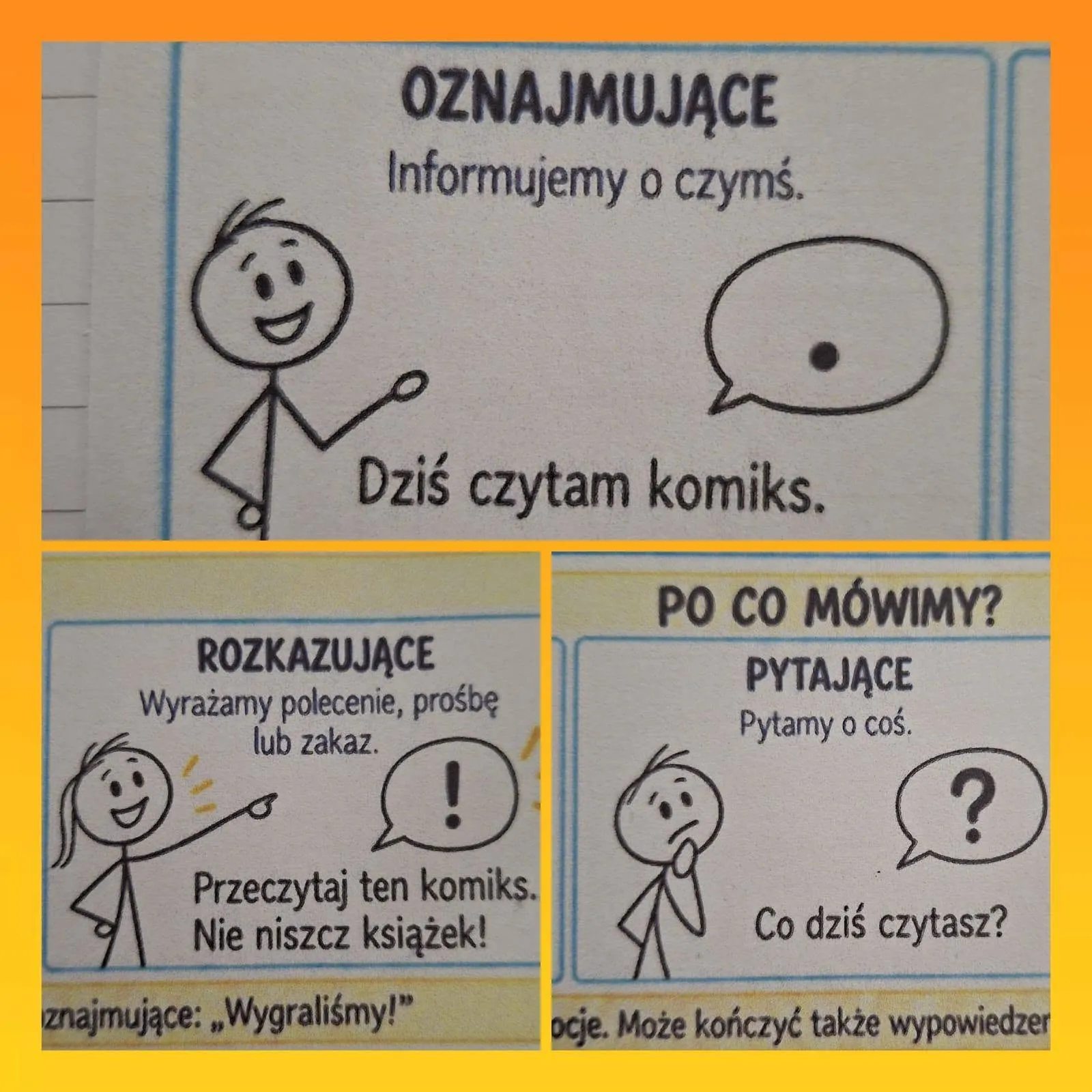
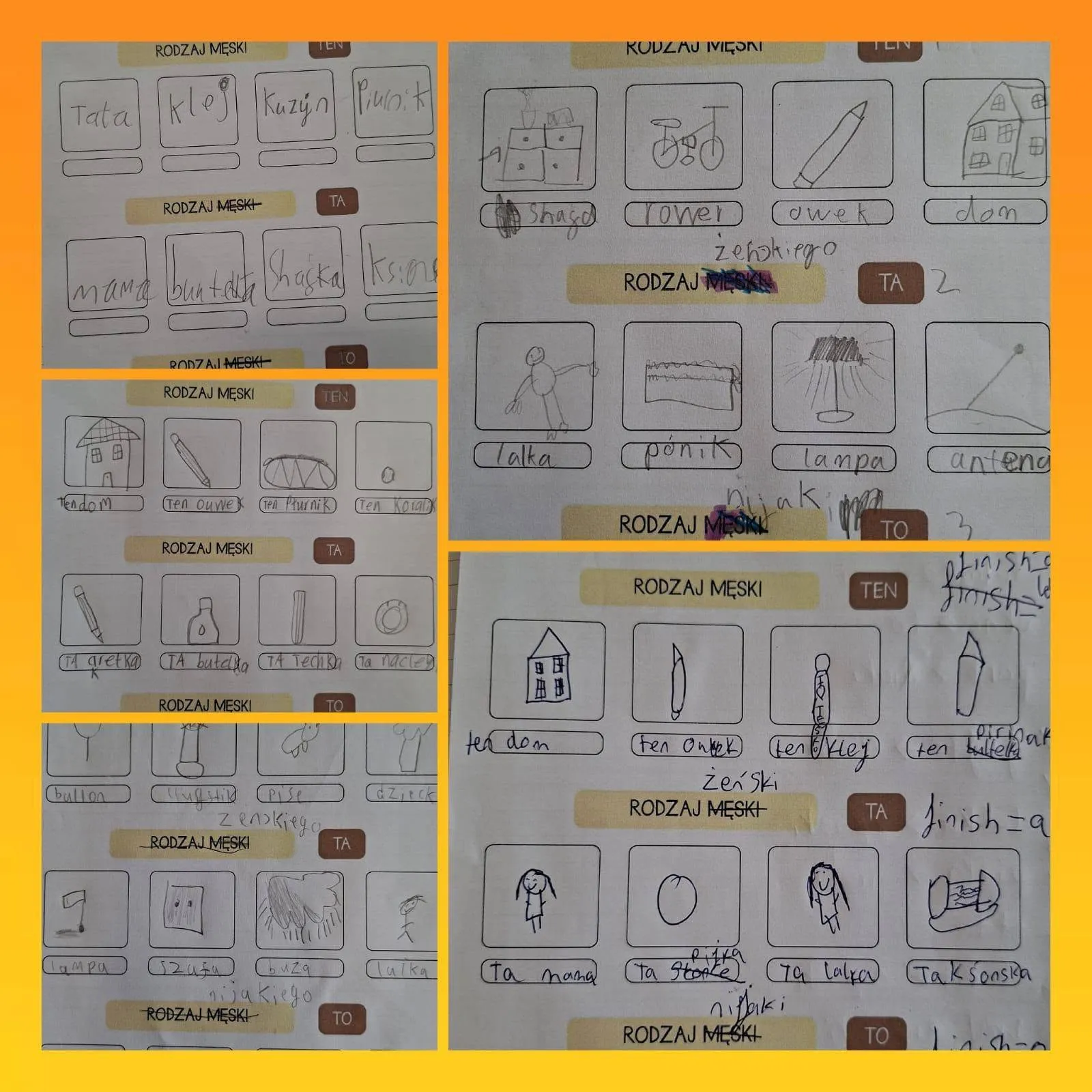
The easiest way to identify the gender of a noun is to pair it with the word ‘ten’ (masculine), ‘ta’ (feminine) or ‘to’ (neuter). Sentences, on the other hand, are classified according to their purpose, and the clue is the mark at the end: a declarative sentence, which gives information, ends with a full stop; an interrogative sentence ends with a question mark; and an imperative sentence, which expresses a command, request or prohibition, ends with an exclamation mark or a full stop. The pupils consolidated this knowledge on worksheets, practising not only accuracy but also careful reading and comprehension.
The legend of Piast the Wheelwright
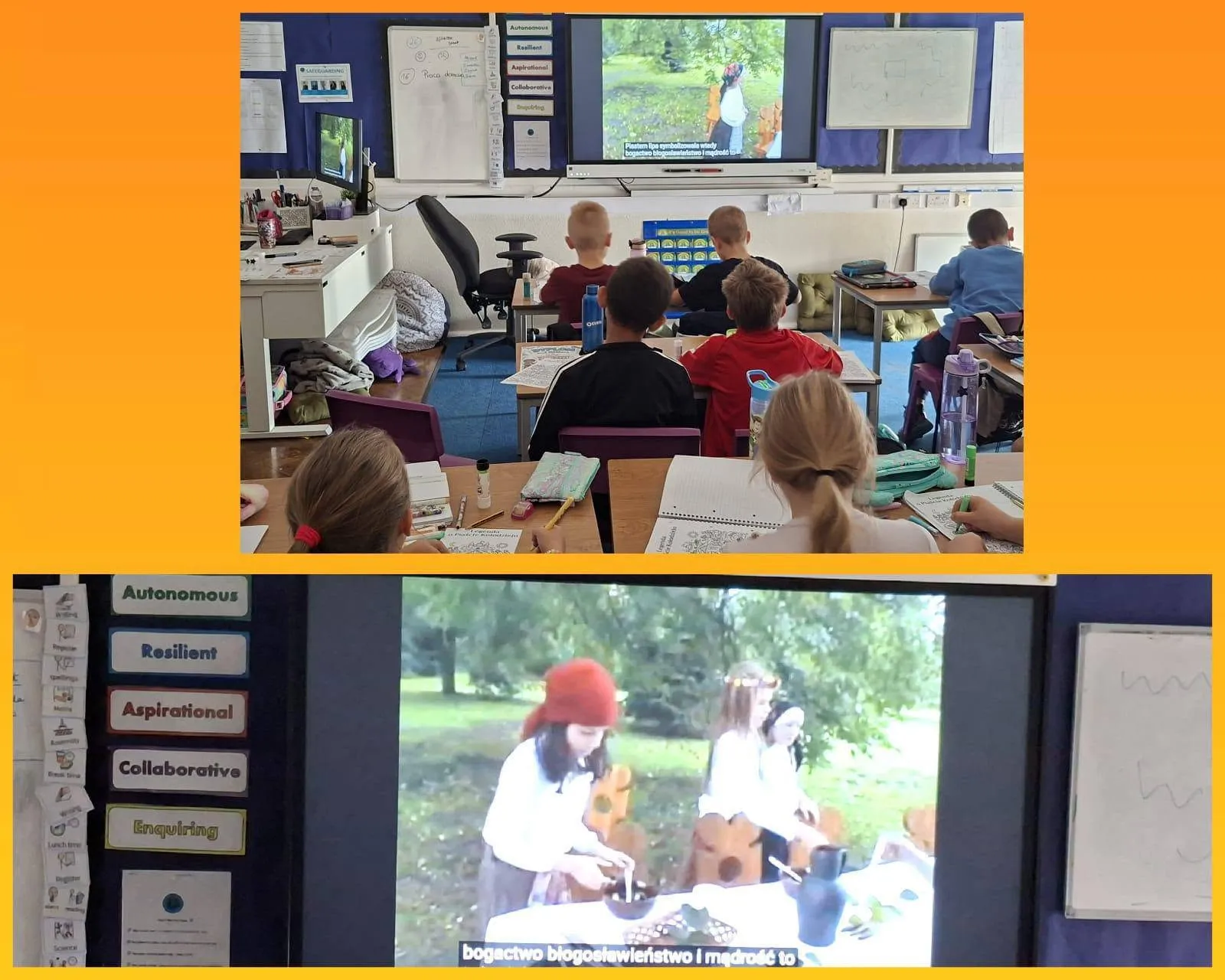
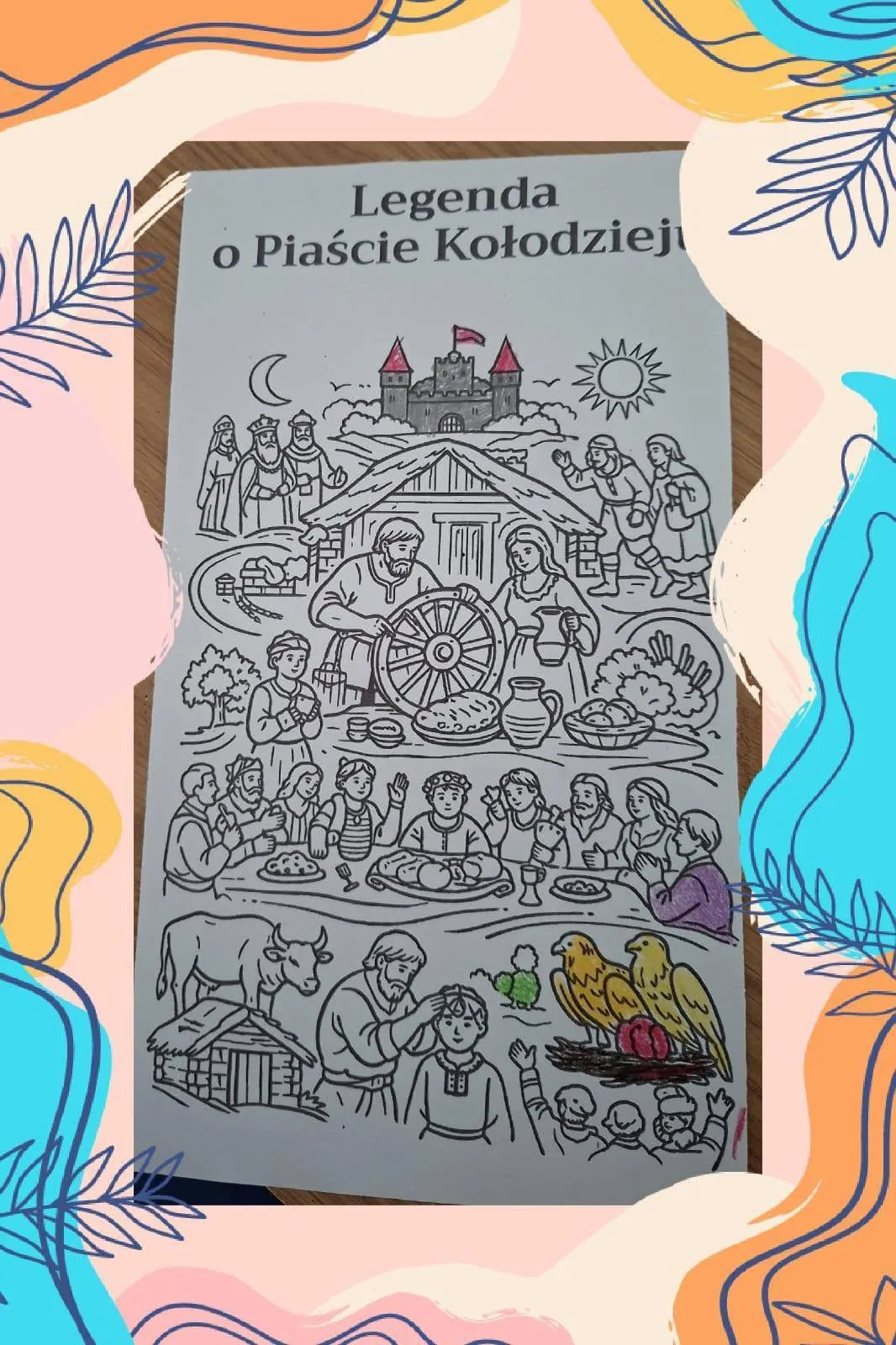
Later in the lesson, the class entered the world of Polish legends. The pupils watched a film presenting the legend of Piast the Wheelwright, and then discussed and analysed it together. This was also an opportunity to talk about Polish history, traditions and values. The story of the poor wheelwright who welcomed travellers turned away from the court of Prince Popiel was recorded at the beginning of the 12th century by Gallus Anonymus. The first dynasty of Polish rulers took its name from Piast.
The Vistula, Cezary the stork and Pan Kleks
The geography of Poland was not forgotten either: the pupils recalled the name of the country’s capital, its longest river and the sea on which Poland lies. They also began learning the traditional song ‘Płynie Wisła, płynie’ (‘The Vistula flows on’).
There was also time for the children’s own stories. One pupil told the class about the week she had spent in the company of Cezary, the class stork. Moments like these develop the ability to speak freely, listen to others and share one’s own experiences.
To finish, the class listened to another instalment of the adventures of Pan Kleks and Adaś Niezgódka – characters from the books of Jan Brzechwa – and chose the ‘Star of the Day’: the pupil who stood out for their participation and commitment.