

Where do bees live? How long do they live? Why are they useful? Pupils in class B1 found out the answers to these and other questions during their Saturday lessons.
Honey bees live in hives kept by beekeepers, while wild swarms build their nests in places such as hollow trees. Bees are among the most important pollinating insects: by carrying pollen from flower to flower, they enable many plants, including crops, to bear fruit. In summer, a honey bee colony can number several tens of thousands of bees. At that time of year, worker bees live for only a few weeks, whereas the queen can live for several years.
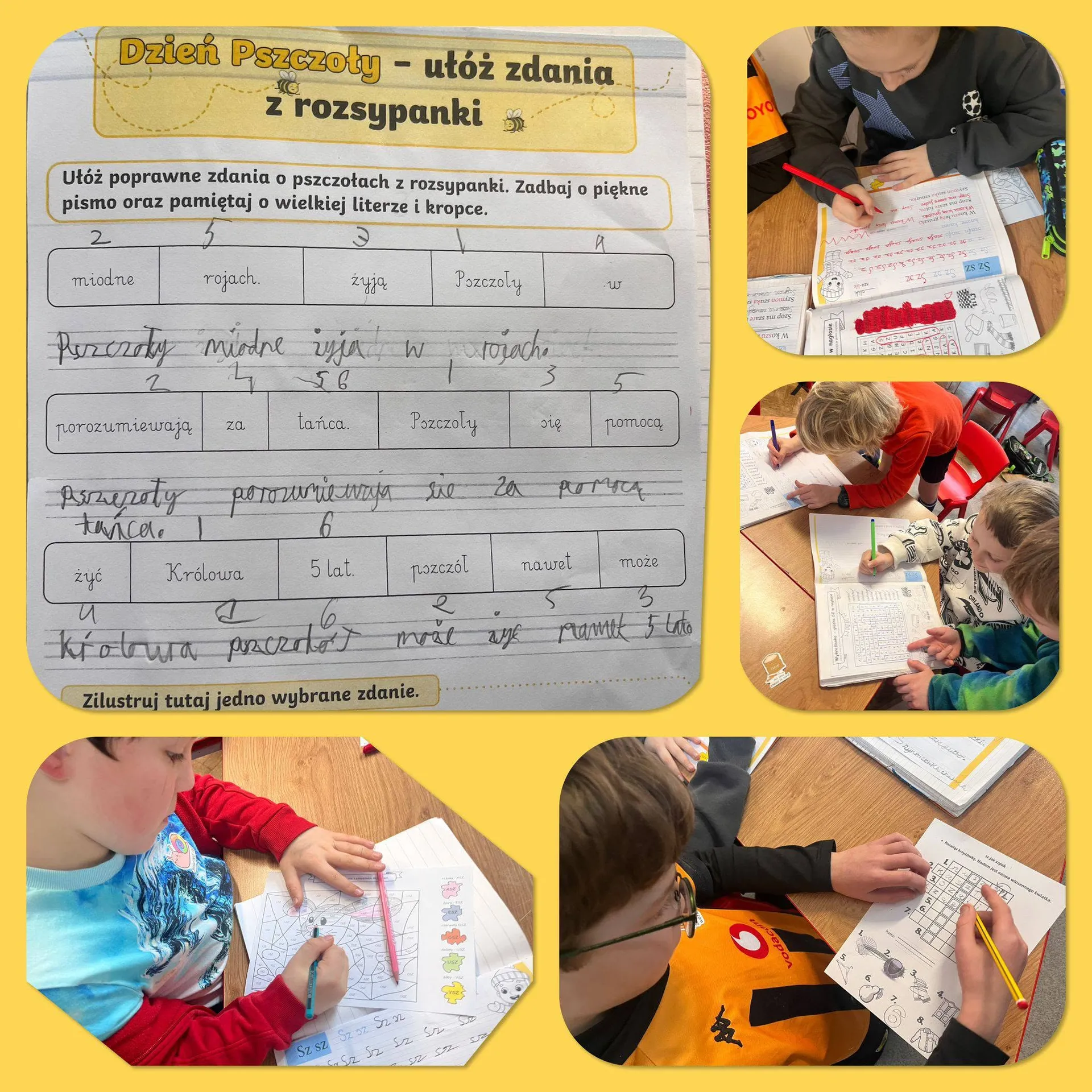
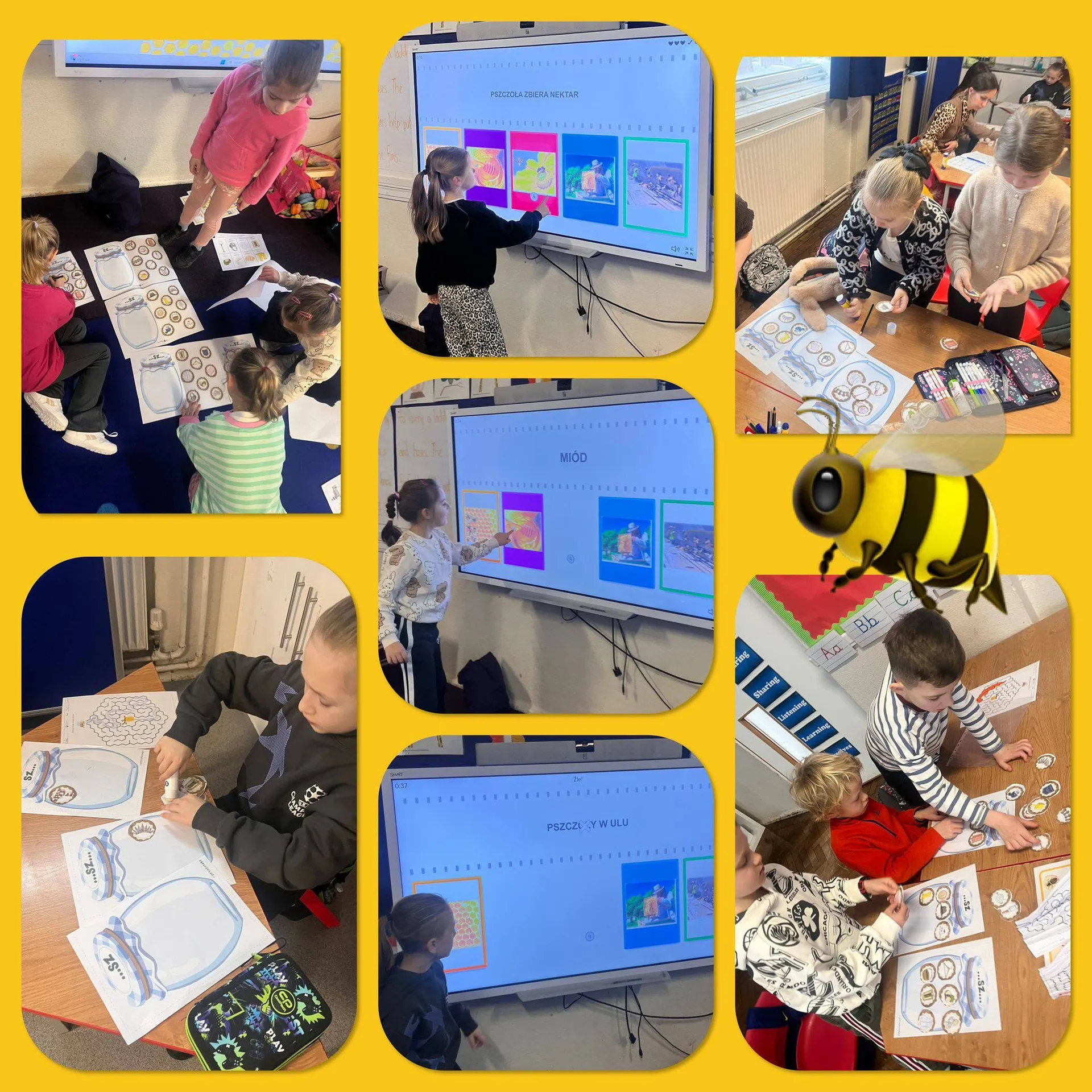
Along the way, the busy little bees of class B1 learnt a new digraph – ‘sz’. Pupils built sentences from jumbled words, practised writing ‘sz’, and solved quizzes and puzzles – including on the interactive whiteboard and in a word search with words beginning with ‘sz’. Their exercise books featured sentences such as ‘Szop ma szare futro’ (‘The raccoon has grey fur’).
The word ‘pszczoła’ (bee) is itself a spelling curiosity. After the consonant p, Polish is usually written with rz (‘przy’, ‘przyjaciel’), but ‘pszczoła’, ‘pszenica’ (wheat) and ‘pszenny’ (wheaten) are well-known exceptions to this rule.
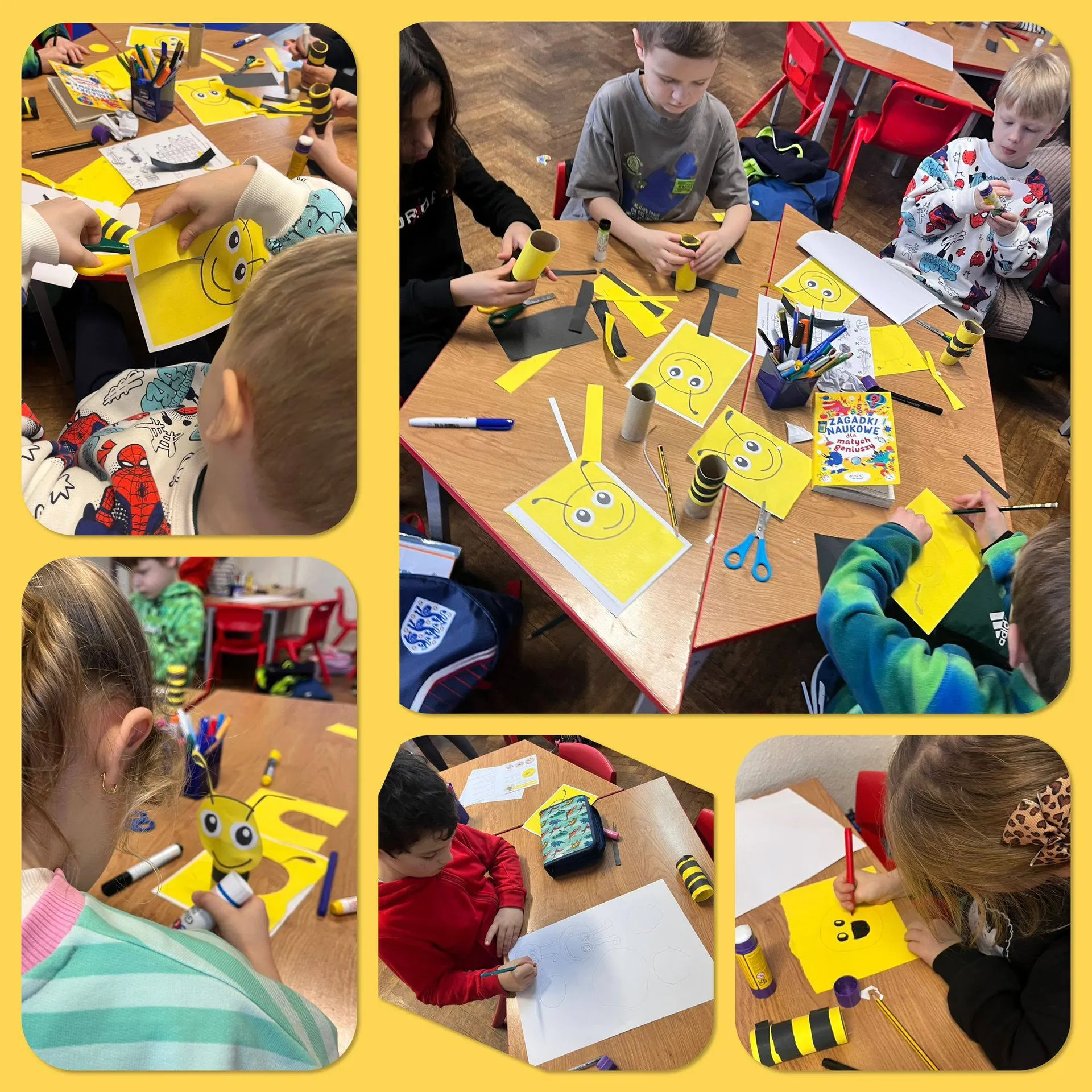
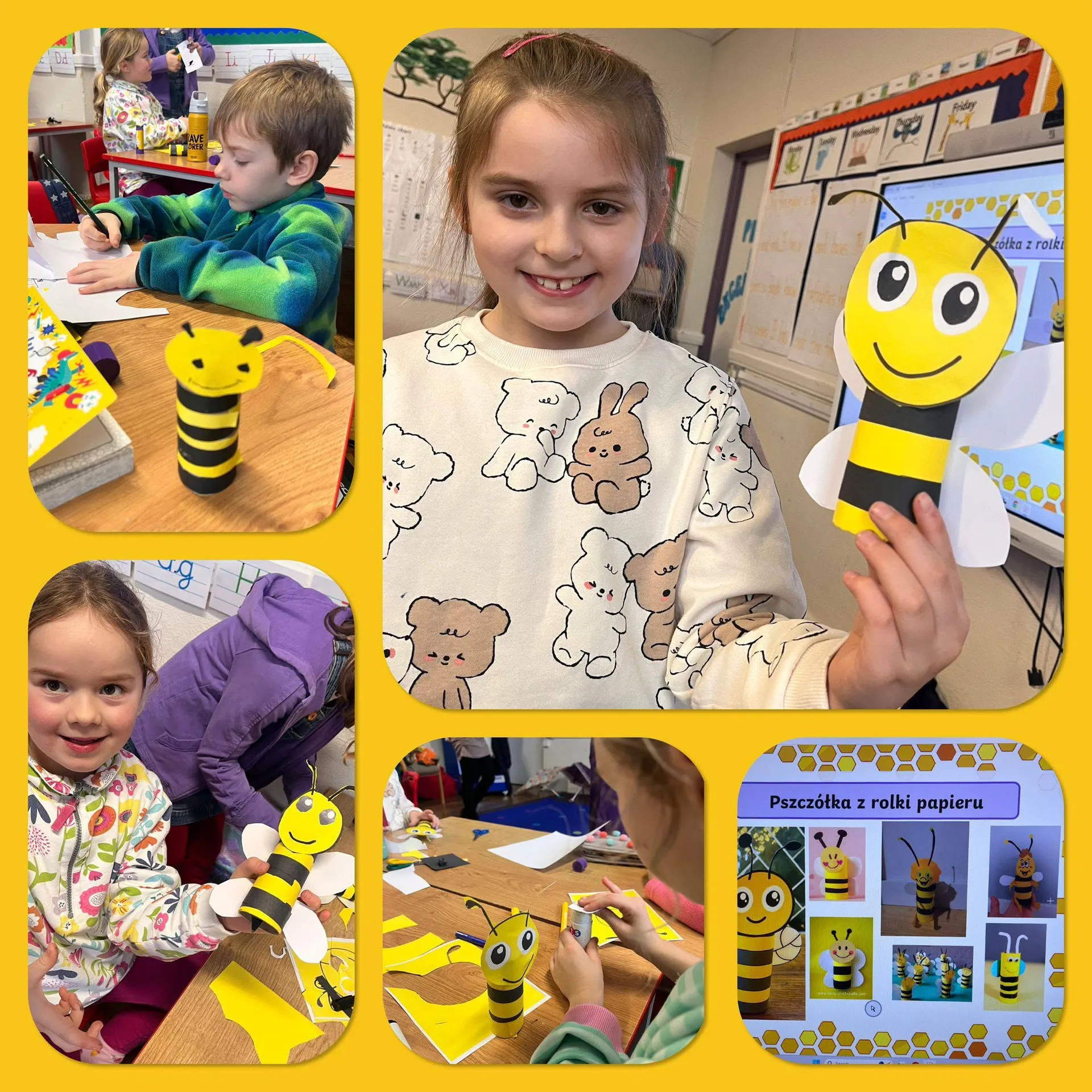
The pupils also made their own bees from toilet-roll tubes – yellow and black, with wings, antennae and smiling faces. More photographs from the lesson can be viewed in the gallery.