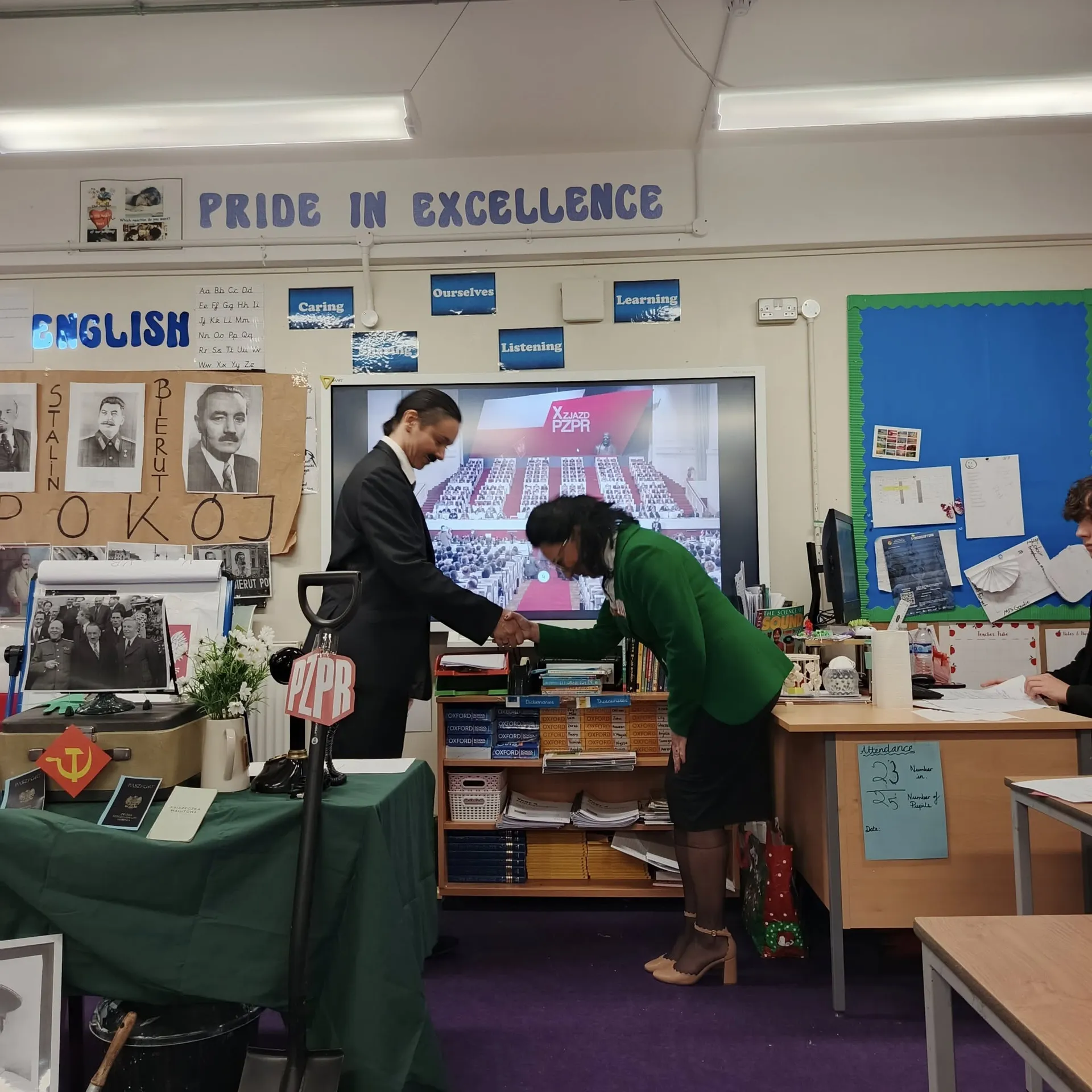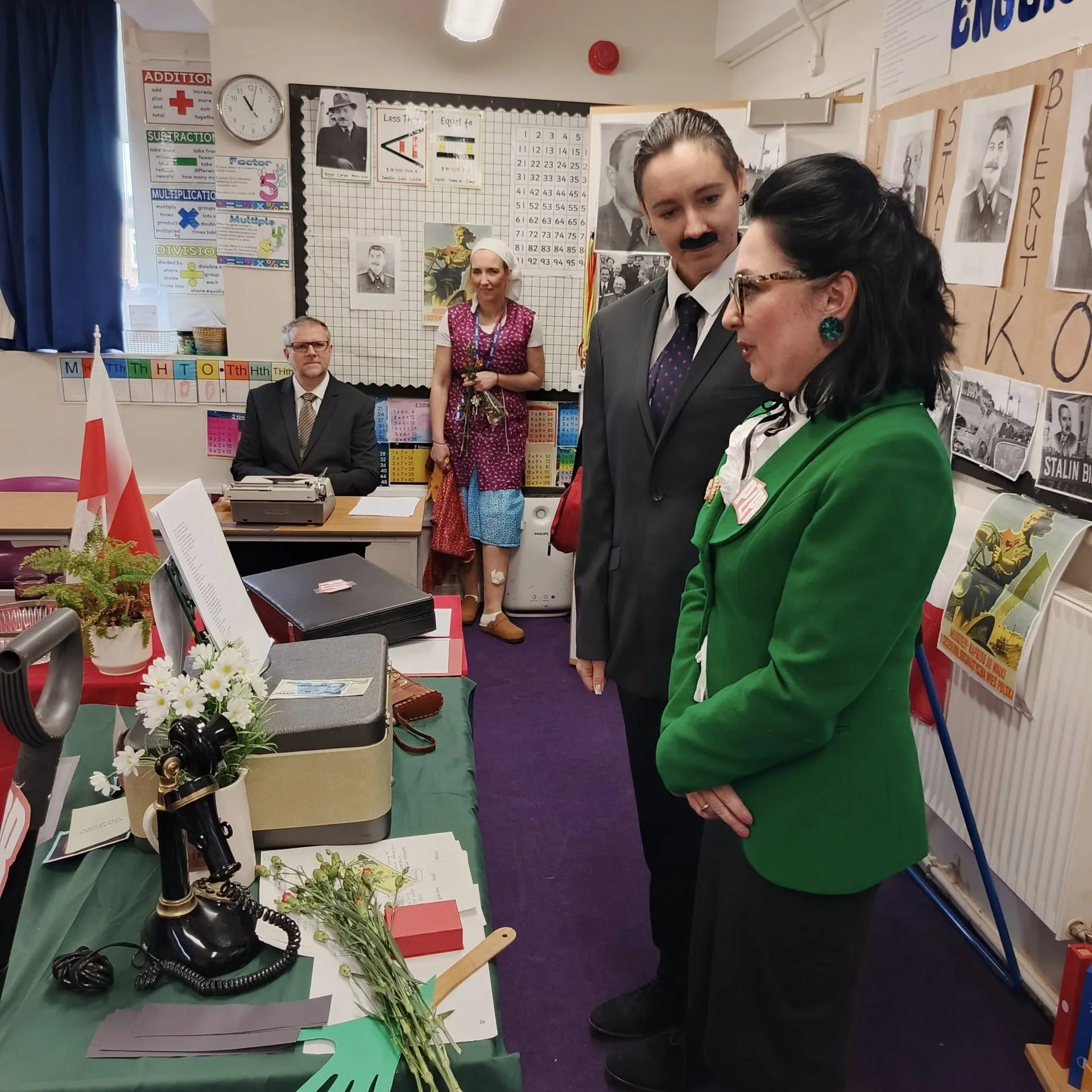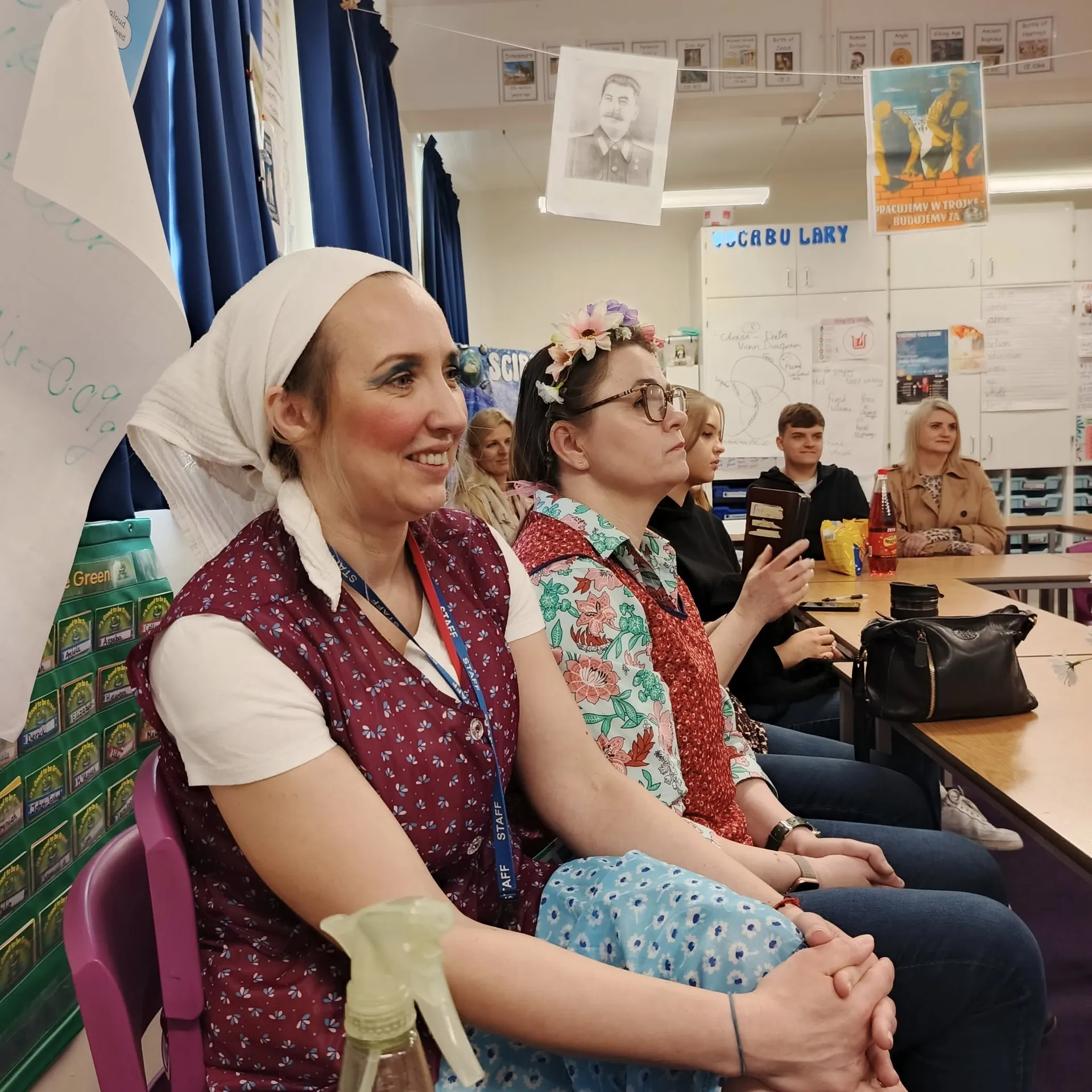


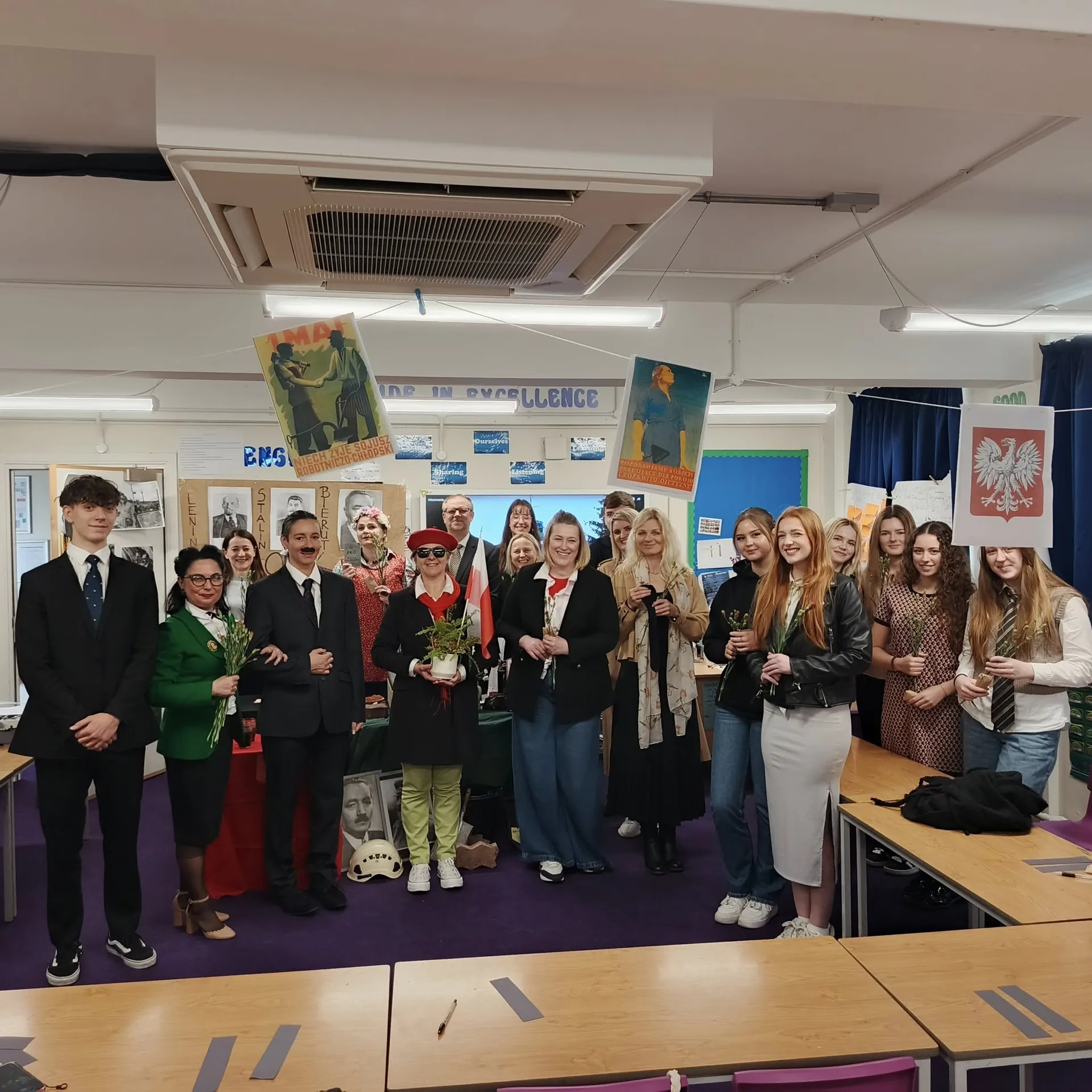
To conclude a project on communism, the students of the final-year A-level class travelled back in time. Together with parents and teachers, they took part in a re-enactment of the 2nd Congress of the Polska Zjednoczona Partia Robotnicza (Polish United Workers’ Party, PZPR), attended by none other than Bolesław Bierut – played by one of the participants in the re-enactment.
The party that controlled everything
The re-enactment showed how the party operated: it exercised state power in a totalitarian manner and controlled every sphere of social life. The PZPR was formed in December 1948 through the merger of the PPR and the PPS, and held power in the Polish People’s Republic for more than forty years. Its 2nd Congress met in March 1954, and the party’s leader, Bolesław Bierut (1892–1956), was one of the chief architects of the Stalinist system of government in Poland. From 1947 to 1952 he served as president, and subsequently as prime minister; his period in power is associated above all with political repression and propaganda.
The classroom was transformed into a period set. Portraits of communist leaders and the word ‘Pokój’ (‘Peace’) hung on the walls; an old telephone and a typewriter stood on tables covered with red and green baize, with a shovel and a helmet placed beside them; and the participants wore costumes in the style of the communist era.
Gifts from the party
At the end of the ‘congress’, the participants received tights, knee-high socks and carnations from the party – gifts which, as the organisers noted with tongue firmly in cheek, delighted everyone. These are props well known from the communist era: carnations and tights are associated above all with Women’s Day in the Polish People’s Republic, when flowers and hard-to-find goods were presented to women at their workplaces.
A history lesson like this allows students to see at close quarters the rituals of power familiar from textbooks, while also viewing them with critical distance. The project was prepared by Ms Agnieszka Mikrut and Ms Katarzyna Minorowska. More photographs of the re-enactment can be viewed in the gallery.