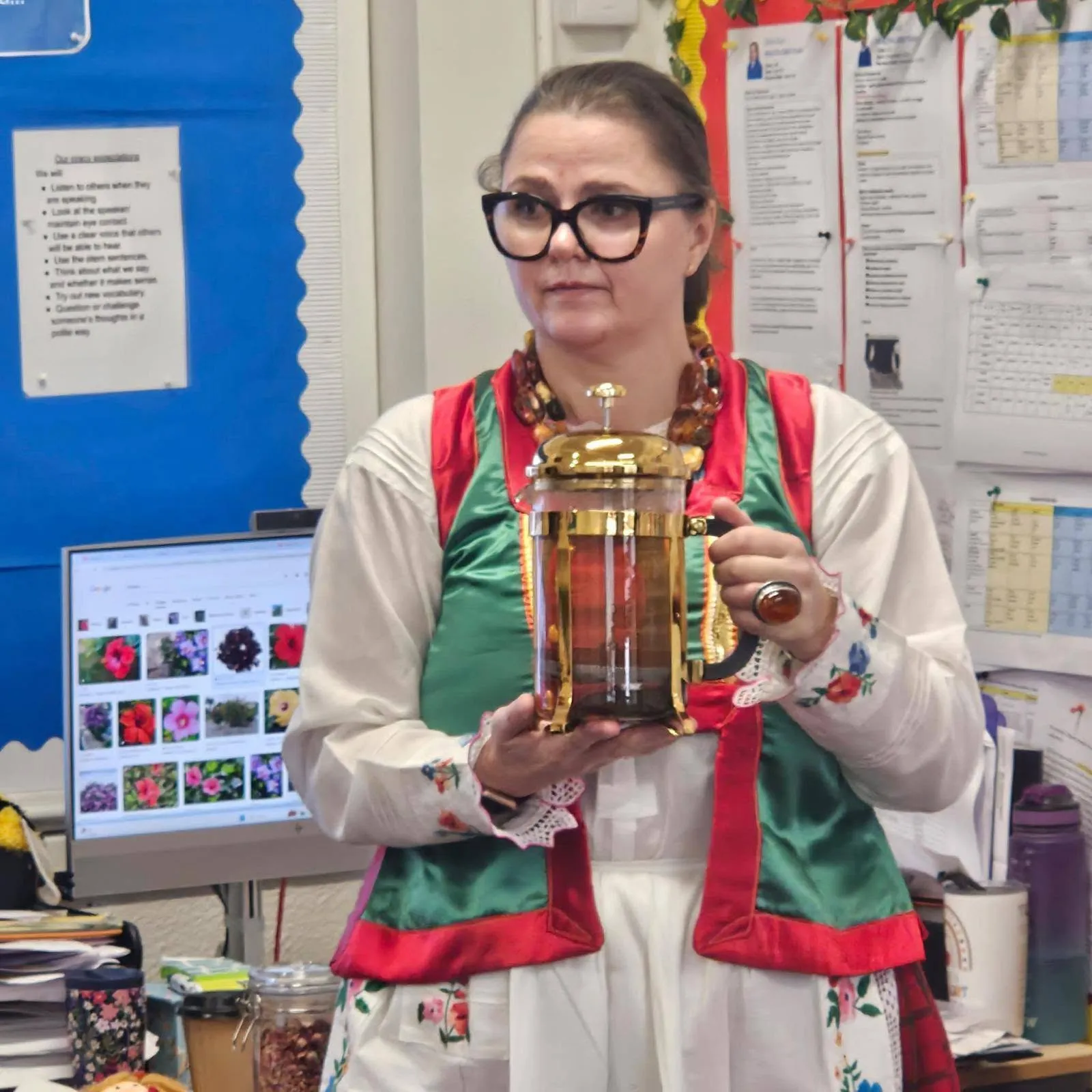


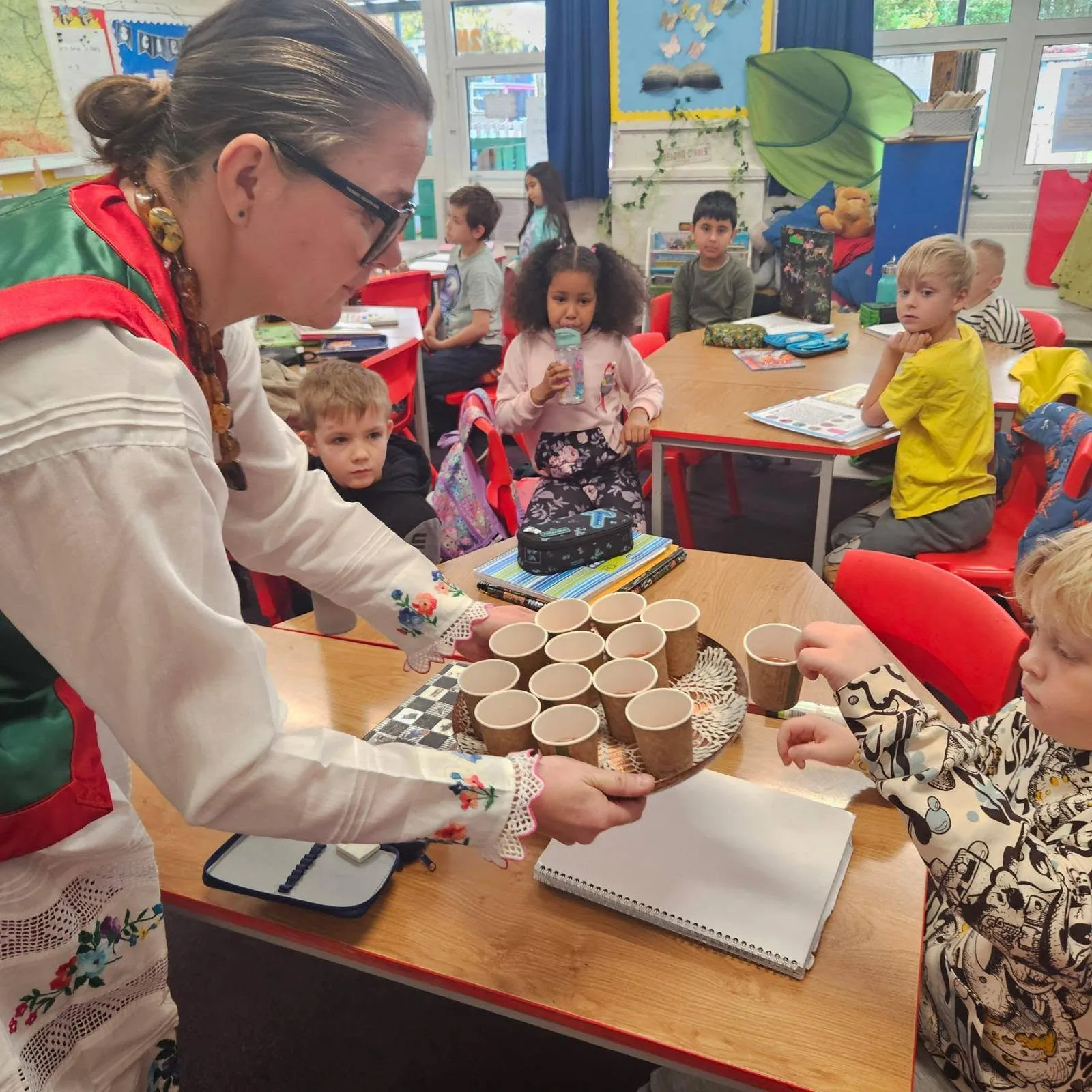
Saturday's lessons were all about the letter H – as in herbata z hibiskusa (hibiscus tea). The class was visited by a woman from the Kurpie region (Kurpianka) in a folk costume full of embroidery, and the lessons combined learning the new letter with Polish tradition, geography and legend.
Teas from flowers, fruit and leaves
Our Kurpie guest talked about different kinds of tea and how to make your own tea from dried:
- flowers – e.g. hibiscus, dandelion, rose or lime blossom,
- fruit – e.g. rosehip, quince, raspberries or blackberries,
- leaves – e.g. nettle, birch or mint.
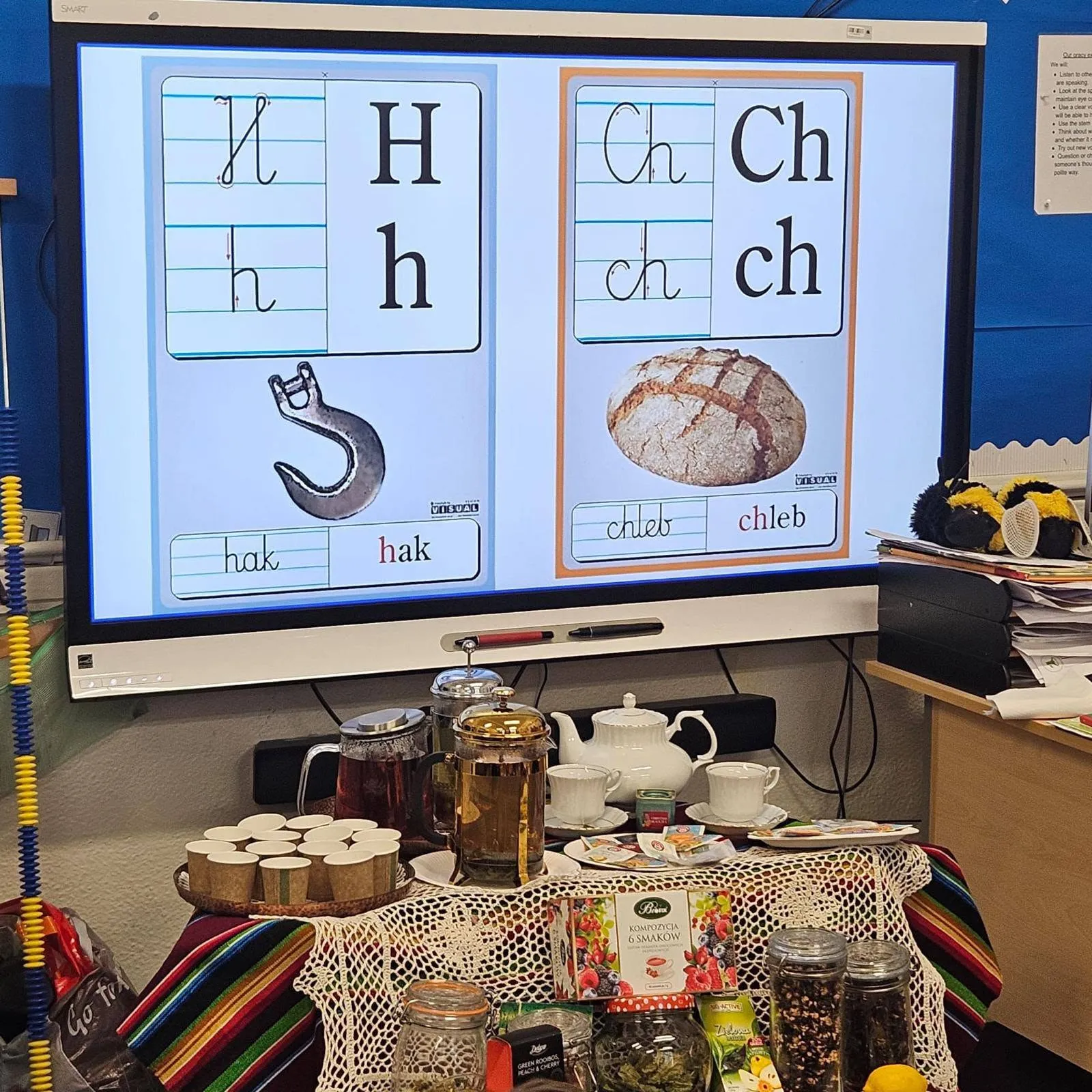
After listening to Wanda Chotomska's poem ‘Herbatka’ (‘Tea’), the pupils talked about which teas they drink and who they most often drink them with. Each pupil could also taste different kinds of tea, which were waiting on a table laid with a folk cloth and lace doilies. There was also practice with the new letter at the board: in modern Polish, h and ch sound the same, so the spelling of many words, such as ‘herbata’ (tea), ‘hak’ (hook) or ‘chleb’ (bread), simply has to be memorised.
St Mary's Trumpet Call and the map of Poland
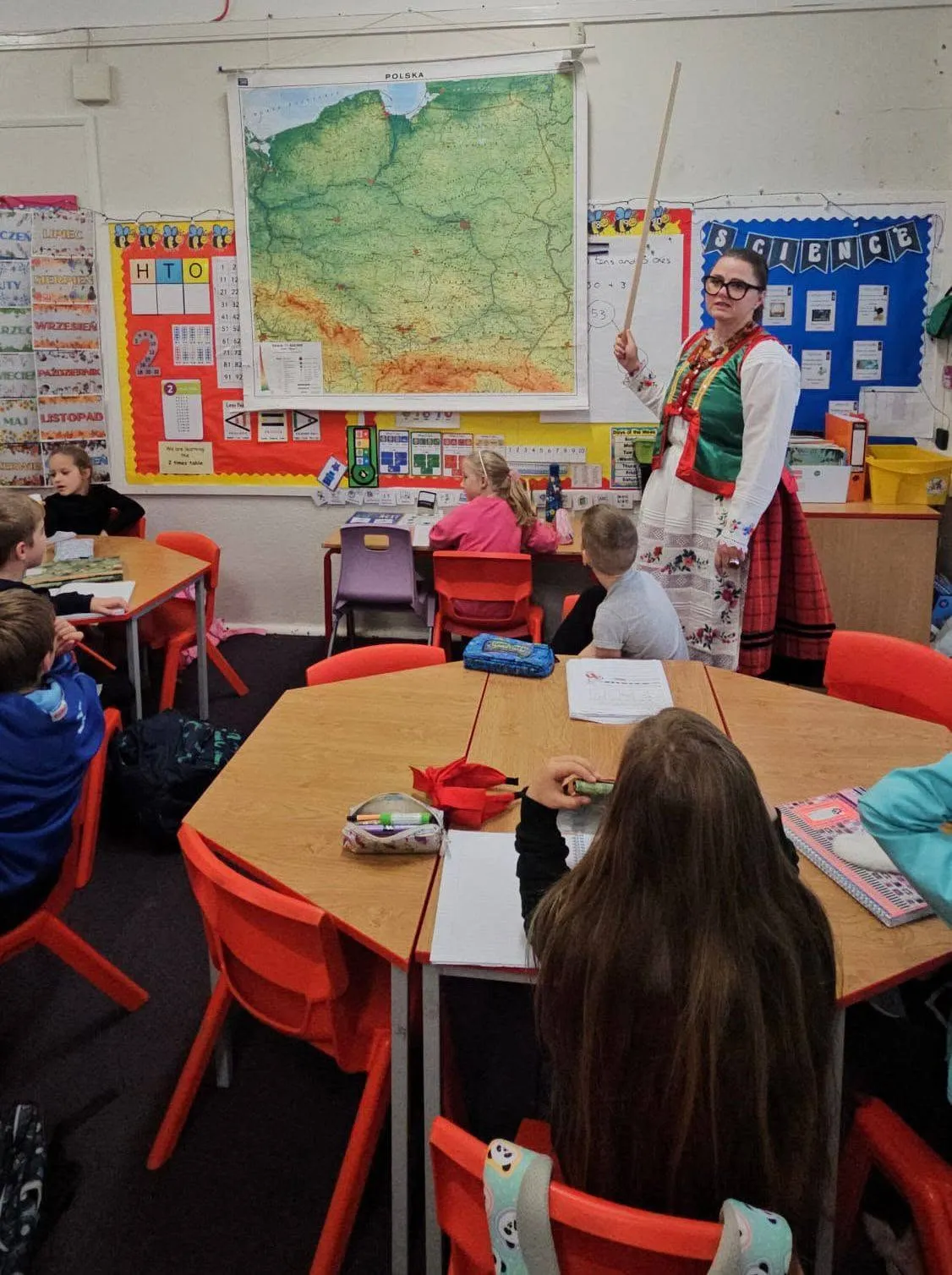
In the next lesson, the class learnt the legend of St Mary's Trumpet Call (hejnał mariacki). The pupils saw what the inside of St Mary's tower looks like and heard how the trumpet call sounds. The melody is played every hour from the tower of St Mary's Church in Kraków, and its sudden break commemorates – according to legend – a trumpeter struck by a Tatar arrow. The children recalled where Kraków and other large Polish cities are on the map, named the four cardinal directions and got moving to the song ‘Mam chusteczkę haftowaną’ (a Polish children's folk song).
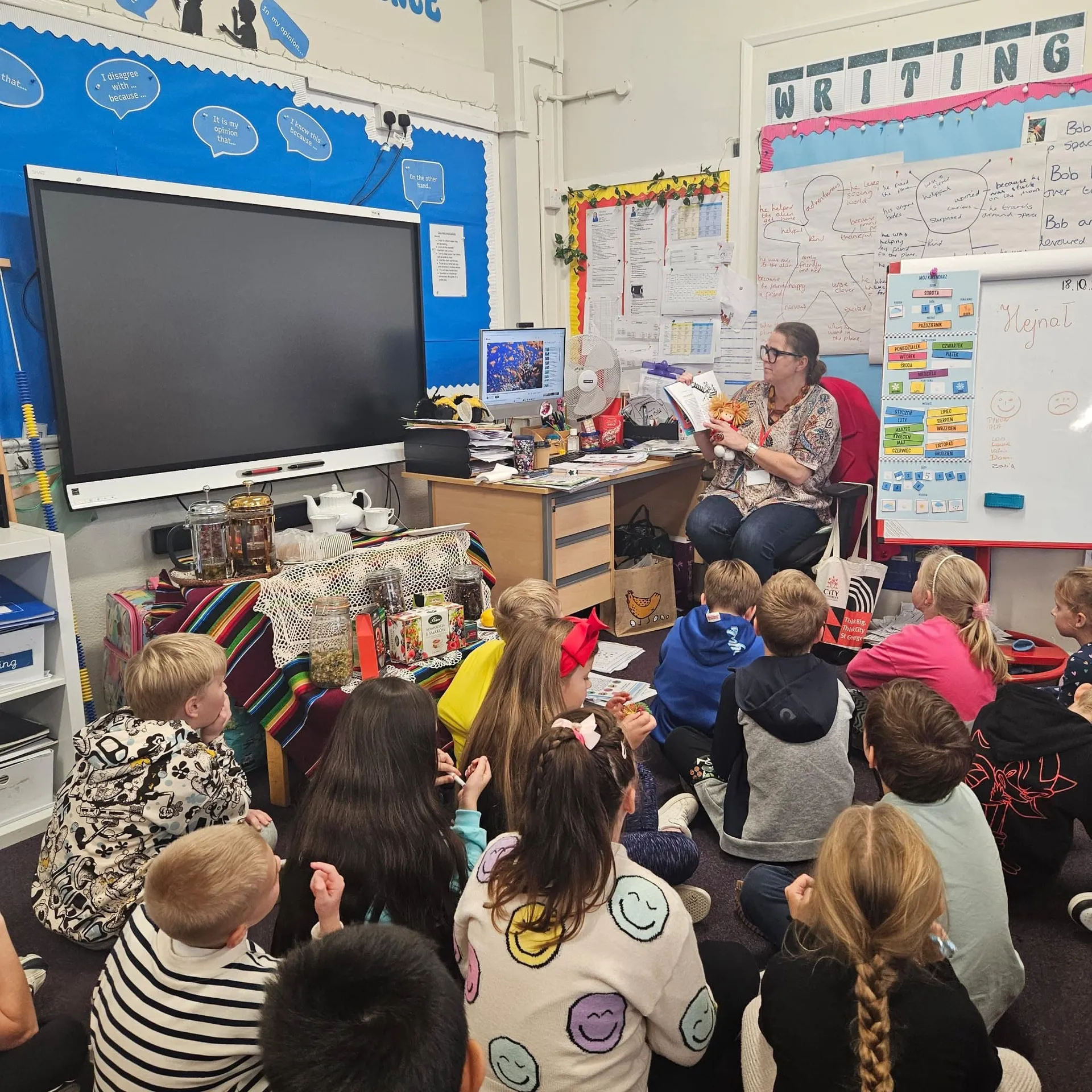
To end the day, the class found out how and where Bolesław the Badger had spent the past week, and read the next chapter of the set book ‘Karolcia’. More photos from this busy Saturday can be seen in the gallery.