

At a Saturday session in March 2025, pupils celebrated Spring Day. Although spring was the main theme of the lessons, there was still room for a new sound that the children are keen to master – sz.
The legend of King Popiel and the sound sz
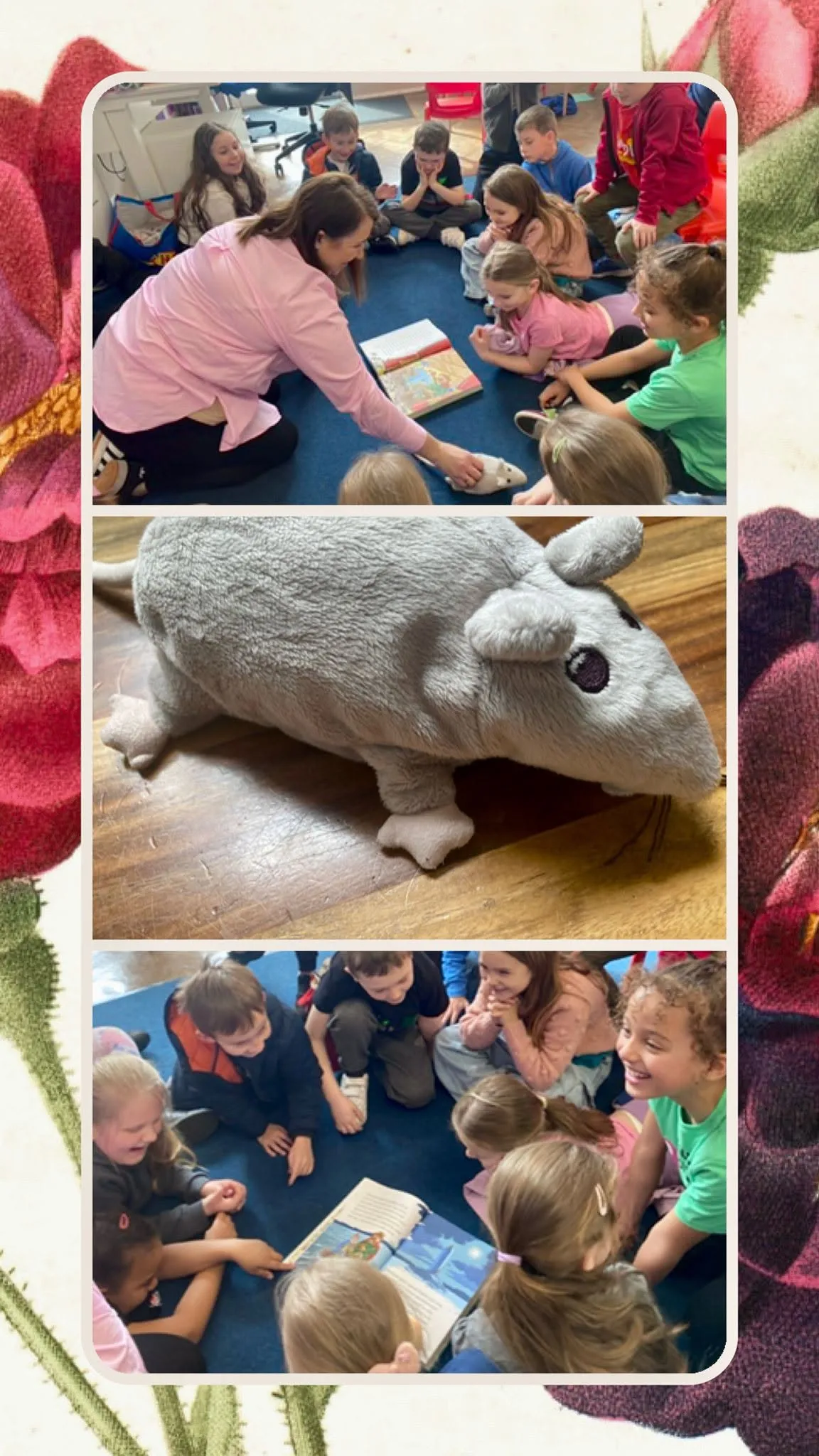
Learning the digraph sz was helped along by ‘The Legend of King Popiel’, a ruler who – so the tale goes – was eaten by mice. It would be hard to find better allies: in the word ‘mysz’ (mouse), the digraph sz can be clearly heard at the end of the word. Digraphs, that is, pairs of letters representing a single sound, can be a challenge for children growing up in the UK, because in English a similar sound is spelt ‘sh’.
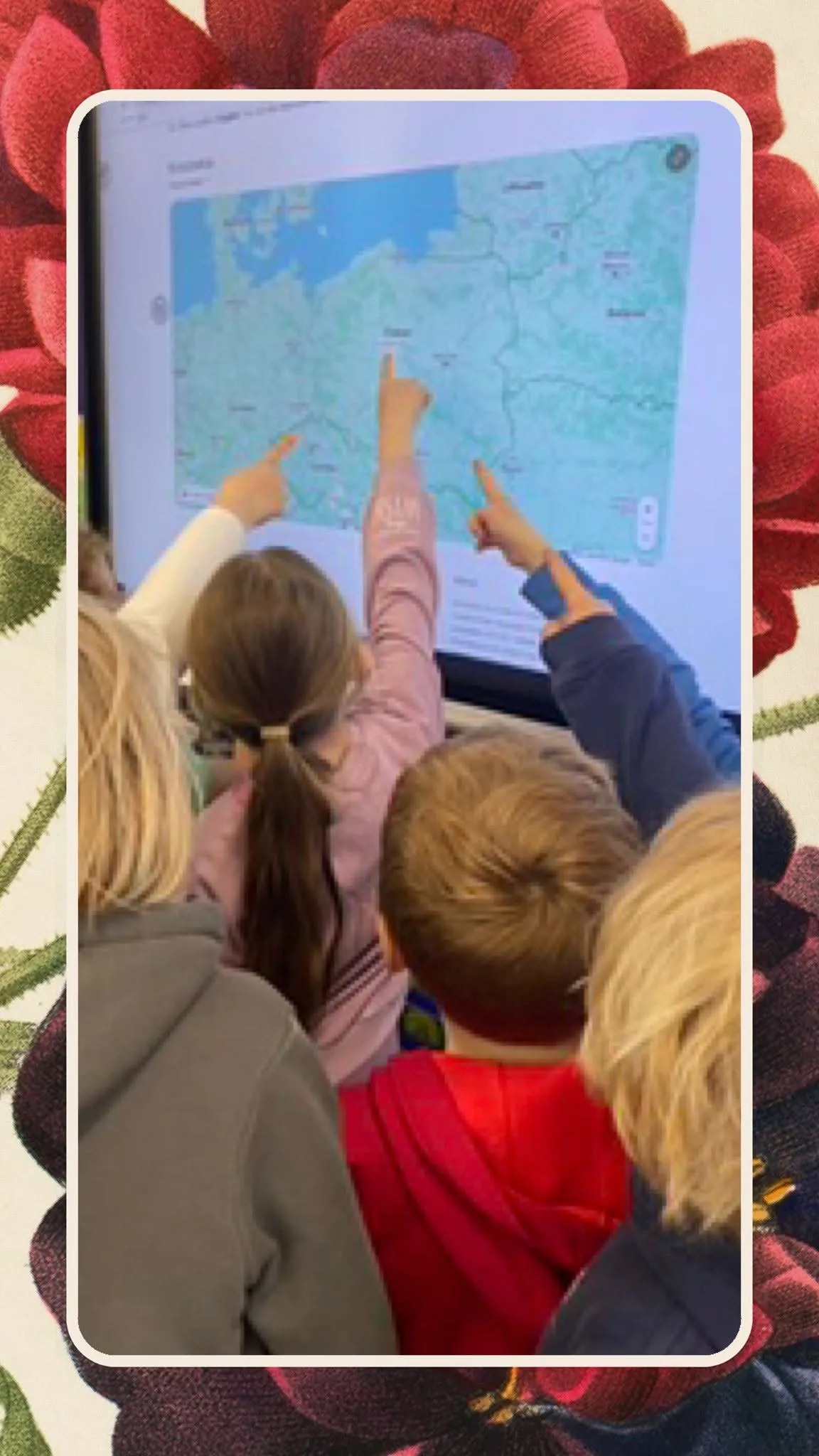
The legend also became an opportunity for a geography lesson: pupils learnt where Kruszwica, Lake Gopło and Gniezno – the first capital of Poland – are located. According to the tale, Popiel, who ruled in Kruszwica on Lake Gopło, was succeeded by Piast the Wheelwright (Piast Kołodziej), the legendary forefather of the Piast dynasty. The Mouse Tower (Mysia Wieża) in Kruszwica is associated with the legend, although it is in fact the remains of a castle built in the 14th century during the reign of Casimir the Great.
On the trail of spring
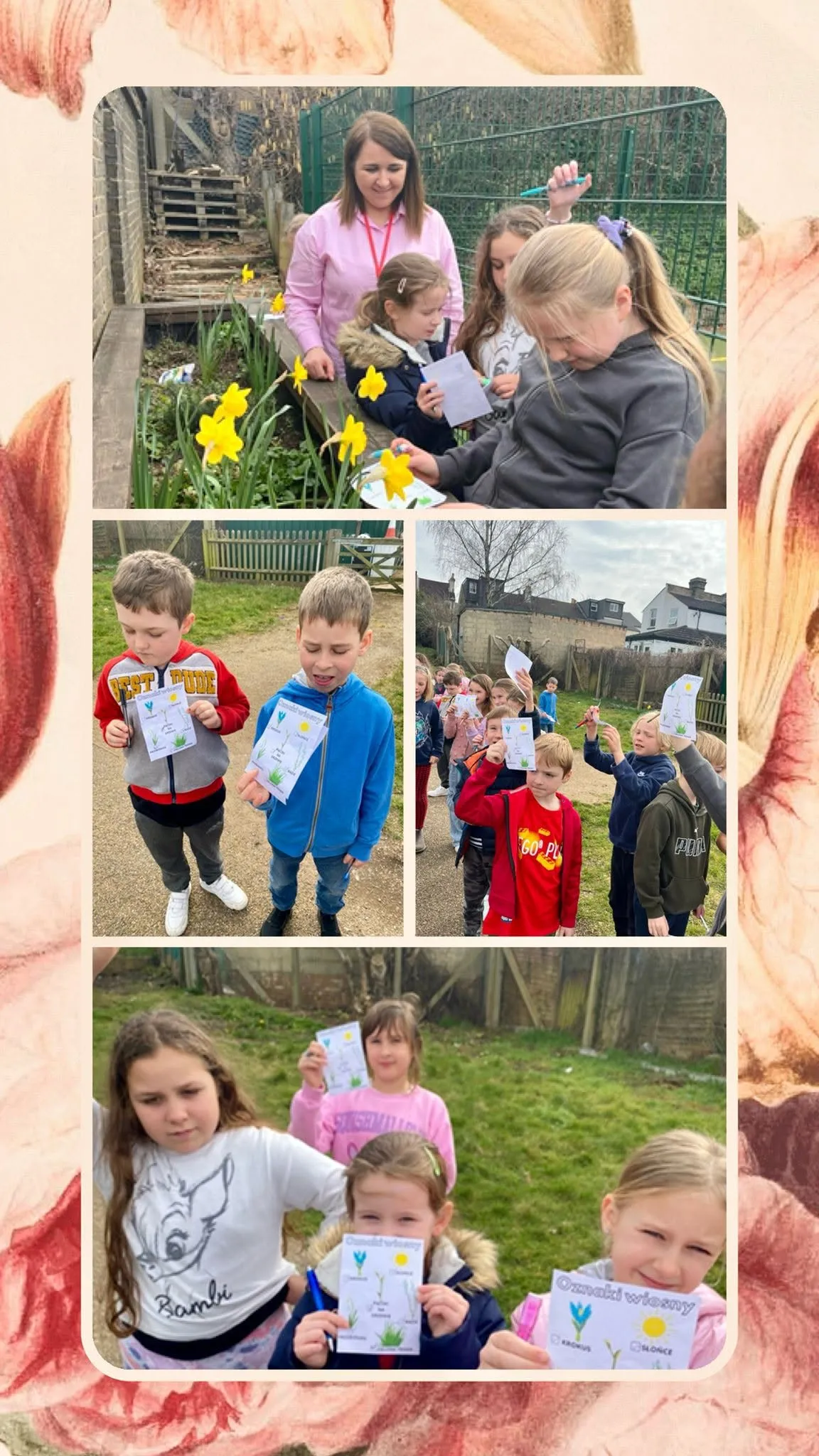
In Polish tradition, the first day of spring, conventionally 21 March, is linked with saying farewell to winter – it is customary to drown Marzanna, a straw effigy personifying winter. The class welcomed the new season in its own way: in the last lesson, pupils went on a short outing in search of signs of spring and found every one of them. So it could be declared that spring had truly arrived.
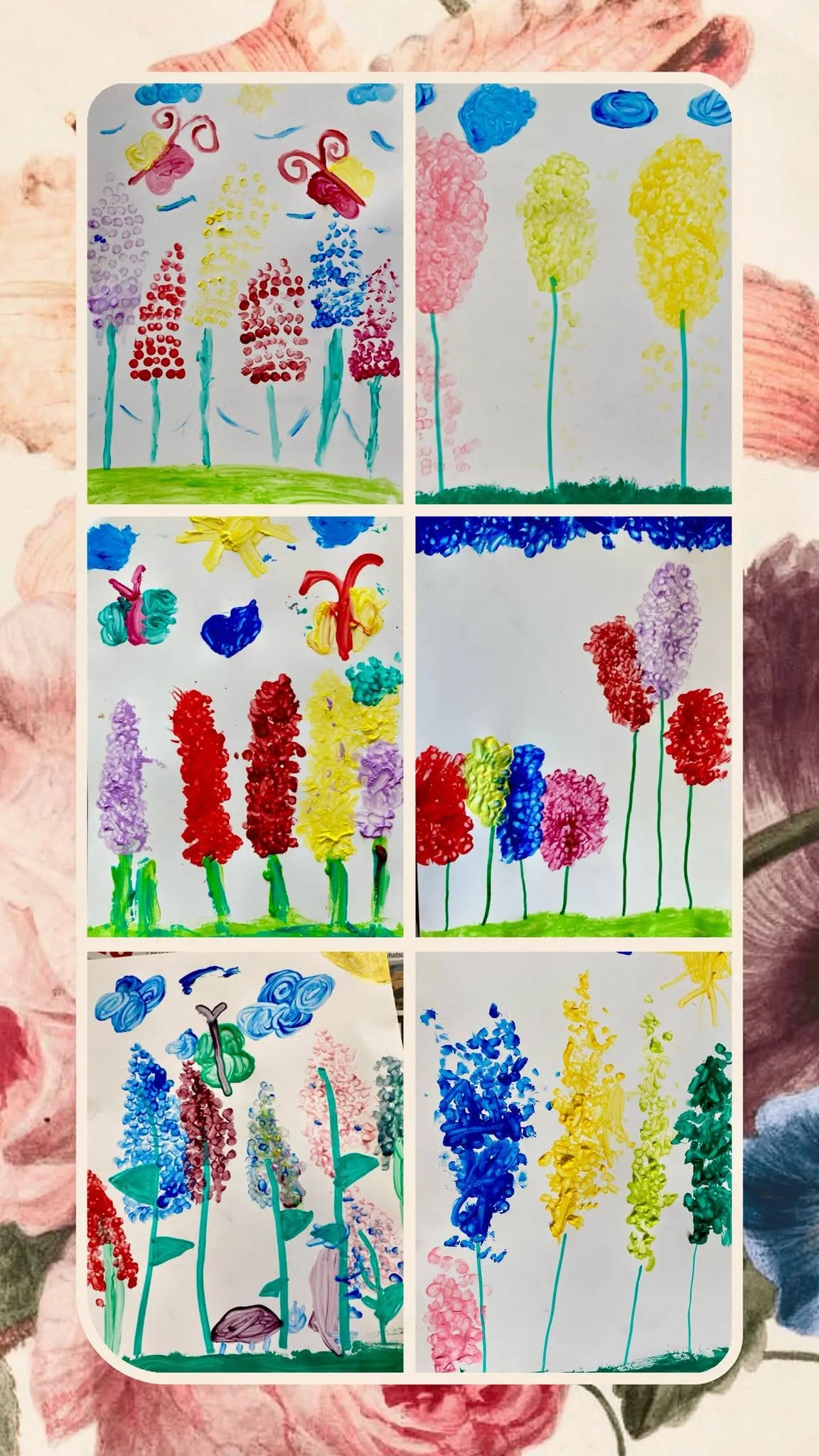
The pupils also produced colourful spring artwork, painted with an unusual tool – cotton buds instead of a brush. Flowers made of tiny dots of paint resemble a meadow in bloom, and the technique itself helps to practise precise hand movements.
More photos from the lessons can be seen in the gallery.