

DŻ as in ‘dżdżownica’ (earthworm) – this was the motto of the lesson in which pupils learnt a new digraph. First they looked for ways to fix its sound in their memory, and then it was time for creativity and fun.
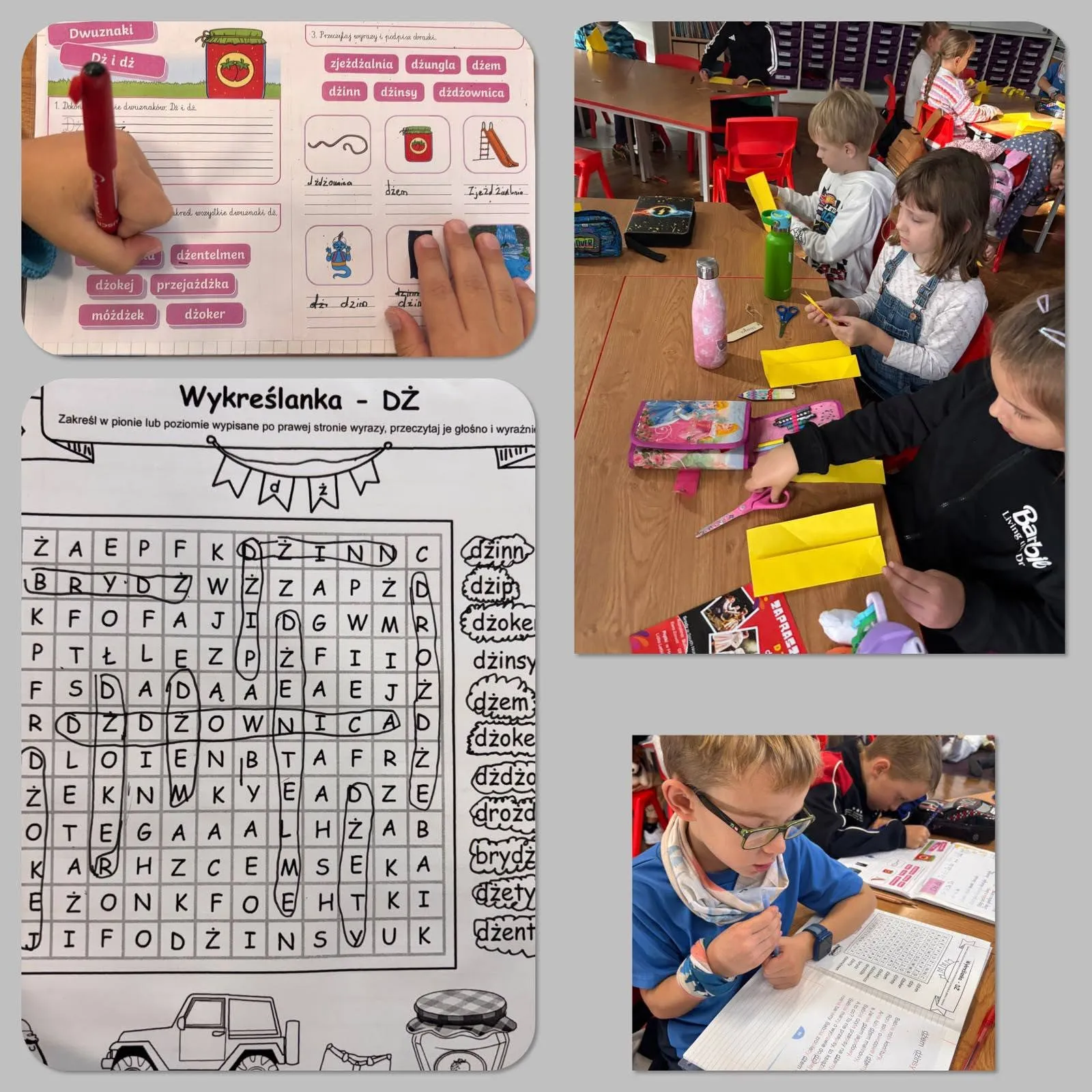
The digraph ‘dż’ represents the voiced counterpart of the sound ‘cz’. It appears in many loanwords, such as ‘dżungla’ (jungle), ‘dżem’ (jam) and ‘dżinsy’ (jeans) – pupils found the last two in their exercises. ‘Dżdżownica’ itself, however, is a native Polish word: its name is linked to the old word ‘dżdż’, meaning rain, and earthworms often come to the surface after rain. A trace of this word survives in the adjective ‘dżdżysty’ (drizzly).
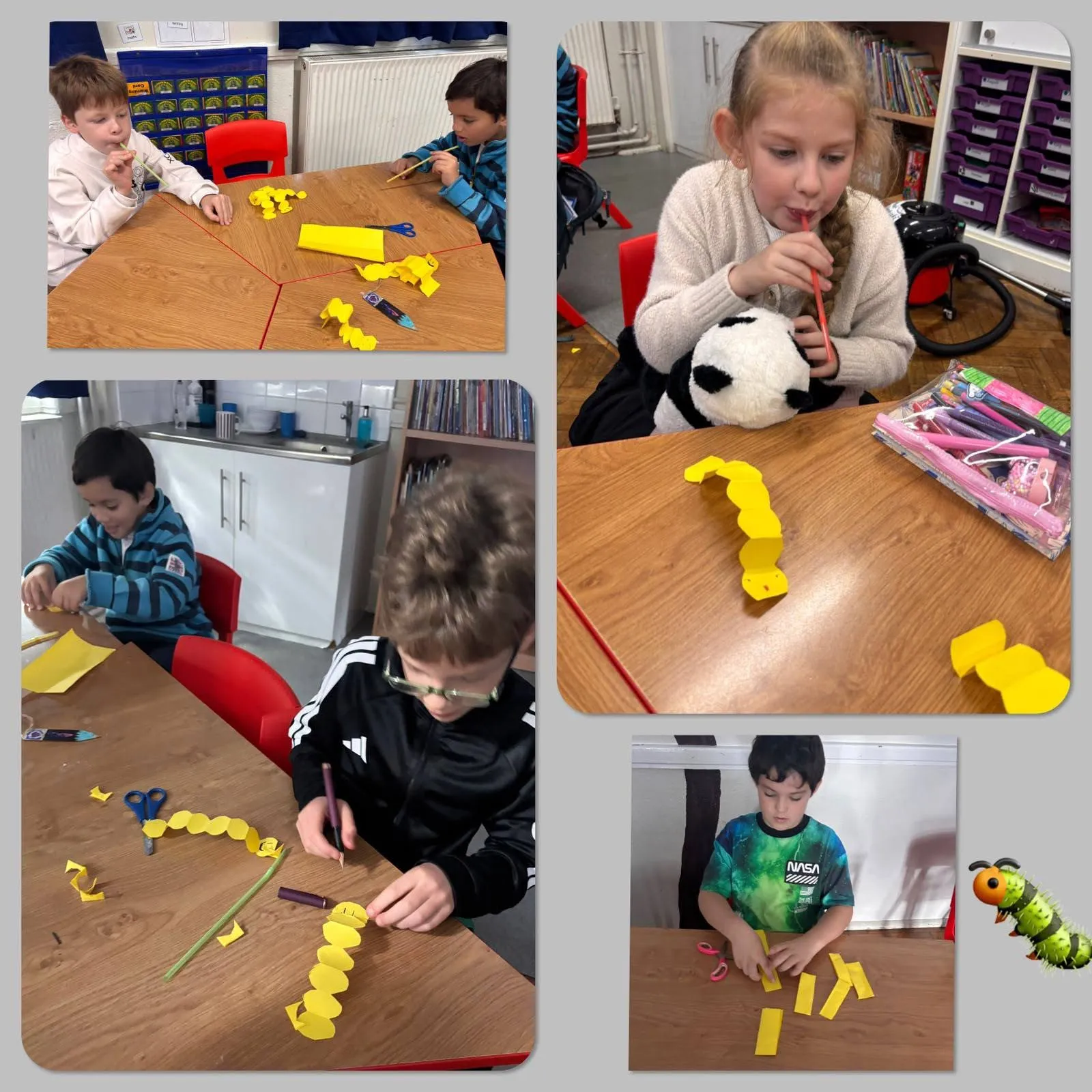
The pupils made colourful paper earthworms, which then took part in a very special race. The children blew on their little creatures as hard as they could, setting them in motion and helping them reach the finish line. There was no shortage of excitement, laughter and cheering. The task was not only a craft activity but also a breathing exercise: pupils practised controlling the strength and direction of their breath, while also developing their fine motor skills, hand–eye coordination and concentration.
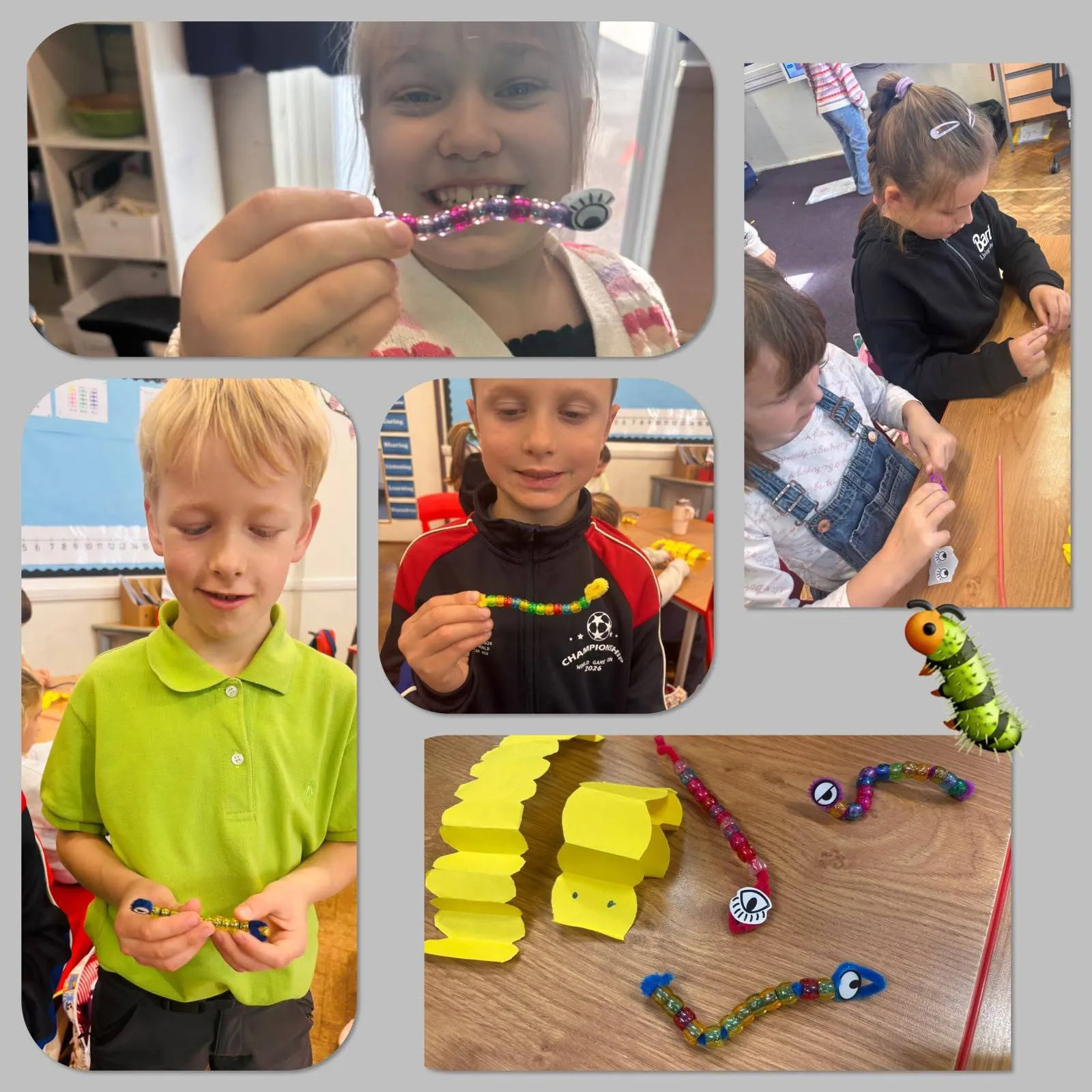
They also made earthworms from beads. The children carefully threaded colourful beads, practising manual dexterity and precision, and each earthworm took on a character of its own. Learning Polish digraphs doesn't have to be boring – sometimes all it takes is a bit of paper, a child's imagination and a good strong breath. More photos from the lesson can be seen in the gallery.