

As part of their vocabulary and language exercises, students in class A-level 1 wrote their own poems describing their personalities.
The starting point was ten questions, but simply answering them was not enough. The task demanded linguistic skill, creativity, a sense of humour and verbal intelligence: the students had to choose their vocabulary, pay attention to rhythm and turn ordinary information about themselves into a poetic text.
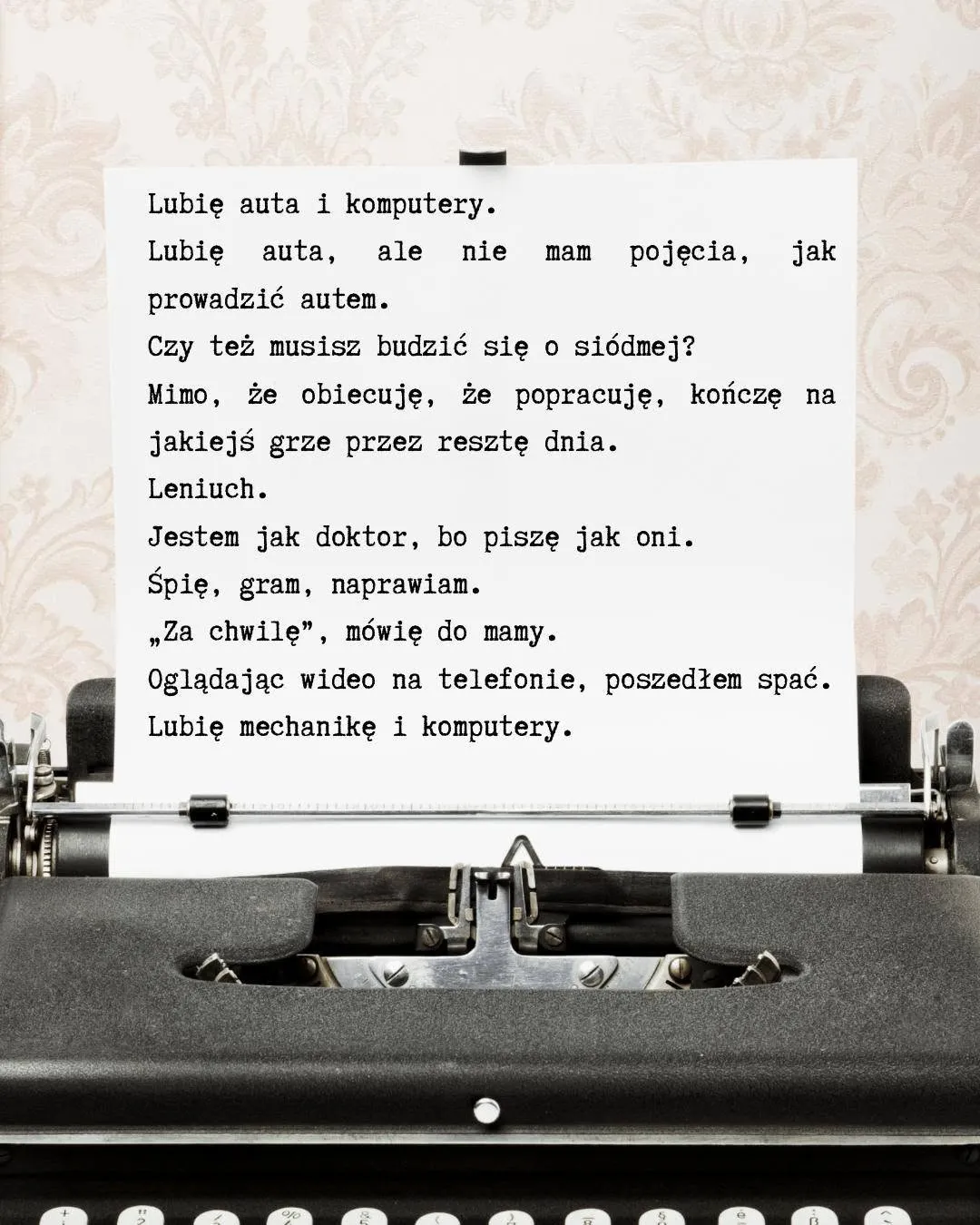
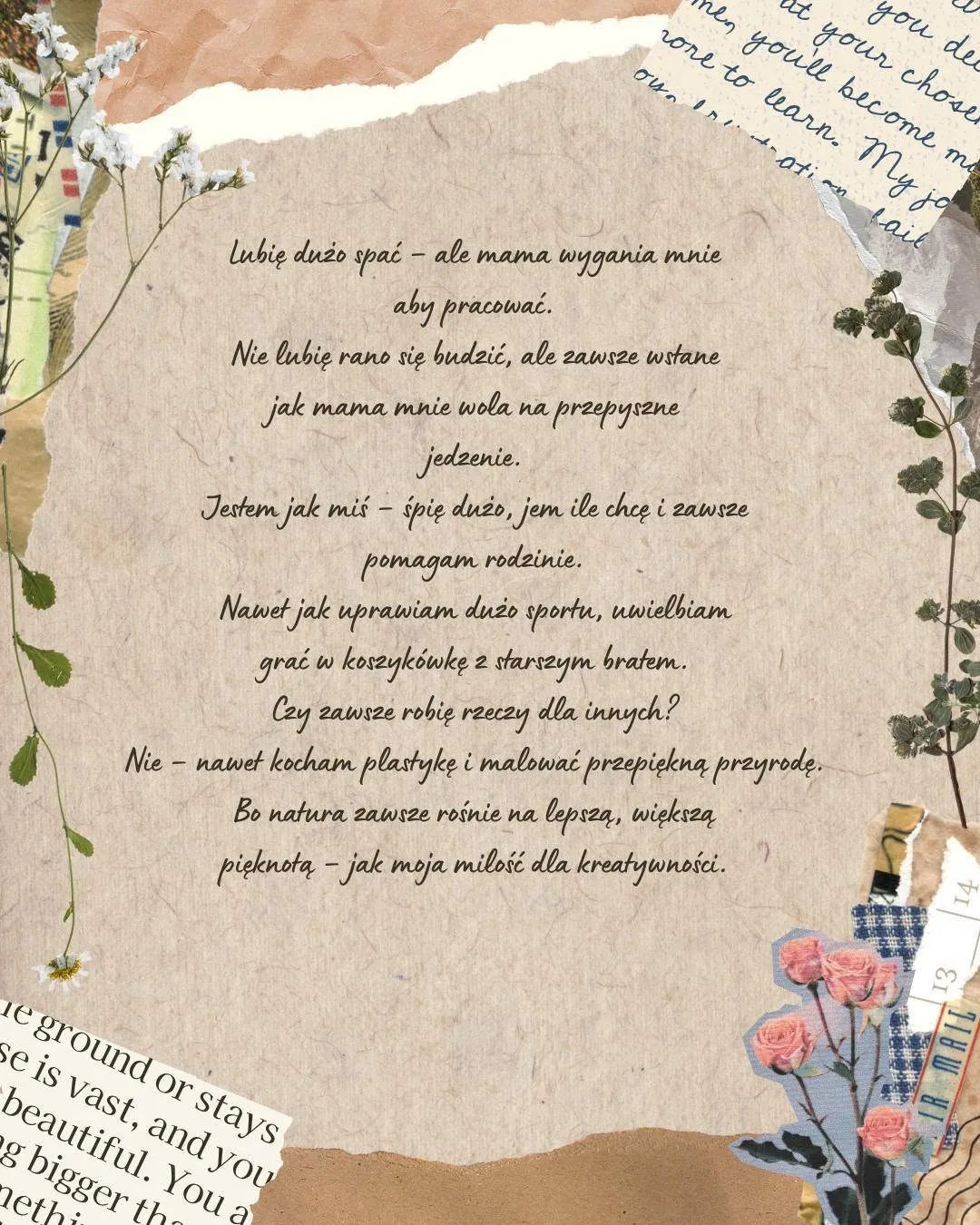
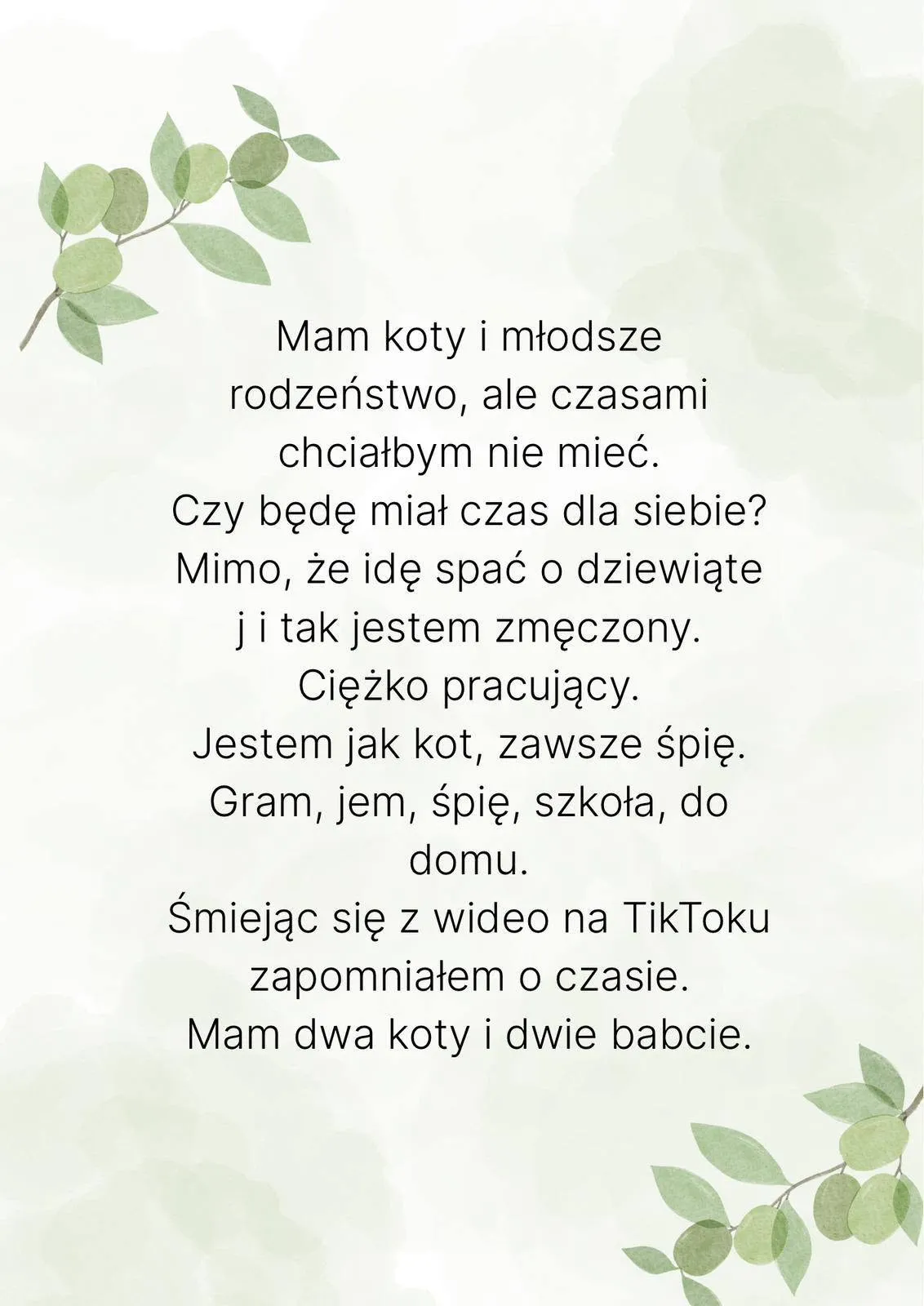
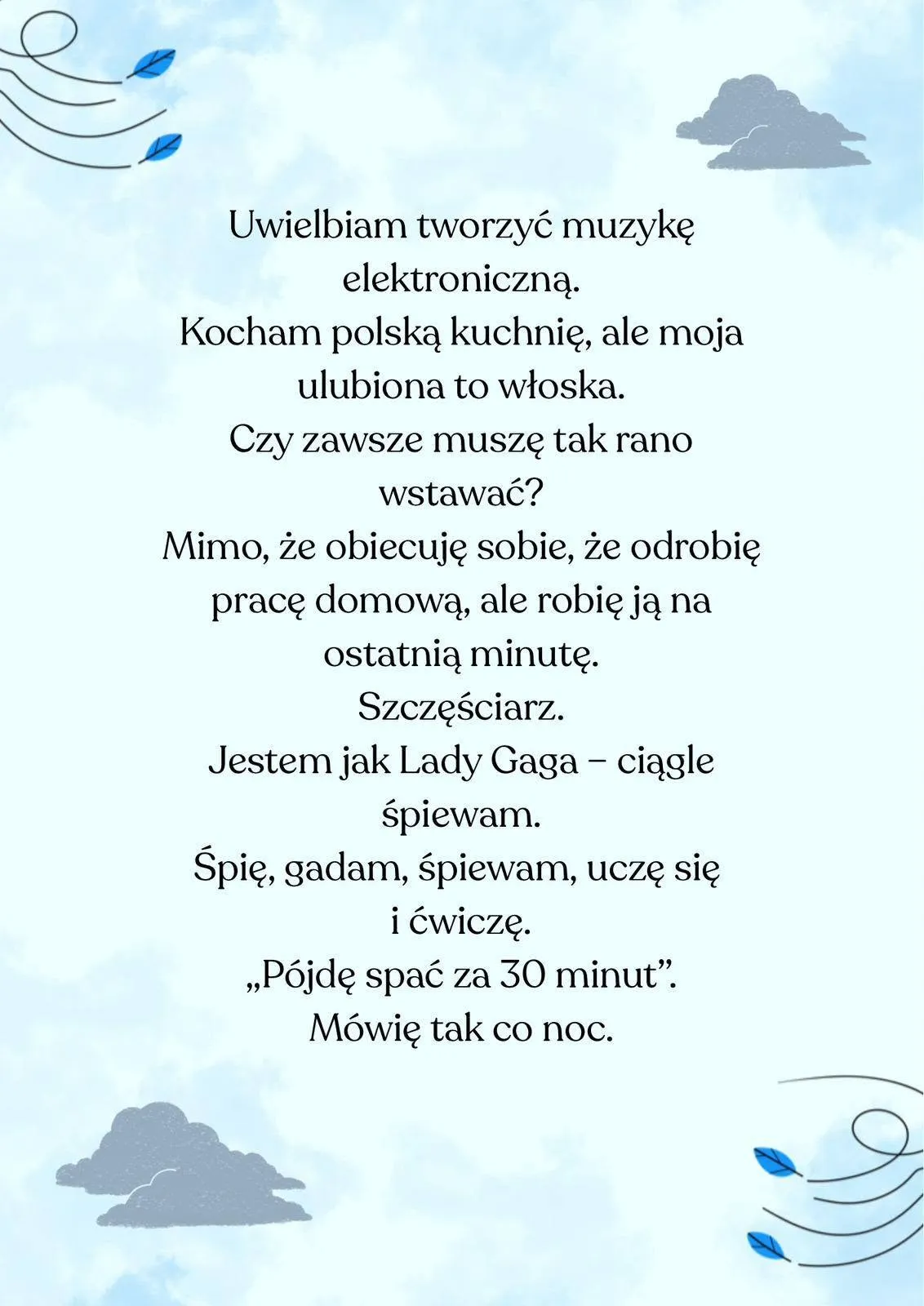
The resulting texts show a variety of styles and the individuality of their authors. Recurring features of the poems include similes built on the pattern ‘I am like…’, questions addressed directly to the reader and familiar everyday sayings. The work was presented in a range of graphic designs – from watercolour clouds and floral frames to a sheet of paper wound into a typewriter.
A poem written in the first person, in which the speaker talks directly about themselves, is an example of direct lyric poetry. This form makes it possible to practise vocabulary describing character traits, habits and emotions, while the simile – one of the simplest stylistic devices – helps to capture something very personal in just a few words.
For young people growing up in Great Britain, a task like this is also a test of how comfortably they can use Polish: describing yourself with detachment and humour requires an awareness of shades of meaning, idiomatic expressions and different registers of the language. Exercises of this kind therefore combine vocabulary learning with creative writing.
Selected poems can be read in the graphics included here.