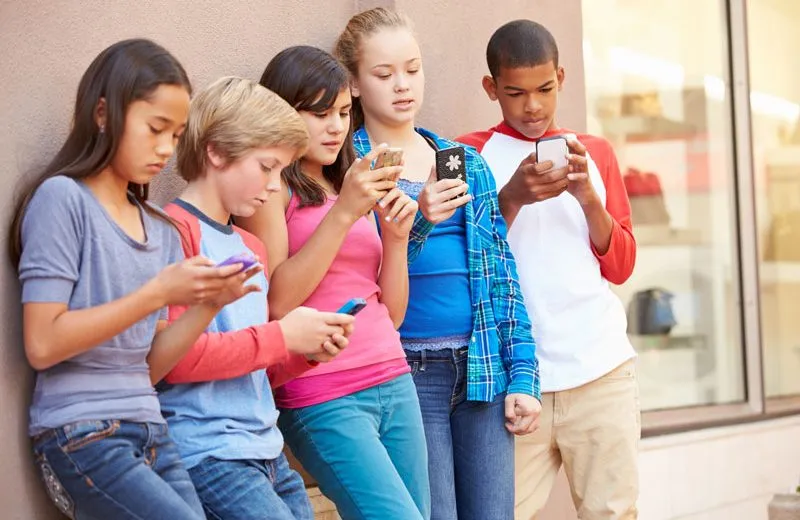


Mobile phones have become an inseparable part of teenagers' everyday lives. For a pupil, a phone is not only their first personal device for exchanging information but also one of the main channels of access to knowledge and an attractive tool used in education. Teachers at the schools run by the Fundacja Edukacji Międzynarodowej (Foundation for International Education) in Wrocław use this technology inventively, constructively incorporating mobile phones into their lessons. At the same time, the Foundation's schools have agreed with parents, and introduced, specific rules on pupils' use of mobile phones during lessons and breaks.
In the view of many educators, schools should not shy away from using mobile phones creatively for educational purposes. Phones can still be used as a teaching tool with the teacher's consent and in line with the teacher's plan. On the other hand, a phone in a pupil's pocket during a lesson – even on silent – can be a distraction. There is a constant temptation to check whether an important message has arrived. The pupil's thoughts drift away from the lesson. This makes the teacher's work harder and disturbs other pupils. Such a widespread phenomenon inevitably had to be subject to some restrictions. In recent years, school rules have included a growing number of bans on phone use.
Pupils at the Fundacja Edukacji Międzynarodowej schools are also bound by a ‘mobile phone savoir-vivre’. Under the Pupil Code, they must switch off and put away their mobile phones and any other electronic devices before lessons begin. In exceptional situations, having agreed this with the teacher in advance, they may leave their phone switched on. However, for using a phone during a lesson without permission, a pupil may be penalised with so-called ‘debits’, which at the Foundation's schools – alongside ‘atuty’ (credits) – form the basis of the behaviour grade. The ‘mobile savoir vice’ applies to teachers too. They must switch off their phones during lessons. If they are expecting an important message, they should tell the pupils at the start of the lesson.
Fundacja Edukacji Międzynarodowej The question of breaks still remained to be resolved. Between lessons, pupils sometimes need to contact their parents or check something online. However, most lower secondary (gimnazjum) pupils spend their breaks playing games on their phones. This caused concern among the teaching staff of the Foundation's schools, who decided to take a closer look at these habits, which limit pupils' social contact and undermine the use of breaks as a chance to eat or relax.
Awareness of the dangers of using multimedia devices and having unlimited internet access is still not widespread among pupils and parents, says Joanna Oskroba, deputy head of the Dwujęzyczne Gimnazjum ATUT (ATUT Bilingual Lower Secondary School) and the Międzynarodowe Liceum Ogólnokształcące (International Secondary School) in Wrocław, both non-state FEM schools – We therefore wanted to show pupils and parents how to use these devices responsibly, make them aware of the impact they have on young people, and agree together on the rules that apply in our schools.
The schools' leadership organised meetings of teachers, pupils and parents on restricting access to electronic devices on the campus. The aim of the meetings was to work out a shared solution that would meet the needs of all groups and be understood and accepted by everyone. As a result of these three-way negotiations, the following rules were adopted:
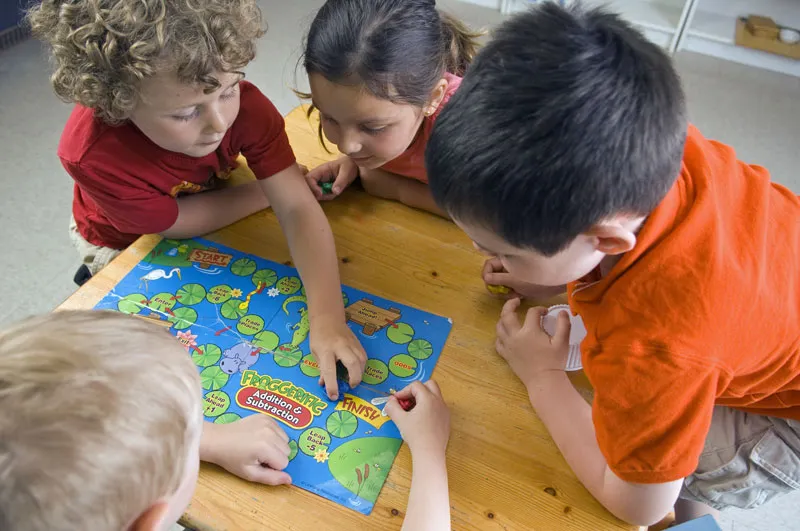
To separate pupils from their phones during lessons, ‘phone baskets’ will be introduced in classrooms. Devices go into the baskets at the start of the lesson and are handed back afterwards. Alternatively, pupils may put their phones in their rucksacks. Any use of a phone during a lesson takes place only on the teacher's explicit instruction. Instead of playing on their mobile phones, the young people organise Active Breaks. Tables with card and board games set up in the corridors, along with a table football machine, are proving helpful here. The schools have organised specialist sessions for pupils and parents on cyberbullying and online dangers. Observations so far at the Fundacja Edukacji Międzynarodowej schools show that this policy works, encouraging pupils to socialise and relax during breaks. A modern school should help pupils see properly the opportunities that technology offers and how to use it wisely, safely and creatively.
About the author: Katarzyna Domżalska is a school counsellor and works at the schools run by the Fundacja Edukacji Międzynarodowej in Wrocław
What about mobile phones at school? KATARZY NA DOMŻALSKA
PS
The Polish Saturday School in Croydon accepts no responsibility for electronic devices and does not approve of children bringing them to school.